






 Portuguese
  Spanish
  4 min of reading
  0 comments


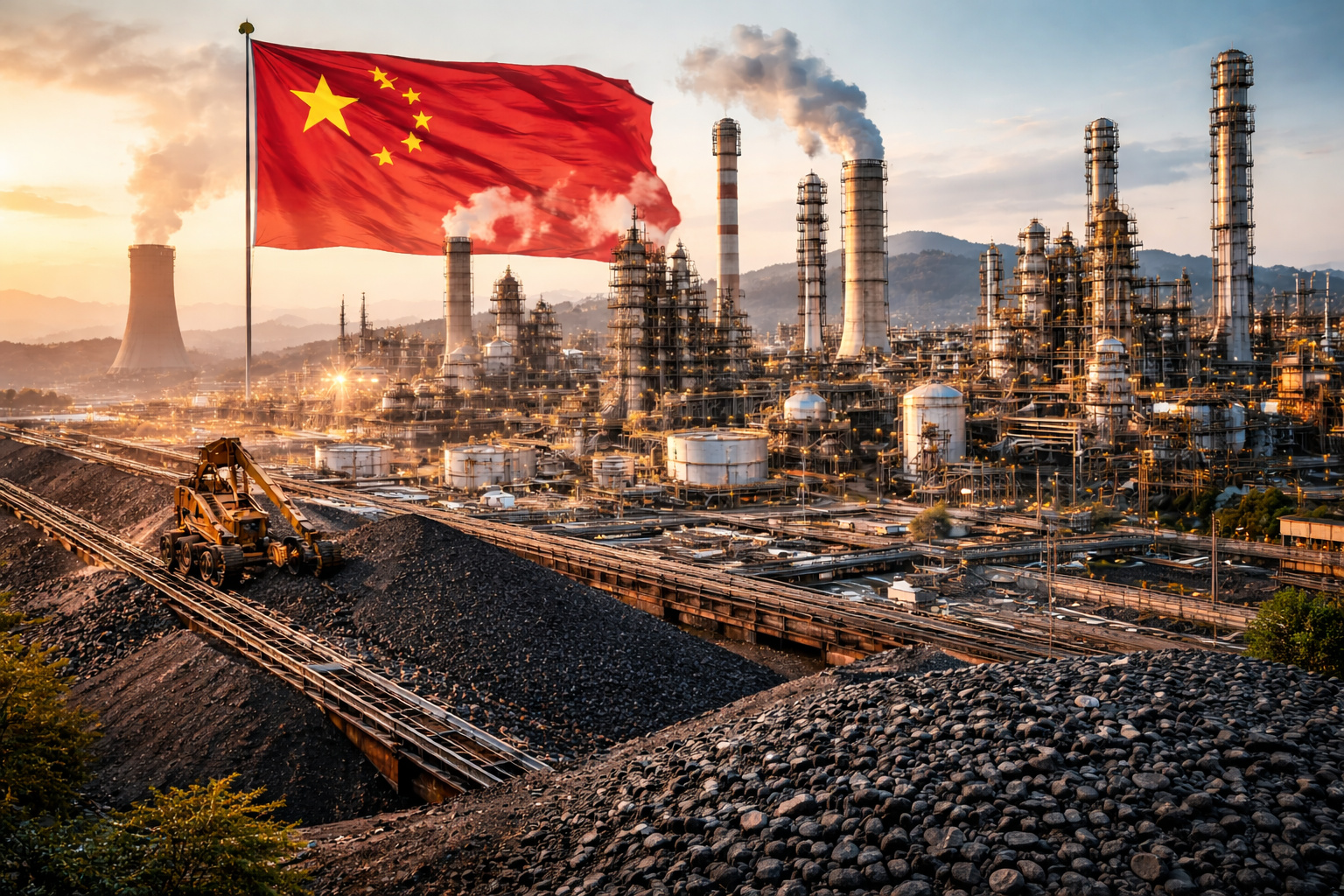
Coal-based energy strategy advances with technology innovation, economic impact, and growing environmental concern
China has intensified the use of coal as the basis for its petrochemical industry. The country has also improved the Fischer-Tropsch process to reduce dependence on imported oil.
This strategy reinforces national security in the face of global instabilities. Information released by the state agency Xinhua in 2025 confirms relevant technical advancements.
The movement occurs in parallel with increasing geopolitical tensions. The volatility of oil prices pressures international markets and accelerates strategic decisions.
-
USP researcher creates thesis to attract international funds for the country’s electric energy sector

-
Trafigura receives authorization from ANEEL to trade electricity in Brazil and expands its operations in the largest energy market in Latin America.
-
Mobile solar panels promised to share space with corn crops, but the 20% to 25% shade reduced production by an average of 7.7% and opened a new dispute between energy and food.
-
More than 80 million kilometers of wires need to be replaced by 2040: the energy transition doesn’t just depend on panels and electric cars, but on a colossal race for copper, aluminum, transformers, and recycling of old cables.




Historic technology gains new industrial relevance
The Fischer-Tropsch process was developed in Germany during World War II. The technology allows for the conversion of coal into fuels and chemicals.
Historically, the method had high levels of carbon emissions. This limitation restricted its application on a large scale.
China decided to modernize the process. The country transformed an old technology into a strategic pillar of industrial policy.
Scientific advancements reduce carbon emissions
Researchers from Peking University introduced small amounts of methyl bromide into the catalytic process in 2025. This information was released by Xinhua.
The result was a significant reduction in carbon dioxide emissions. The rate dropped from about 30% to less than 1%.
The innovation allows for the production of olefins with a lower environmental impact. These compounds are essential for plastic manufacturing.
Studies cited by the journal ACS Sustainable Chemistry & Engineering indicate potential for chemical recycling of plastic waste.
“`html
Industrial expansion is already underway
China has begun construction on a large industrial project in Xinjiang. The information was published by the South China Morning Post.
The facility will have the capacity to produce 2.4 million tons of ethylene glycol per year. The compound is widely used in plastics and antifreeze.
Industrial infrastructure continues to expand. The country strengthens its production based on abundant internal resources.
Geopolitical strategy drives self-sufficiency
The pursuit of self-sufficiency gained momentum during Donald Trump’s first term. This data was highlighted by The New York Times.
Xi Jinping emphasized the need to reduce external dependence. The country has begun to invest more intensively in domestic solutions.
International conflicts have raised oil prices. Economies dependent on the resource have faced greater pressure.
Economic impact favors local companies
Chinese companies based on coal have seen significant appreciation. Reuters pointed out a growth of about 30% in the shares of Ningxia Baofeng Energy.
Traditional refineries faced significant losses during the same period. The scenario highlights changes in the global petrochemical market.
The coal-based model has gained competitiveness. The current context favors this type of production.
Growth of coal use in the chemical industry
Coal consumption for chemical production grew from 155 million tons in 2020. The volume reached 276 million in 2024, according to The New York Times.
The growth continued in 2025. The total surpassed the annual consumption of the United States.
The CREA research center noted a 20% increase in coal use in just the first half of 2025.
About 80% of Chinese nitrogen fertilizer already uses coal as a productive base.
Environmental pressures increase with industrial expansion
Experts point out significant environmental concerns. The Financial Times highlighted limited climate goals in the new five-year plan.
The forecast is for a reduction of only 17% in carbon intensity by 2030.
CREA warns of a possible increase in emissions between 3% and 6% in the coming years.
Planned industrial projects until 2029 could further increase carbon dioxide emissions.
“`Excess Production Generates Global Impacts
China’s productive capacity may exceed domestic demand. This warning was issued by the European think tank MERICS.
The country is increasing exports at reduced prices. This strategy puts pressure on international markets.
The trade surplus reached $1.2 trillion in 2025. This data was also highlighted by MERICS.
Competition affects industries in other regions, especially in Europe.
Duality Between Clean Energy and Coal
China maintains a dual strategy in the energy sector. The country leads investments in renewable energy and electric vehicles.
The coal-based industry continues to be strengthened. This approach ensures economic stability and productive autonomy.
The scenario reveals a pragmatic strategy in the face of global uncertainties.
The combination of industrial growth and environmental sustainability continues to be a challenge — what will be the limit of this model?








Be the first to react!