






 Portuguese
  Spanish
  4 min of reading
  0 comments


It Seems Like Fiction, But It’s Real: This Tree Stores Water Inside It, Sustains Entire Communities, and Can Live Over a Thousand Years Even in the Desert
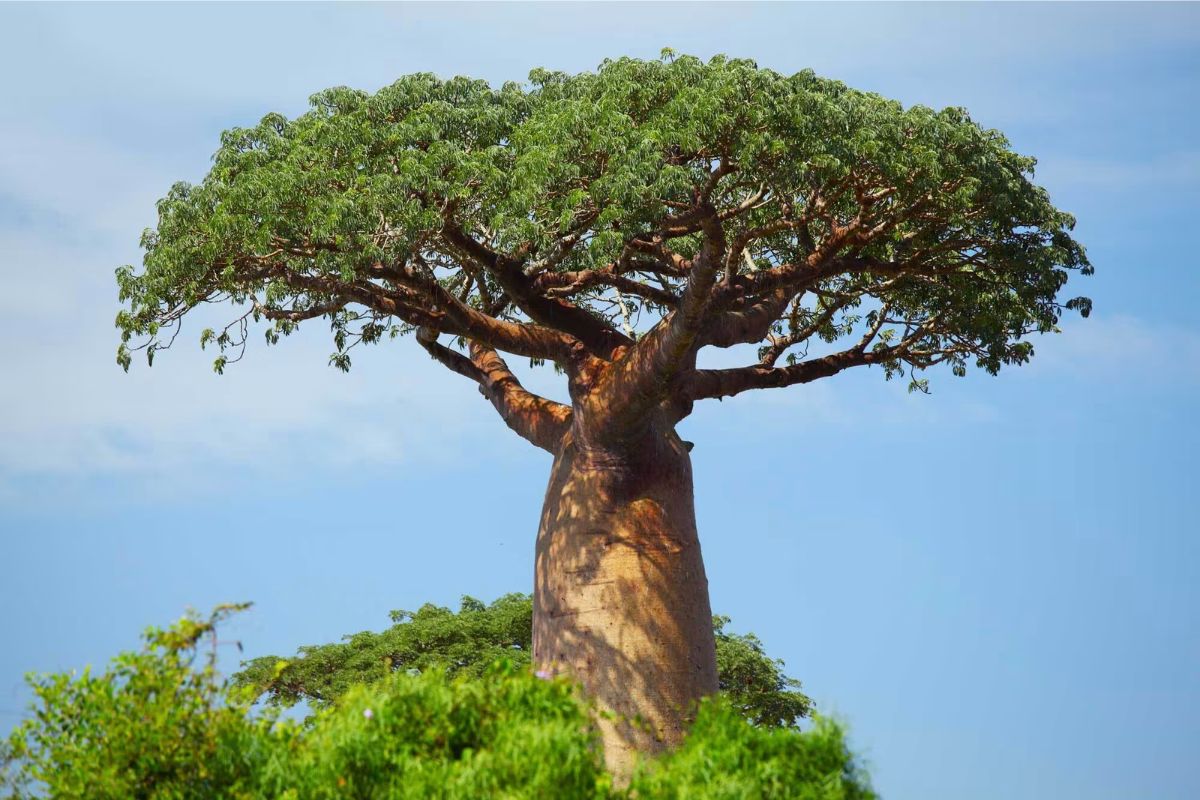
In the midst of dry, sun-scorched landscapes, a giant tree stands out not only for its strange shape but for a remarkable ability that seems like science fiction: it stores water inside its trunk. A lot of water. We are talking about the baobab, considered the largest plant reservoir on the planet, capable of retaining up to 120,000 liters of water within its spongy interior.
A Tree That Defies the Desert
The baobab is native to Africa, primarily Madagascar, but can also be found in arid regions of Australia and India. In some cases, these giants can live over a thousand years, enduring brutal droughts and remaining standing thanks to a unique survival system.
What appears to be just a thick, odd trunk is actually a state-of-the-art water reservoir. The internal wood of the baobab is porous, flexible, and spongy, functioning as a natural cistern. During the rainy season, it absorbs water like a sponge, and this reserve is gradually used during the long dry periods that plague the African continent.
-
He started with a jigsaw, his father’s screwdriver, and many drawings made during classes; years later, the young man who built a roller coaster in his own backyard went viral on the internet, was hired by Cacau Park, and now coordinates Brazilian and foreign professionals in the installation of an attraction weighing 737 tons, 55 meters high, one kilometer long, featuring moments of zero gravity and a speed of 120 km/h, in a journey that turned curiosity, calculations, and persistence into a professional career.

-
Between Egypt and Sudan, Bir Tawil is no man’s land that neither country wants on paper, but in practice has gold mining, nomadic tribes, and even fake “kings.”

-
Swimming champion Shavarsh Karapetyan dove about 40 times into a frozen lake in Armenia to rescue a sunken bus, saved 20 lives, and lost his career because of it.
-
Júlia Pimentel, an 11-year-old from Minas Gerais, independently invented a new formula to calculate the square root using simple addition and multiplication, and her method was published in one of the most important mathematical scientific journals in Brazil.


According to National Geographic, some species of baobab can reach 30 meters in height and 11 meters in diameter, with hollow trunks so wide that in some African villages, they are used as schools, storages, bars, or even makeshift chapels.
A Living Oasis in the Midst of Aridity
But the baobab is not just a walking water tank. It plays a vital role in the ecosystems where it grows. Its nutrient-rich leaves are used in food and traditional medicine. The fruits — known as “monkey bread” — are packed with vitamin C and antioxidants, and today, they have even become a supplement exported to Europe and the United States.
The bark of the tree, in turn, can be turned into ropes, fabrics, or utensils. No part of the baobab goes to waste. It provides shade, shelter for birds and small mammals, and serves as a social and spiritual meeting point for various communities.
According to botanist Patrice Baby, an expert in African flora, “the baobab is one of the few trees that combines ecological survival and cultural survival. It represents the spirit of resistance of the African people.”
Why Does It Store So Much Water?
The explanation lies in a series of evolutionary adaptations:
- Spongy and Hollow Trunk: the interior of the baobab functions as a water reservoir. The structure is made of soft tissues that absorb and store liquid for months.
- Deep Roots: its roots penetrate meters underground, where there is still moisture even when the surface is completely dry.
- Deciduous Leaves: it sheds leaves during dry spells to conserve water, avoiding transpiration.
These strategies make it a symbol of resilience in arid zones, a true natural laboratory of biological engineering.
A Cultural, Spiritual, and Even Tourist Symbol
In many regions of Africa, the baobab is considered sacred. There are hundreds of myths and legends about it — some say it was planted upside down by the gods, which explains the strange shape of its branches. Others believe that ancestral spirits live inside it.
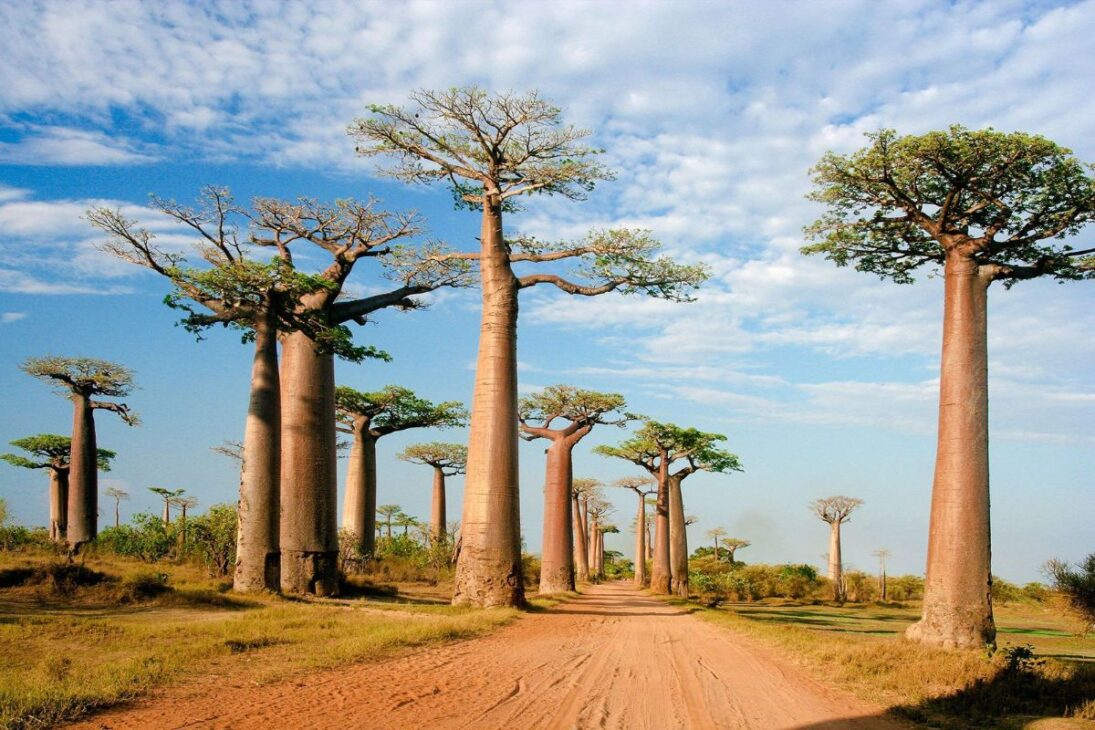
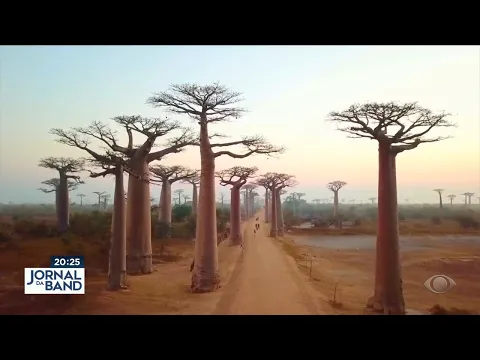
In countries like Senegal and Burkina Faso, religious ceremonies are held under its branches, and it is not uncommon to find altars, offerings, or inscriptions on its trunks. In Madagascar, there is even a “Avenue of the Baobabs,” where dozens of them line up like columns of a natural cathedral, attracting tourists from around the globe.
Moreover, researchers have been studying the use of the baobab for sustainable purposes, including as an alternative source of food and medicine in times of climate crisis.
A Threatened Giant
Despite all its strength, the baobab is also suffering from climate change. Studies published in the journal Nature Plants have shown that nine of the thirteen oldest baobabs in Africa have died or collapsed in the last ten years, many of them over a thousand years old. The cause may be related to rising temperatures, extreme droughts, and soil degradation.
Organizations like Baobab Guardians are promoting reforestation and care for young saplings in African countries, trying to preserve this iconic species for future generations.

The Baobab and the Future of Water
With the worsening water crises around the world, the baobab has gained attention from scientists researching alternative methods of water storage and plants resilient to extreme climates.
The logic is simple: if nature has managed to create a tree capable of enduring millennia of drought, we may be able to learn from it to develop survival solutions in regions affected by desertification or changes in rainfall patterns.
The baobab is, above all, a lesson in humility: a tree that does not run, does not speak, does not move, but resists. And it shows us that even in the harshest environment, it is possible to find shelter, food, and water — one just needs to be prepared for it.


-

-

2 people reacted to this.