






 Portuguese
  Spanish
  5 min of reading
  0 comments


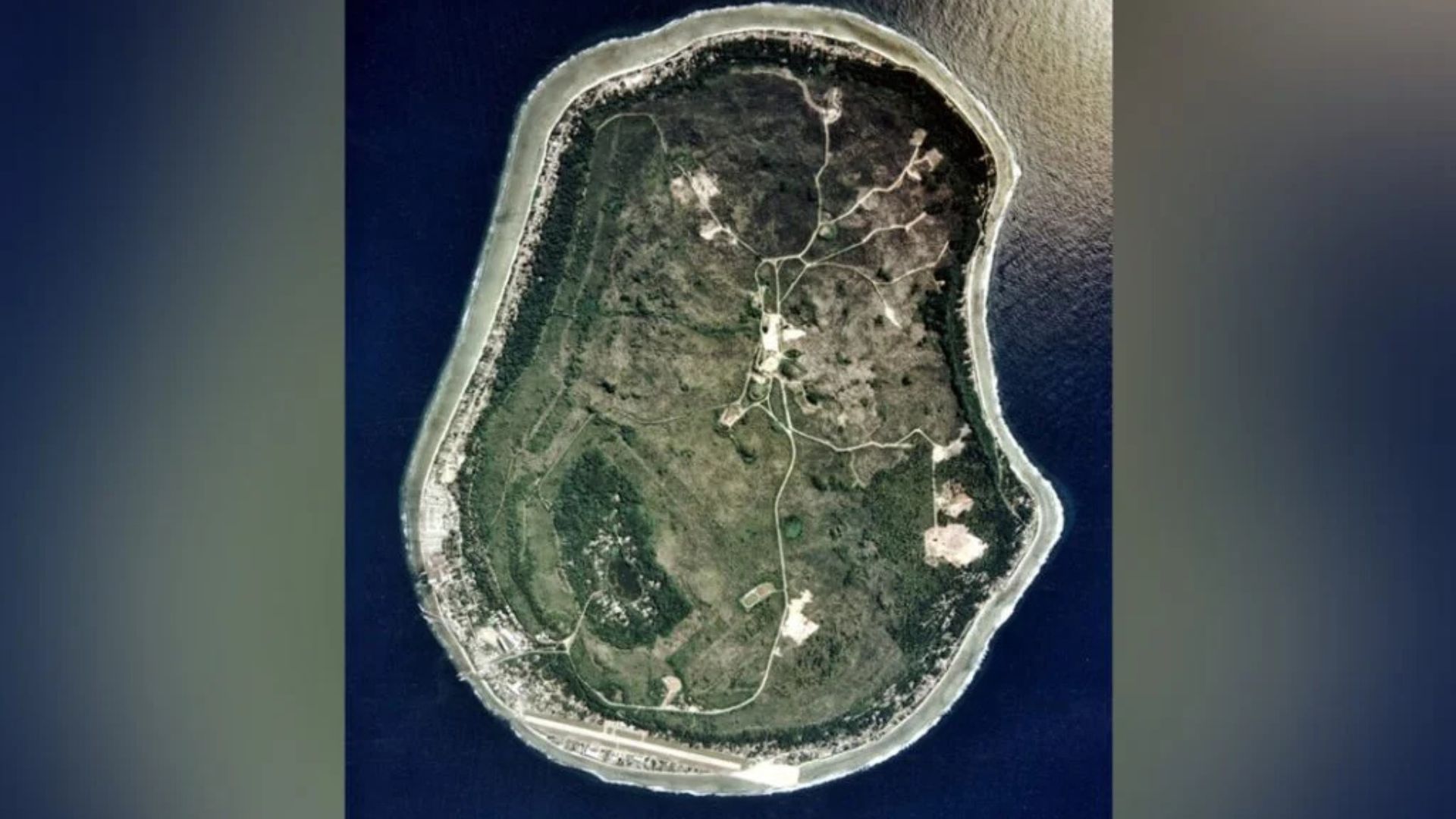
Parliament of Nauru approves changing the country’s name to Naoero in a decision linked to historical identity and colonial past.
The Parliament of Nauru approved in May 2026 a proposal to officially change the country’s name to “Naoero,” a traditional term used by local inhabitants before European colonization. The decision will still need to pass a national referendum, but it already represents one of the most significant symbolic changes in the recent history of the small Pacific island country.
Located in Micronesia, Nauru is considered the smallest island country on the planet and has only 21 km² of territory. The island became globally known for its wealth linked to phosphate mining during the 20th century, but it also began to face severe environmental degradation, economic dependency, and risks associated with climate change.
According to local authorities, the change seeks to strengthen national identity and reduce historical ties with the German colonial past. The name “Nauru” was consolidated during the period of European influence, while “Naoero” is associated with the original linguistic and cultural traditions of the local population.
-
The rule of silence after 10 PM may lose strength in Brazilian cities, but noise will not be allowed, and new proposals divide residents and business owners.

-
Measuring 13m in wingspan, the F-15 Eagle is a tactical fighter that combines power, advanced electronic systems, large weapon capacity, and high maneuverability to dominate the skies in any condition.

-
Macabre garden in Poland: 34 fetuses found on former property of a doctor reveal a disturbing story of silence, pain, and unanswered questions
-
As small communities struggle to maintain local income, Zigurats bets on its own cryptocurrency and transforms water, clay, and cosmetics into digital assets.



Parliament approves proposal to officially replace “Nauru” with “Naoero”
The proposal was approved by the national Parliament on May 15, 2026. The next step will be holding a referendum for the population to decide if the change will be officially incorporated into the Constitution and the country’s international records.

According to local parliamentarians, the change aims to restore a name historically linked to the traditional identity of the island before the consolidation of European colonial presence in the Pacific.
The government states that “Naoero” was already historically used by the native population long before the international formalization of the name “Nauru.” The change is treated by the authorities as an attempt at cultural and historical recovery in one of the smallest sovereign states on the planet.
Nauru has only 21 km² and is the smallest island country in the world
Nauru is located in the Central Pacific Ocean, northeast of Australia. The country has about 12,000 inhabitants and a territorial area of only 21 km², a size smaller than many urban neighborhoods around the world.


Besides being the smallest island country on the planet, Nauru is also among the smallest sovereign states in population and territory.
The island does not have an officially defined capital, although the district of Yaren concentrates government administrative functions. The entire territory can be traversed by car in a few minutes, a factor that often turns Nauru into an international geographical curiosity.
Island became extremely rich with phosphate mining in the 20th century
For decades, Nauru was one of the nations with the highest per capita income in the world thanks to phosphate reserves accumulated over millions of years through deposits formed by seabird droppings.
Intensive exploitation began under colonial rule and transformed the small island into a highly profitable mining center throughout the 20th century.
In the 1970s and 1980s, phosphate revenue placed Nauru among the richest countries proportionally to its population. The problem is that mining devastated much of the national territory. Estimates indicate that approximately 80% of the island’s area suffered severe degradation caused by mineral extraction.
Country faces economic difficulties after collapse of mineral reserves
With the reduction of economically viable phosphate reserves, Nauru began to face a severe economic crisis. Over the past decades, the country has tried different strategies to maintain national revenue, including unsuccessful international investments, regional agreements, and programs linked to Australia.
The Nauruan economy has become heavily dependent on external aid and activities associated with the presence of migration detention centers funded by the Australian government.
The country also faces structural difficulties related to territorial limitation, dependence on imports, and low economic diversification.
Climate change increases pressure on the small Pacific territory

In addition to economic problems, Nauru is also among the countries vulnerable to global climate impacts.
The rise in sea level concerns several small island nations in the Pacific, especially territories with low altitude and limited resources for coastal adaptation.
In the case of Nauru, the situation is even more delicate because a large part of the island’s interior has already suffered intense degradation caused by phosphate mining. This reduces habitable areas and limits urban expansion, agriculture, and infrastructure.
Name change seeks to strengthen national identity before the 60th anniversary of independence
Local authorities claim that the proposal to adopt “Naoero” also has strong symbolic value in light of the country’s political history. Nauru gained independence in 1968 after decades of colonial control exercised by Germany, Australia, the United Kingdom, and New Zealand at different historical periods.
According to parliamentarians, the debate on national identity gained momentum on the eve of the sixtieth anniversary of independence, scheduled for the coming years.
The name change is seen by part of the population as an attempt to reaffirm local cultural roots instead of maintaining references established during the colonial presence.
Name “Naoero” is linked to the island’s local linguistic tradition
Researchers and local authorities claim that “Naoero” has origins linked to the traditional language spoken by the island’s inhabitants before European colonization.
Although the term “Nauru” is already internationally established in maps, multilateral organizations, and diplomatic relations, the government maintains that the new name better represents the country’s original cultural identity.
Similar changes have already occurred in other parts of the world, especially in countries that sought to abandon names associated with colonialism.
Historical cases include changes such as Burma to Myanmar, Ceylon to Sri Lanka, and Upper Volta to Burkina Faso.
Referendum will decide if the change will be officially adopted by the country
Despite parliamentary approval, the change still depends on popular validation. The government informed that a national referendum will be organized to decide if “Naoero” will officially replace “Nauru” in constitutional documents, diplomatic records, and international recognition.
If approved, the change will require formal communication to the UN and other international organizations.
Gradual changes may also occur in passports, public institutions, diplomatic representations, and national symbols.
Small Pacific Territory Returns to the Center of International Attention
Despite its small size, Nauru frequently appears in global debates about climate, sovereignty, mining, and migration.
The country has one of the most unusual economic histories on the planet: it went from extreme wealth based on mineral resources to a situation of strong external dependence in just a few decades.
Now, the possible transformation of Nauru into “Naoero” adds a new symbolic layer to the trajectory of the small Pacific island.
The question that begins to arise is whether this change will represent just a name alteration or the start of a broader attempt to redefine the national identity of one of the smallest, most isolated, and unique countries on the planet.




-

-

-

3 people reacted to this.