






 Portuguese
  Spanish


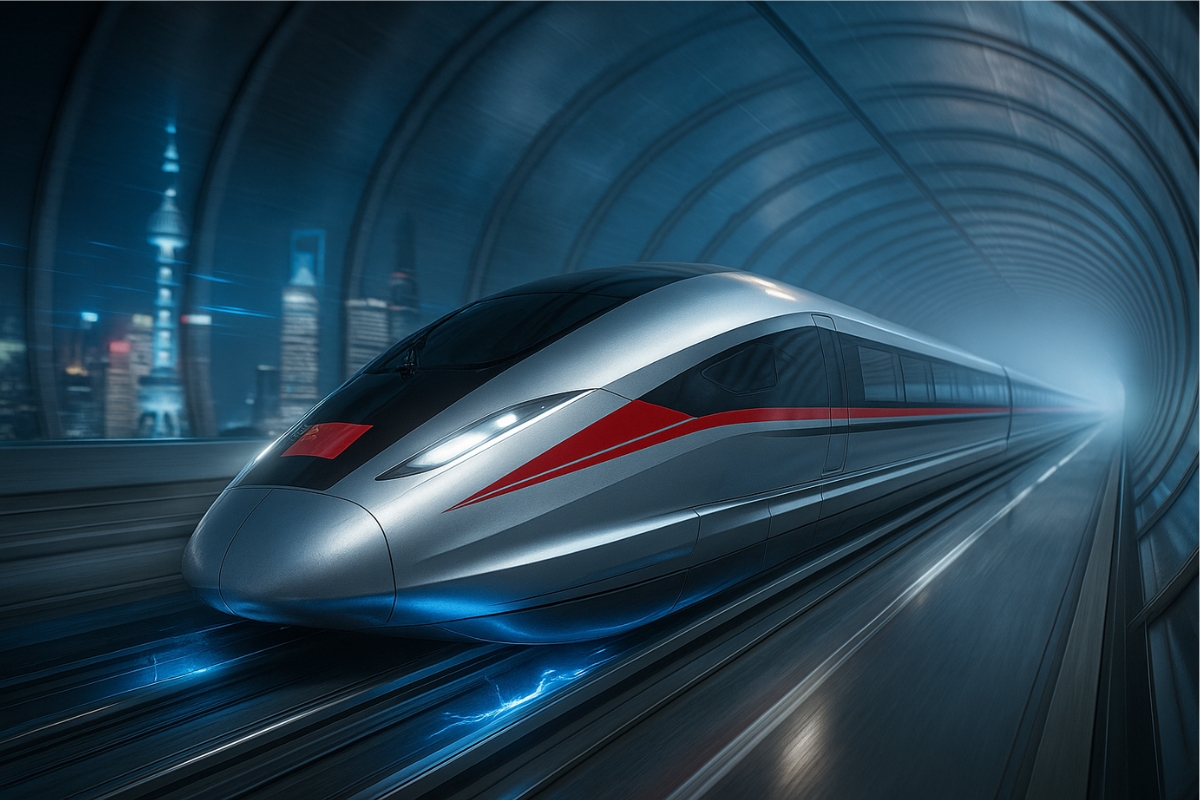


The New Magnetic Levitation Train From China Reaches 1,000 Km/h, Surpassing Commercial Planes. Tested in Vacuum Tunnel, the System Uses Superconductive Technology and Promises to Revolutionize Global Transport
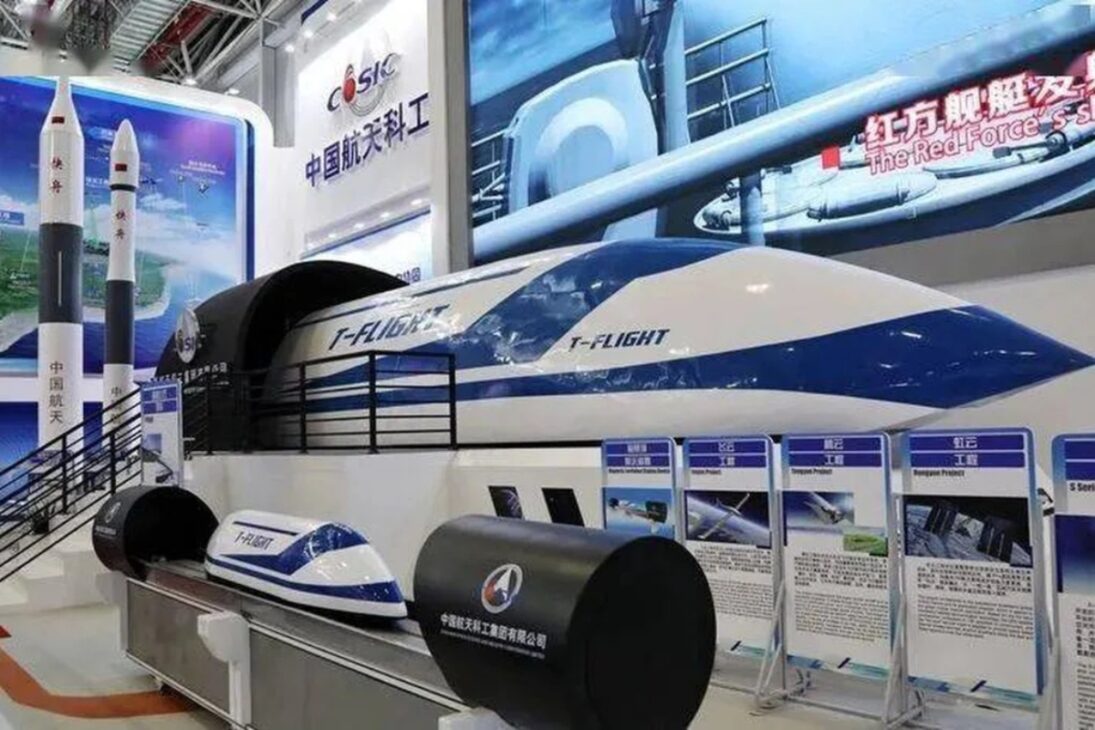
China has just taken another step toward the future of land mobility with the testing of a magnetic levitation train capable of reaching 1,000 km/h. The project, developed by the China Aerospace Science and Industry Corporation (CASIC), was tested in Shanxi province in the north of the country and combines railway engineering and aerospace technology. The model is powered by a superconductive levitation system inside a low vacuum tunnel, which reduces friction and air resistance to almost zero.
According to the state newspaper Global Times, the experimental line built in Yanggao, in the city of Datong, is about two kilometers long and was designed to validate the performance of the structure, magnetic suspension, and braking in controlled conditions. The initial results were deemed successful and paved the way for new phases of development, aiming to transform the train into a real means of transportation capable of rivaling commercial aviation over medium distances.
A Technological Leap That Redefines Speed
During the tests, the propulsion system demonstrated total stability and high efficiency, confirming that the operating principle is viable for future commercial applications. The Chinese plan is to use this technology to connect the major megacities of the country, such as Beijing and Shanghai, shortening the travel time from nearly five hours to just ninety minutes.
-
China Develops Custom 140-Ton Electric Mining Truck with 770 kWh Swappable Battery, Deploys 290 Units in Xinjiang’s Largest Zinc Mine

-
Meta to Launch Arena, a New Prediction App Targeting 3.56 Billion Users, Competing with Polymarket and Kalshi

-
Scientist Challenges Famous Human Evolution Theory, Argues Homo Sapiens Evolved Gradually Over Thousands of Years
-
15-Year-Old American Builds Ocean Generator with PVC Pipe and 3D-Printed Propeller for $12, Wins National Prize, Presents at White House, and Makes Forbes 30 Under 30 List




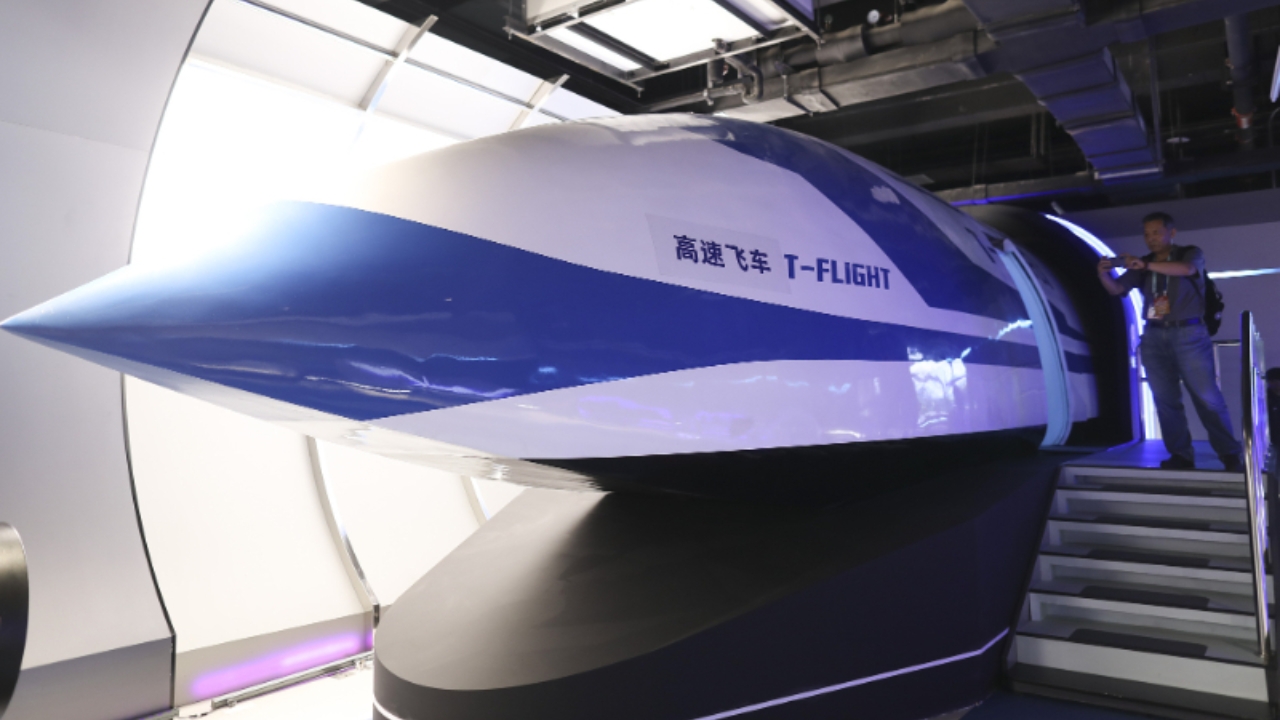
The project also positions China ahead in the global race for ultrafast transportation systems, challenging the limits of engineering and physics. The use of magnetic levitation eliminates direct contact between mechanical parts, while the low-pressure environment allows speeds that far exceed traditional bullet trains, which operate between 350 and 400 km/h.
According to experts, the CASIC initiative reflects a long-term national strategy to dominate emerging technologies in transport, energy, and infrastructure. In addition to reinforcing China’s image as a leader in innovation, the 1,000 km/h train has the potential to boost new industries related to the production of superconducting magnets, autonomous control systems, and high-strength materials.
Challenges and Viability Issues
Despite the excitement, the challenges to transform the prototype into a commercial system are immense. Building vacuum tunnels requires millimeter precision, high costs, and complex monitoring and safety systems. Experts consulted by ABC News point out that the necessary investment could be up to five times greater than that of a conventional railway.
Operating at such high speeds also raises concerns regarding stability, braking, and evacuation in emergency situations. Professor Sun Zhang from Tongji University explained that the project still requires long-term safety checks and that operating conditions demand extreme rigor. Even so, the Chinese government has already approved the expansion of the experimental track, indicating confidence in the advancement of research.
Another debated point is the cost-benefit ratio for short journeys, where the time advantage may not justify the investment. Still, the development of this technology creates a valuable scientific foundation that could benefit other industrial sectors, such as light freight transport, defense, and space exploration.
The Global Impact of a New Era of Transport
The Chinese test has reignited global interest in magnetic levitation and low vacuum transport systems, technologies that have been studied for decades in projects like the Hyperloop. The difference this time is that the system has been effectively built and tested under real conditions. If validated on a large scale, it could significantly reduce the use of airplanes on domestic routes and transform passenger transport between major urban centers.
For Brazil, the advancement represents an opportunity to closely observe a trend that may influence the future of national railways. Even though the country currently lacks the infrastructure to adopt trains of this speed, indirect impacts, such as reduced component costs and technology transfer, may emerge in the coming years.
At the pace China is advancing, it would not be surprising if the first commercial line of this type were inaugurated within this decade. China already has the fastest maglev train in operation in the world, the Shanghai model, which reaches 600 km/h, and now aims for a level few believed possible just a few years ago.
What once seemed like science fiction is beginning to become a reality before the eyes of the world, and the project of 1,000 km/h is proof that China does not intend merely to keep up with the future — it wants to build it.
If you were a passenger on this train, would you board this journey at a thousand kilometers per hour? Share your opinion in the comments and let us know what you think of this new era of mobility.






