Portuguese
  Spanish


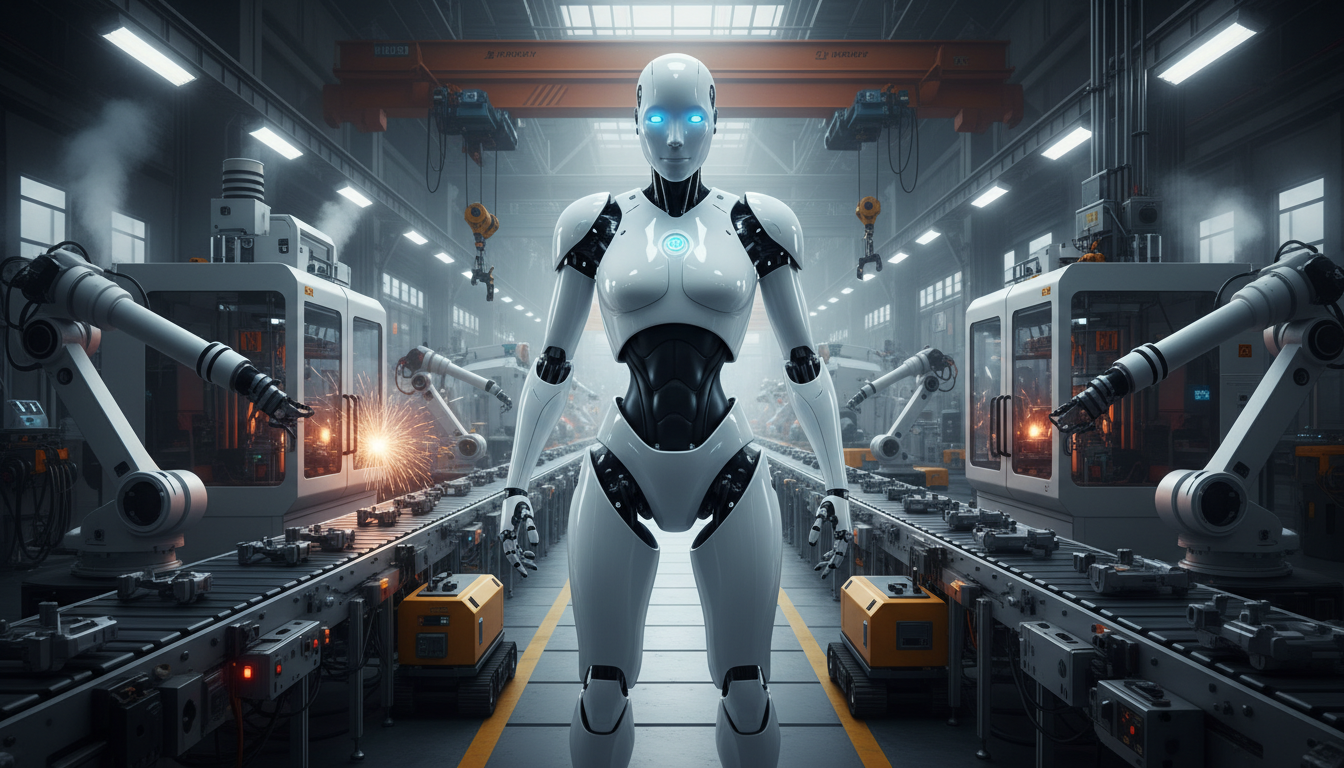


On March 28, 2026, the Chinese company Agibot delivered its 10,000th humanoid robot — five thousand of them left the factory in the first quarter of this year alone, and the goal for December is to reach 100,000 units, while Tesla, Boston Dynamics, and Figure AI have not yet announced commercial production at scale
According to a Momenta Media report from March 2026, Shanghai-based Agibot reached the milestone of 10,000 humanoid robots shipped cumulatively on March 28, 2026.
In doing so, the company entered what it calls the “era of multi-industry global deployment.”
Therefore, while the Western world is still debating whether humanoid robots are viable outside of laboratories, China is already sending thousands of them to factories, warehouses, and logistics centers.
-
Pennsylvania Mine Creates Ice in Summer Heat and Melts in Winter, Turning a Mountain Crevice into a Reverse Natural Refrigerator

-
China Accelerates Global Expansion of Robotics: From Smart Vacuums to Industrial and Humanoid Machines, Millions Exported to Over 150 Markets
-
Polar Air Mass to Hit Brazil: Temperatures to Plummet in Nine States, Near Freezing in the South with Frost Risk Until Monday
-
Chinese “dark factories” produce electric cars 24/7 with minimal human intervention, as Zeekr assembles 800 units daily, raising concerns in Brazil.




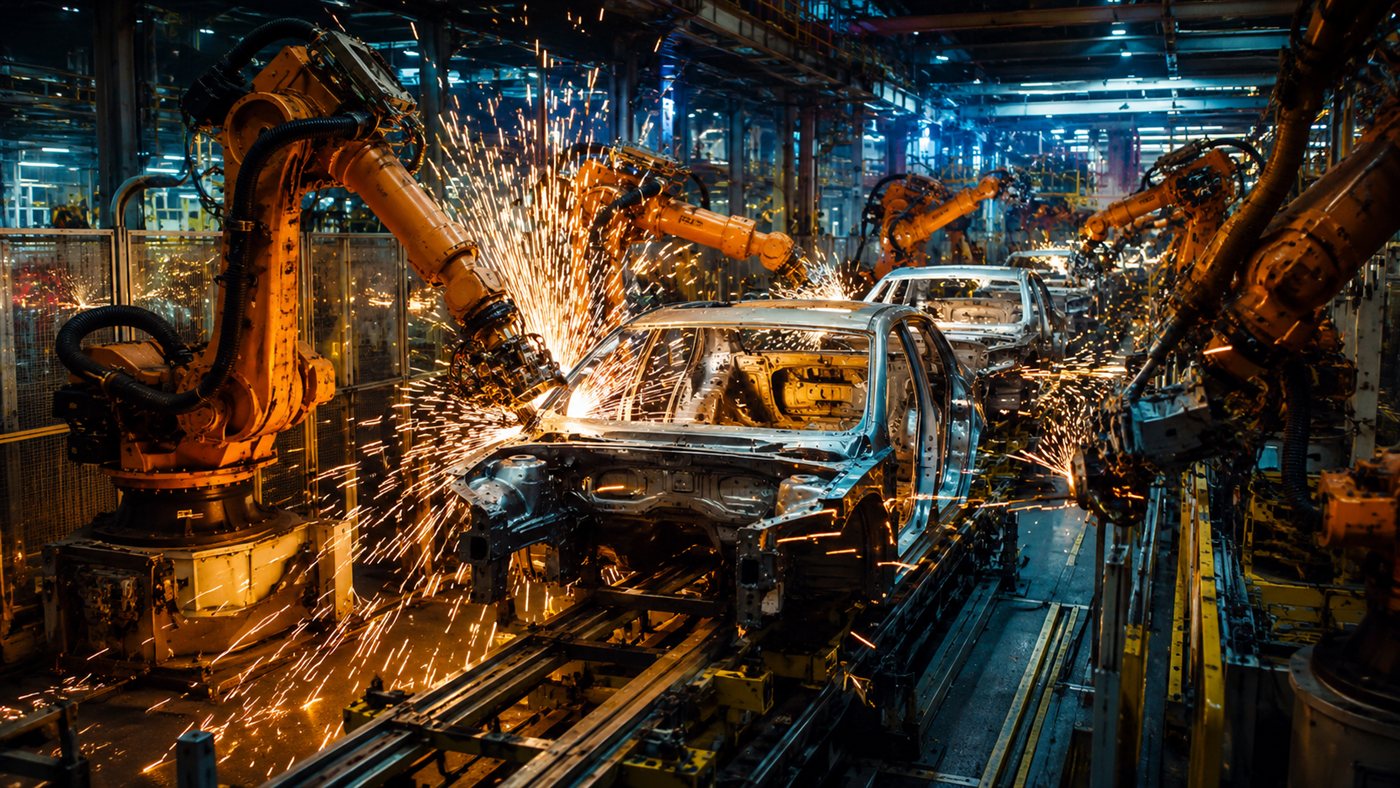
5,000 robots in 3 months — and the goal is 100,000
According to Biped News, China is experiencing what experts call a “production surge” of humanoid robots in 2026.
Agibot alone produced 5,000 units in the first three months of the year.
Additionally, a new dedicated factory in Foshan, southern China, began operations on March 31, 2026.
Consequently, production capacity is expected to multiply in the coming months.
Agibot’s official goal is to deliver 100,000 humanoid robots by the end of 2026 — ten times more than everything produced so far.
For comparison, Norwegian company 1X signed an agreement with EQT Ventures to deliver 10,000 Neo robots between 2026 and 2030 — in five years, the same quantity that Agibot produced in a single quarter.
- 10,000 humanoid robots delivered by March 2026
- 5,000 produced in the first quarter of 2026 alone
- 100,000 is the goal for the end of 2026
- Foshan: new dedicated factory inaugurated on March 31
- Main model: Agibot G2 (logistics, manufacturing, entertainment)

Meanwhile, Tesla and Boston Dynamics are still in the prototype phase
In contrast, major Western humanoid robotics companies are still in earlier stages of development.
Tesla announced that it is converting part of its Fremont factory for mass production of the Optimus Gen 3, but has not disclosed numbers of commercially delivered units.
Similarly, Boston Dynamics has begun commercial production of its new electric Atlas, with plans to deploy tens of thousands of units in Hyundai factories.
However, none of these companies have reached Agibot’s shipping scale in 2026.
In this regard, China has opened a numerical advantage that may be difficult to close: while the West perfects prototypes, China has already learned to mass-produce.
Figure AI, in turn, is scaling its factory for thousands of units annually, with commercial pilots intensifying — but without announcements of milestones comparable to Agibot’s 10,000.

The question nobody wants to answer: what about jobs?
Given this, the most sensitive question remains without an official answer.
If 100,000 humanoid robots enter factories and warehouses by the end of 2026, how many jobs will be affected?
Available sources indicate that robots are “assisting logistics tasks” and “meeting real demand” in industrial scenarios.
However, the corporate language of “helping” often masks a reality of replacement.
Still, a factory that previously operated with 500 workers and now runs with 50 humanoid robots did not “help” 450 people — it laid them off.
In the 1X agreement with EQT Ventures, for example, 10,000 robots will be distributed among 300 companies in the Swedish investor’s global portfolio — for logistics, manufacturing, and warehouse operations.
On the other hand, automation advocates argue that robots eliminate repetitive and dangerous tasks, allowing humans to focus on creative and supervisory roles.
Despite this, the speed of the transition is what worries: if Agibot’s goal materializes, the scale of automation will shift from artisanal to industrial in less than a year.
What this means for Brazil
Above all, the impact on developing countries like Brazil could be even greater.
Brazilian industry competes with Chinese industry in sectors such as manufacturing, logistics, and assembly.
In this way, if Chinese factories operate with robots at a lower cost than Brazilian workers, Brazil’s industrial competitiveness could be directly affected.
Likewise, Brazilian companies that rely on labor-intensive work to compete on price will face increasing pressure.
As demonstrated by the China-Kyrgyzstan-Uzbekistan railway, China not only dominates production — it exports its industrial capacity to other continents. With humanoid robots, the next step could be to export its own automated workforce.

As reported by La Razón, Norwegian company 1X has already closed a deal for 10,000 Neo robots with Swedish investor EQT Ventures — distributed among 300 global companies for logistics and manufacturing by 2030.
What still needs to be proven
However, caution is needed when interpreting Agibot’s numbers.
Most sources about the company come from outlets aligned with the Chinese technology market.
Furthermore, the goal of 100,000 units in 2026 is extremely aggressive — even by Chinese standards.
There is no independent data on the failure rate, cost per unit, or actual performance of the robots in a production environment.
Thus, it is possible that the announced scale reflects more corporate optimism than operational reality.
Still, even if Agibot delivers half of its goal — 50,000 humanoid robots in one year — it will already be an unprecedented feat in the history of industrial automation.
The question is no longer whether humanoid robots will replace workers in factories. The question is when — and if the world will be prepared to deal with the consequences.