Portuguese
  Spanish


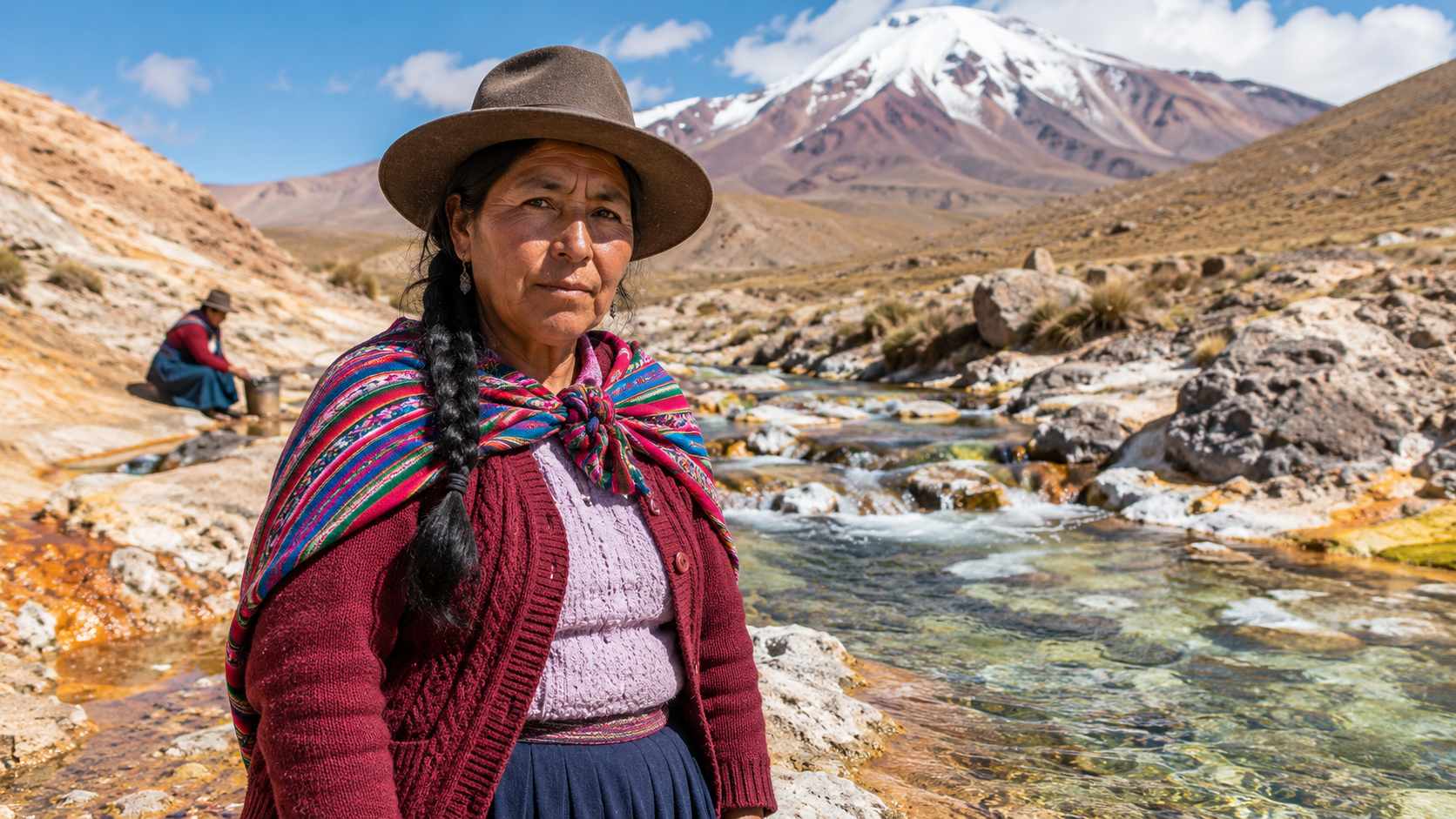

Study indicates that Andean communities developed genetic variants linked to arsenic processing after thousands of years of exposure to contaminated water, revealing how natural selection can leave marks on DNA in the face of a toxic environment.
The arsenic present in the water of the high Andes seems to have left marks on the DNA of indigenous communities. Studies cited in the material indicate that variants linked to the AS3MT gene help these populations better process the toxic metal.
The adaptation was observed in San Antonio de los Cobres, in northern Argentina. The city is over 3,700 meters above sea level and had, before 2012, about 200 micrograms of arsenic per liter.
This level exceeded the limit of 10 micrograms per liter recommended by the World Health Organization. Even so, communities lived, formed families, and remained in the region, where the volcanic landscape fed streams and contaminated groundwater.
-
Microsoft Reveals Windows Setting to Safely Remove USB Drives and Prevent Data Loss

-
Astronomers Discover Two Giant Planets with Cotton Candy-Like Density, Comparable in Size to Jupiter, Orbiting a Star 1,110 Light-Years Away
-
Meteor Showers and Full Moon Create Rare Celestial Display Over Brazil in Late July

-
Metal Detector Enthusiasts Uncover Largest Viking Coin Hoard in Norwegian History with 2,970 Silver Pieces Near Rena



Arsenic in water shaped genetic response
Researchers from Uppsala University and the Karolinska Institute identified variants capable of making arsenic metabolism more efficient. The work was described as the first evidence of human adaptation to an environmental toxic chemical.
The central gene is AS3MT, responsible for helping the body transform arsenic into chemical forms eliminated by urine. When this conversion occurs better, the substance tends to remain less time in more dangerous forms.
The material points out that arsenic is often remembered as an industrial pollutant, but it can also naturally seep from the bedrock into groundwater. In the Andes, this exposure would have ancient roots, linked to geology and human occupation.
Archaeological evidence from Atacama indicates contact with arsenic since prehistory. Research cited in the material observed the substance in the hair of 7,000-year-old mummies found in the region.
How the body deals with the poison
When arsenic exposure exceeds safe levels, human enzymes modify the substance in stages. An intermediate form called MMA is harmful, while another, called DMA, is easier to excrete.
The main difference is not just in drinking contaminated water, but in how each body processes arsenic. In the studied communities, many people showed low levels of MMA and high levels of DMA in their urine.
This pattern indicated a greater detoxification capacity compared to people from other places. To investigate the origin of this difference, the researchers studied 124 women exposed to arsenic in San Antonio de los Cobres.
They measured arsenic metabolites in urine and analyzed millions of genetic markers across the genome. One region stood out repeatedly: chromosome 10, near the AS3MT gene.
The AS3MT Gene and Natural Selection
The AS3MT had already appeared in studies conducted in Bangladesh, Mexico, Argentina, and Taiwan, always linked to arsenic metabolism. The Andean study compared the Argentine population with related groups from Peru and Colombia.
In these compared populations, historical exposure to arsenic was considered lower. The group from San Antonio de los Cobres showed strong genetic differentiation around AS3MT, as well as signs of a selective sweep.
This process occurs when a variant offers a survival advantage and becomes more common over generations. As it spreads, nearby stretches of DNA may advance along with it.
The signal of this selection appeared in San Antonio de los Cobres, but not in the Peruvian and Colombian groups used for comparison. For the researchers, this reinforces the link between contaminated water, survival, and protective variants.
The protective pattern did not appear only in this population. The material reports that similar versions exist in other parts of the world, especially among some Native American and East Asian populations.
Protective Pattern Was More Common in the Andes
Although not exclusive, the protective haplotype was much more frequent in San Antonio de los Cobres. It accounted for 58.4% of the phased haplotypes in the local group, compared to 29.1% in Peruvians and 26.8% in a Vietnamese population.
This data suggests that natural selection may have acted on existing genetic variation in the ancestors of these populations. The adaptation, therefore, did not need to rely on a new mutation after the region was settled.
A subsequent study in Bolivia found a similar result among Aymara-Quechua and Uru indigenous groups. These populations showed abnormally high frequencies of variants linked to efficient arsenic processing and strong signs of natural selection near AS3MT.
The Bolivian groups had the highest reported frequency so far of alleles associated with more efficient arsenic metabolism. The finding strengthened the idea that contaminated water shaped evolution in more than one Andean population.
Adaptation Does Not Mean Immunity
The adaptation found in the Andes does not mean immunity to arsenic. Mattias Jakobsson, from Uppsala University, stated that the protective variant does not represent a magic cure nor does it make it safe to drink a lot of contaminated water.
Even with some protection, the effects of arsenic remain associated with damage to the immune system, child health, lungs, liver, blood vessels, and increased cancer risk.
These damages may have influenced natural selection, especially when they affected people before or during reproductive age. Individuals able to process arsenic better may have survived longer, had children, and passed on protective variants.
The study adds a new way to understand human adaptation. Besides altitude and diseases like malaria, a toxic landscape can also pressure the genome and alter the frequency of useful variants.
Today, arsenic in drinking water threatens millions of people. Most have not had thousands of years to develop genetic protection, and even where it exists, safe water remains the only real solution.
With information from ZM.