






 Portuguese
  Spanish


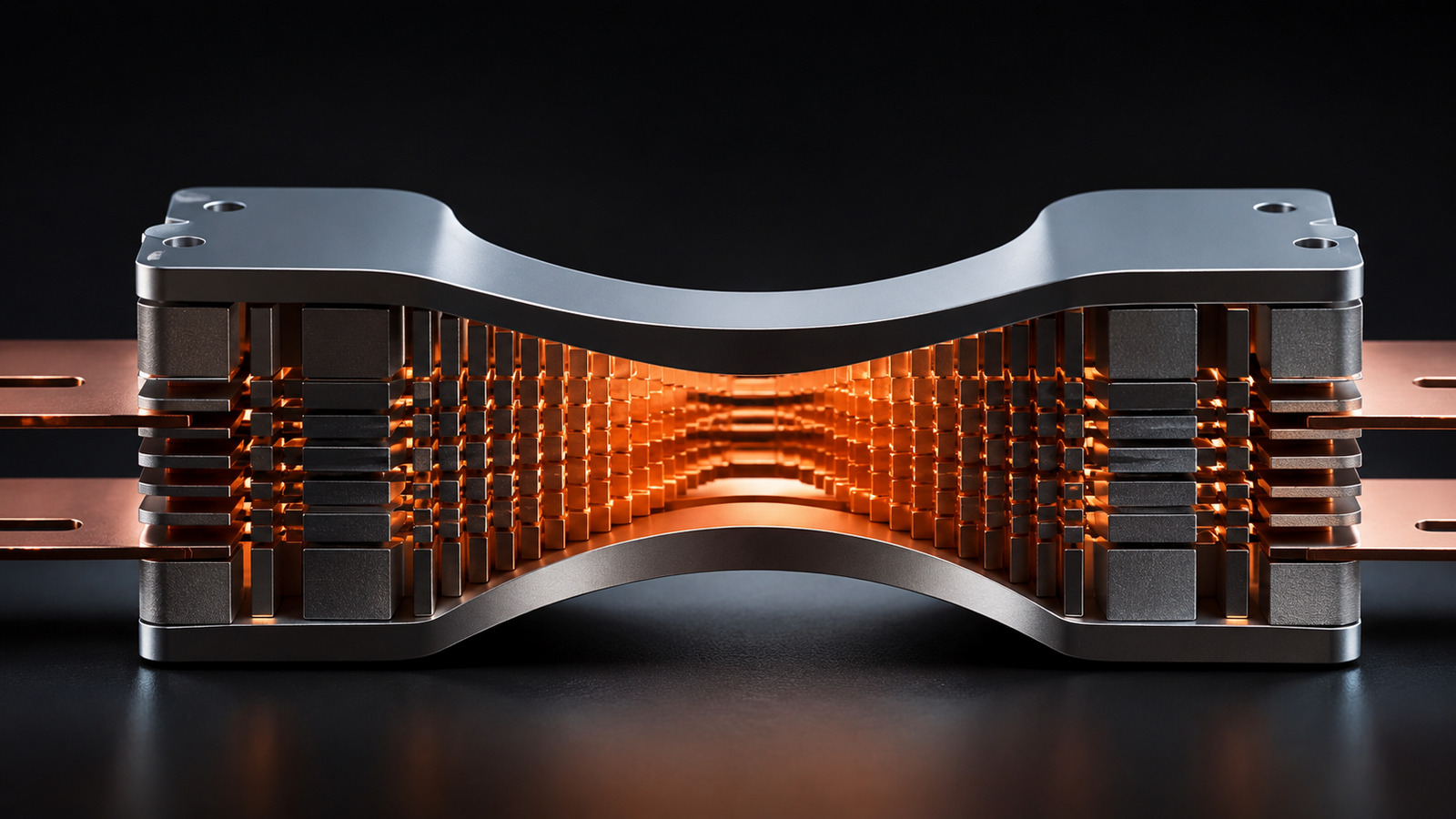

Computer-designed thermoelectric generator uses unusual shape to better control heat, reduce electrical losses, and achieve 8.2 times higher efficiency than a conventional rectangular model
A computer-designed thermoelectric generator achieved 8.2 times higher efficiency than a conventional rectangular model made of the same material, in tests by researchers in South Korea.
Design replaces trial and error with calculation
Thermoelectricity is among the most promising alternative energy sources because it allows the use of different forms of heat available in nature. This utilization can range from human body heat to solar heat.
The field also allows for recycling heat produced by technologies used in everyday life. The challenge is not just in creating materials capable of converting heat directly into electricity with greater efficiency.
-
China Develops Custom 140-Ton Electric Mining Truck with 770 kWh Swappable Battery, Deploys 290 Units in Xinjiang’s Largest Zinc Mine

-
Meta to Launch Arena, a New Prediction App Targeting 3.56 Billion Users, Competing with Polymarket and Kalshi

-
Scientist Challenges Famous Human Evolution Theory, Argues Homo Sapiens Evolved Gradually Over Thousands of Years
-
15-Year-Old American Builds Ocean Generator with PVC Pipe and 3D-Printed Propeller for $12, Wins National Prize, Presents at White House, and Makes Forbes 30 Under 30 List




To build a thermoelectric generator, many factors must be combined. These include the equipment’s shape, the heat flow path, electrical resistance, contact losses, and real operating conditions.

[Image: Jungsoo Lee et al. – 10.1038/s41467-026-69901-3]
Topological optimization defines the best shape
Jungsoo Lee and colleagues assessed that testing everything in the laboratory, by trial and error, would require excessive effort. The team handed the task over to a computer program based on topological optimization.
This method determines the most efficient three-dimensional geometry for a task. Instead of starting from a ready-made design, the program analyzes the project conditions and creates structures to maximize efficiency.
The approach reduces dependence on expensive experiments. It also includes practical parameters, such as thermal environment, material properties, contact resistance, and electrical load, bringing the design closer to real-world use.
Unusual shapes outperform rectangular design
The generated models stood out for their performance and appearance. While traditional thermoelectric generators usually have simple rectangular shapes, being easy to manufacture and test, the program pointed to different geometries.
Among the suggested structures were I-shapes and asymmetric hourglass shapes. These designs would be difficult to imagine with intuition alone but emerged from the computational analysis of variables.
The strongest result appeared in the best prototype tested. This thermoelectric generator achieved 8.2 times higher efficiency than a conventional rectangular model made with the same material.

[Image: Jungsoo Lee et al. – 10.1038/s41467-026-69901-3]Bat
Heat flow was precisely controlled
The team concluded that the computer-designed shape precisely controls heat flow. This control increases the temperature difference and reduces electrical resistance.
The model also minimizes contact-related losses. The improvement did not come from a new material but from the reorganization of the shape and internal conditions.
Jae Sung Son stated that the study goes beyond the traditional focus on better materials. For him, the work presents a path to elevate performance through guided design.
Next step involves AI tools
The team intends to integrate the program with AI tools. The goal is to expand the performance achieved with topological optimization in real thermal environments.
With this, the thermoelectric generator begins to better explore shape, heat flow, and practical operation. This change points to a different path for transforming heat into electricity.
With information from Inovação Tecnológica.





