






 Portuguese
  Spanish


Known as the Quaking Giant, what appear to be 47,000 trees is actually an 80,000-year-old clone that now fights to survive in Utah.
At the heart of Utah, in the United States, a landscape that resembles a vast forest of quaking aspens hides a biological secret: it is not a collection of 47,000 individual trees. Known as Pando, this grove is, in fact, a single colossal living organism, a clonal colony interconnected by a massive underground root system. According to the organization Friends of Pando, this giant weighs about 6 million pounds and its origin may date back to 80,000 years, making it one of the oldest and heaviest living beings on the planet.
Despite its millennia of resilience, the Quaking Giant faces an existential crisis. An almost total failure in regeneration, caused by decades of overgrazing by deer and livestock, is killing the organism. The forest is aging without replacements, a problem that historians say was created by 20th-century management policies that eradicated natural predators and artificially inflated herbivore populations.
What Is Pando, the Quaking Giant?
Pando is what biology defines as a clonal colony. What we see above ground are not trees, but genetically identical stems (called “ramets”) that sprout from a single vast network of roots. As described by the Friends of Pando in their overview “What is Pando?”, each visible trunk is analogous to a branch on a common tree; the true organism is the root network that spreads underground. Its name comes from the Latin “I spread”, and the nickname “Quaking Giant” comes from the distinct sound of its leaves, which have flattened stems that sway dramatically even with the slightest breeze.
-
Billionaire says the most valuable skill will help overcome job elimination caused by AI, following Bill Gates’ fears

-
A Dutchman created a ‘box’ that makes trees grow in the desert almost without water and without irrigation: the invention has already brought seedlings to dozens of countries and achieves up to 90% survival where common planting did not exceed 10%.

-
Abandoned warehouse hid a giant collection of rare computers, with over 2,000 artifacts from the 1930s to the 1980s.
-
Scientists warn that melting ice is triggering an alarming chemical transformation in preserved areas, and the first signs are already concerning researchers worldwide.




The scale of Pando is monumental. The organism covers more than 43 acres (equivalent to about 60 football fields) and its estimated weight of 6 million pounds classifies it as the most massive living organism known on Earth. Though a fungus in Oregon covers a larger area, its mass is significantly lighter. This colossal entity originated from a single seed thousands of years ago and expanded vegetatively, a process where new shoots (“suckers”) emerge from lateral roots, creating exact genetic copies of the parent organism.
The Debate About Age: Is Pando 9,000 or 80,000 Years Old?


Determining the exact age of Pando is one of the biggest scientific challenges associated with the clone. Individual stems rarely live more than 130 years, making the traditional method of counting growth rings (dendrochronology) useless for dating the organism as a whole. Conservative scientific estimates, based on paleoclimatic modeling, suggest that Pando could only have arisen after the retreat of glaciers in the region, placing its maximum age in the range of 9,000 to 14,000 years.
However, other estimates, often popularized, reach an impressive 80,000 years. More recent methods, such as the analysis of somatic genetic mutations (which work like a “molecular clock” by tracking small copying errors in DNA over time), have produced a remarkably wide range, from 16,000 to 80,000 years. If the oldest age is accurate, it means that Pando has survived multiple drastic climate changes, including ice ages, which makes its current rapid decline even more alarming and unnatural.
Why Is the “Forest” of 47,000 Trees Dying?
The most critical, immediate, and well-documented threat to Pando is an almost total failure in regeneration of new stems. The direct cause is chronic overgrazing. According to the Friends of Pando, overabundant populations of mule deer, elk, and, seasonally, domestic cattle, selectively feed on the young, tender sprouts that emerge from the root system. By eating the tops of these sprouts, they effectively kill them, preventing them from maturing.
The result is an alarming demographic phenomenon: the Pando forest is becoming the equivalent of a city composed almost entirely of elderly citizens, with no children or young ones to replace them. As the life cycle of a stem is 100 to 130 years, as the old stems die, there are no new ones to take their place. The Utah Division of State History, in its article “The Diminishing Pando Clone,” points out that this crisis is not natural but rather the direct result of over a century of management decisions that altered the ecological balance. The systematic eradication of top predators (wolves, mountain lions) and measures to artificially increase game animals have created a profound imbalance, and Pando has become a heavily exploited food source.
The Battle for Survival: Can Fences Save Pando?
Conservation efforts, detailed by the Friends of Pando in their history of land management (“The History of Land Management of The Pando Tree”), have focused on one main strategy: fencing. The idea is to physically exclude herbivores to allow new sprouts to survive. However, this approach has produced drastically different results, dividing Pando into three distinct ecological zones. In areas with robust, well-maintained fences of 8 feet tall (about 16% of the total), the strategy is a resounding success, with vigorous regeneration creating a dense understory dubbed the “bamboo garden.”
Unfortunately, in about half of Pando, which remains completely unfenced, regeneration failure is nearly total and decline is rapid. Another significant portion has inadequate fences or those that have fallen into disrepair and were only recently reinforced, showing slow recovery. This fragmentation represents a profound paradox: the primary conservation tool is inadvertently “breaking” Pando into isolated ecosystems. Critics argue that fencing is a “zoo solution”, as it treats the symptom (the overgrazing) without addressing the root cause of the problem: the imbalance of wildlife populations in the broader landscape.
A Symbol of Interconnection at Risk
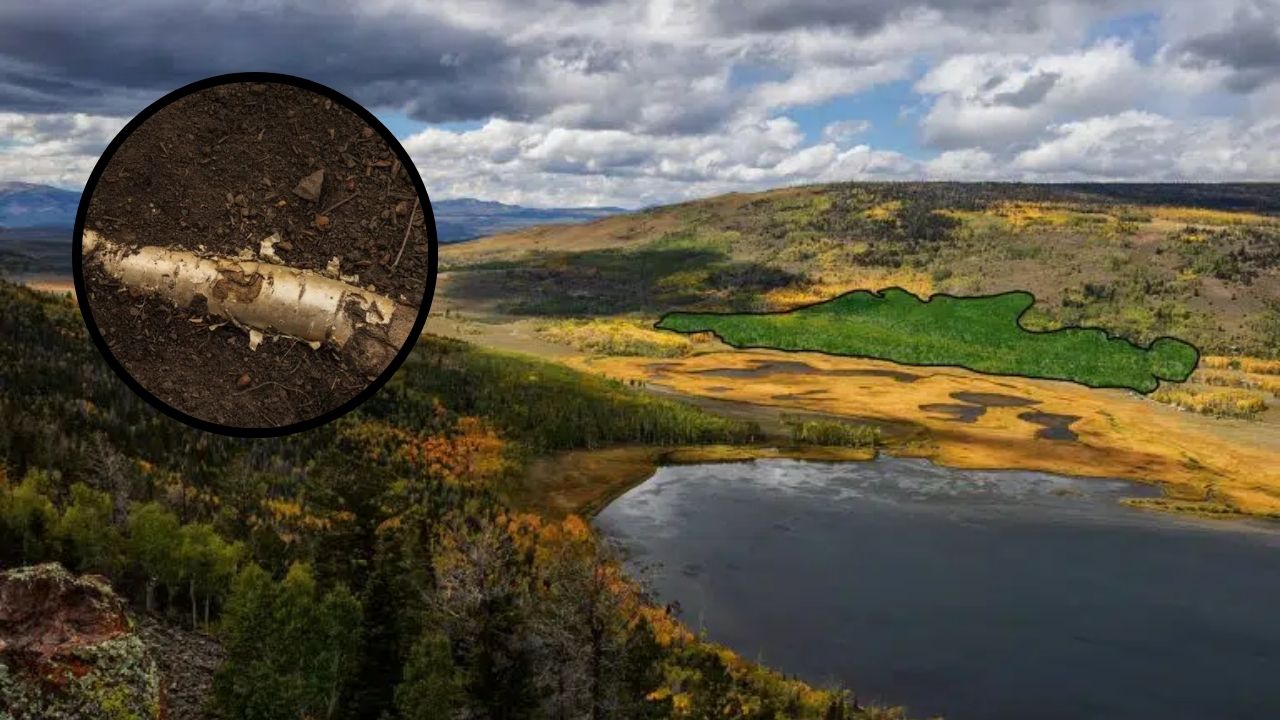
Pando is not just a biological curiosity; it is a keystone species that sustains an entire ecosystem. As one of the largest quaking aspen forests, it creates an oasis of biodiversity. Its relatively open canopy allows sunlight to reach the ground, nourishing a rich understory of grasses, wildflowers, and shrubs, which in turn provide food and habitat for a wide range of insects, birds, and small mammals. The collapse of Pando would not be the death of an individual, but the collapse of hundreds of other species that depend on it.
Beyond ecology, Pando has become a powerful cultural symbol of interconnection. The image of 47,000 trees that seem separated but share a single root, a single life, and a single destiny resonates deeply in a fragmented world. As noted by the Friends of Pando, the organism is a metaphor for community, where the health of the whole depends on the health of each part. Its current decline serves as a “canary in the coal mine”, reflecting global challenges of resource mismanagement and the consequences of disrupting fundamental ecological balances.
The story of Pando shows how human actions from decades ago can threaten an organism that has survived ice ages. Do you believe the solution is to actively manage animal populations, such as deer and elk, or should we only focus on protecting Pando with more fences? What is your opinion on this complex conservation dilemma? Leave your comment.





