Portuguese
  Spanish


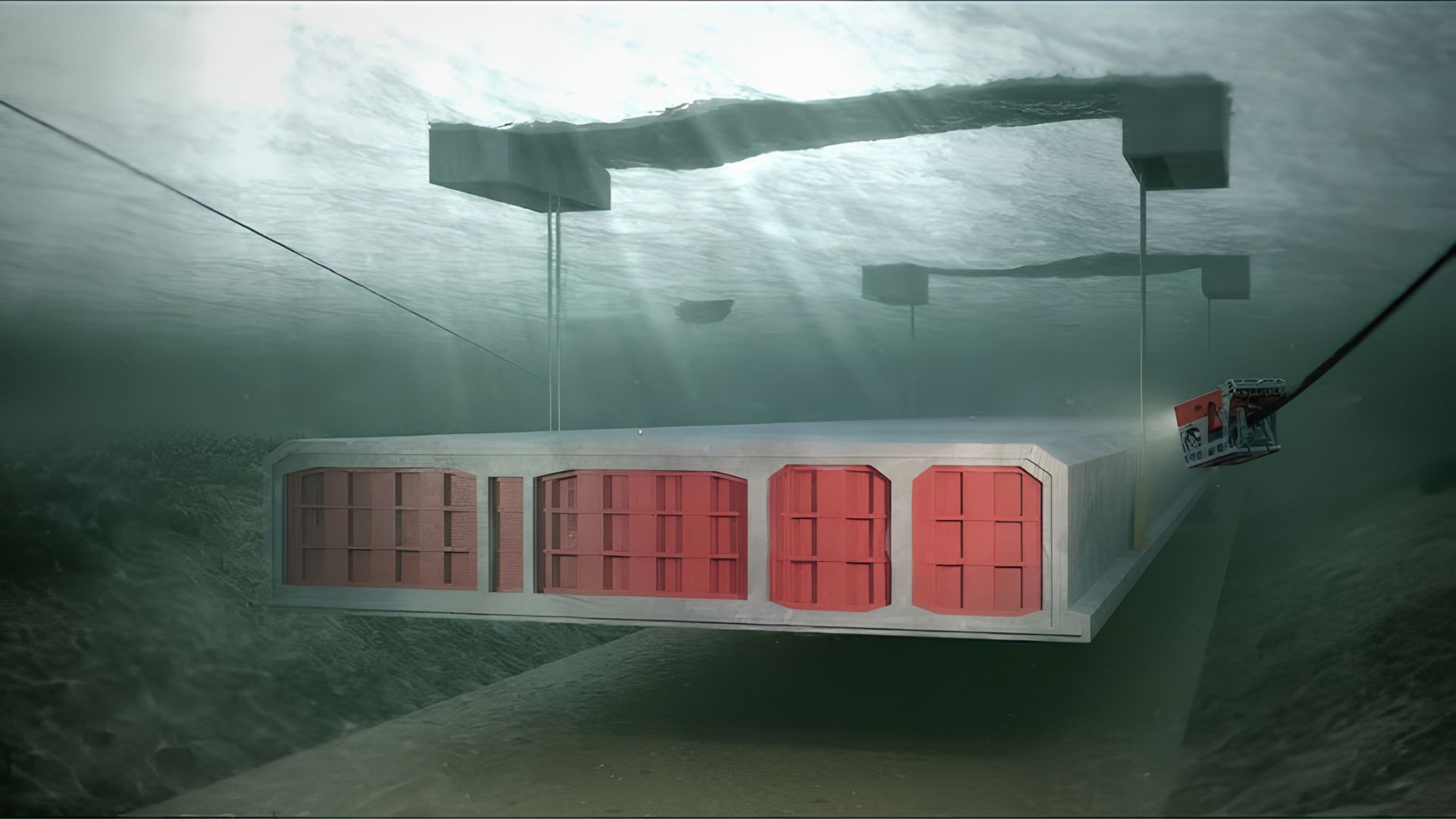

Fehmarnbelt will have 18 km under the Baltic Sea, 89 concrete elements, and a 10-minute car trip between Denmark and Germany.
The crossing between Rødbyhavn, in Denmark, and Puttgarden, in Germany, is transitioning from a ferry-dependent route to becoming one of the largest infrastructure projects in Europe. Instead of ferries, the two countries are building the Fehmarnbelt Tunnel, an immersed tunnel of 18 kilometers under the Baltic Sea, designed to be the largest in the world using this technology.
The technical choice also deviates from the more well-known model of tunnels excavated by tunnel boring machines. In Fehmarnbelt, engineers opted to manufacture huge concrete elements on land, tow them floating to the installation point, and then sink them precisely into an open trench on the seabed, connecting module by module until forming the final corridor.
Fehmarnbelt Tunnel will replace the ferry crossing in the Baltic and shorten the corridor between Scandinavia and Central Europe
Today, the sea crossing between Denmark and Germany takes about 45 minutes by ferry. When the tunnel becomes operational, the same route should drop to 10 minutes by car and 7 minutes by train, significantly shortening the connection between Scandinavia and continental Europe.
-
Low-Cost Concrete Panel House Goes Viral: Investor Reveals Prefabricated Kit Structure for Around $1,500, Assembled in 30 Days, with Plans for Rental and Resale Income

-
Polymeric Mortar Revolutionizes Brazilian Construction with Efficient, Clean Application and Uniform Finish

-
Biologist Builds 160m² Dream Home in Brazil for $32,000 Using Eco-Friendly Bricks, Achieving 67% Savings Through Smart Planning and Simple Solutions
-
Modular Home in Southern Brazil Offers Quick Assembly, Thermal Insulation, and Ready-to-Install Bathroom for $4,000



The impact is not limited to local travel. The fixed link was conceived as part of the European corridor connecting the north of the continent to central and southern markets, with a direct effect on logistics flows, rail transport, and economic integration between Denmark, Germany, and other countries in the continental network.
The change will be especially relevant for rail transport. According to Femern, the journey between Copenhagen and Hamburg should drop to about two and a half hours, significantly reducing the current time and making the axis more competitive for passengers and freight.
Submerged tunnel in the Baltic Sea will be assembled with 79 standard elements of 217 meters and 10 special elements
Although the project uses 89 structures in total, they are not all identical. Femern reports that the tunnel will be formed by 79 standard elements of 217 meters in length and by 10 special elements smaller, used to house technical facilities along the submerged connection.
Each standard element is produced in an industrial series and composed of nine segments molded on an assembly line. This logic allowed the construction to be transformed into a continuous manufacturing process, reducing part of the complexity that would exist if the entire structure depended solely on conventional execution at sea.


The standard elements are gigantic. According to Femern, each one weighs more than 73,500 tons and already leaves the factory with the necessary internal division to accommodate two road galleries, two railway galleries, and a central technical space.
First immersion of the Fehmarnbelt in May 2026 marked the beginning of the most delicate phase of the underwater work
The project reached its most symbolic milestone on May 7, 2026, when Femern announced the successful installation of the first element on the seabed.
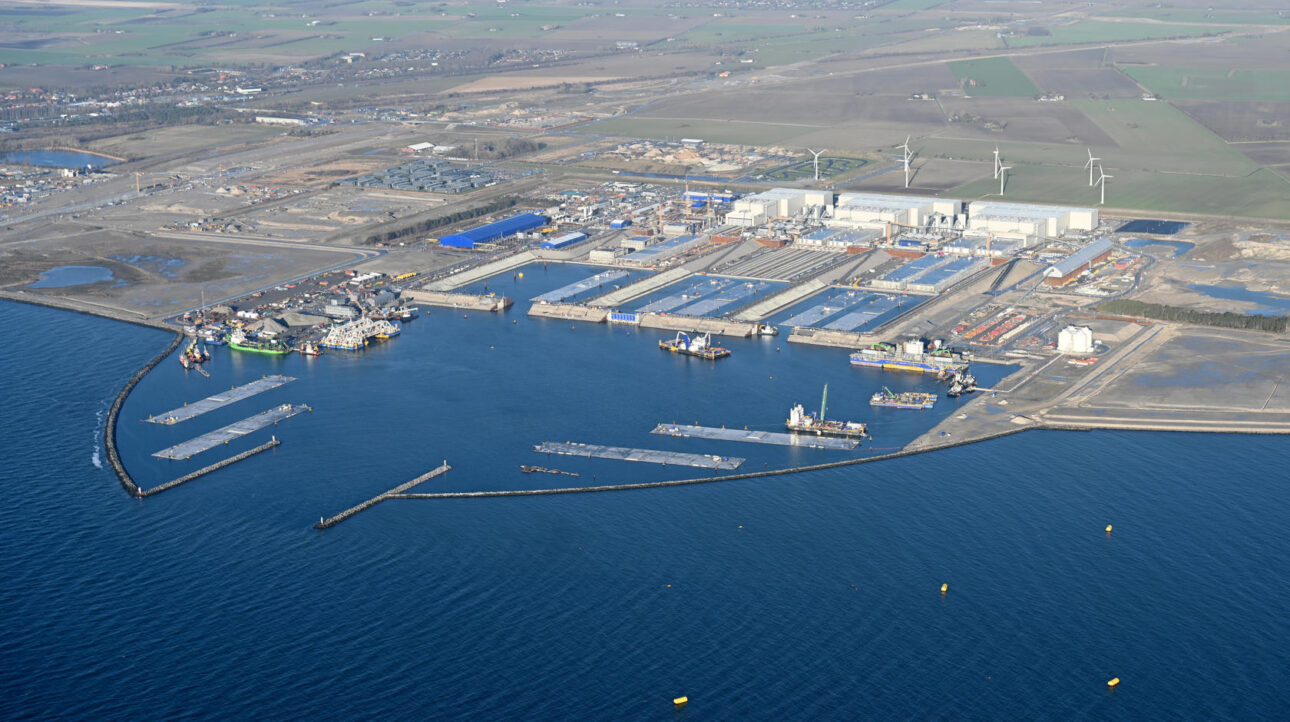
The operation began on the night of May 4, when the module left the factory’s work port in Rødbyhavn towed by five tugboats and the specialized vessel IVY.
Before the descent, the element received 4,500 additional tons of ballast concrete to reach the necessary weight for controlled immersion. After that, it was taken to the prepared trench on the Baltic seabed, lowered with precision, and connected to the Danish portal of the tunnel.
The installation does not end when the piece touches the seabed. After positioning, the element undergoes stabilization and protection stages with granular material around it, ensuring it remains secure and correctly seated in the underwater trench.
Factory built in Rødbyhavn transformed the immersed tunnel into a heavy engineering assembly line
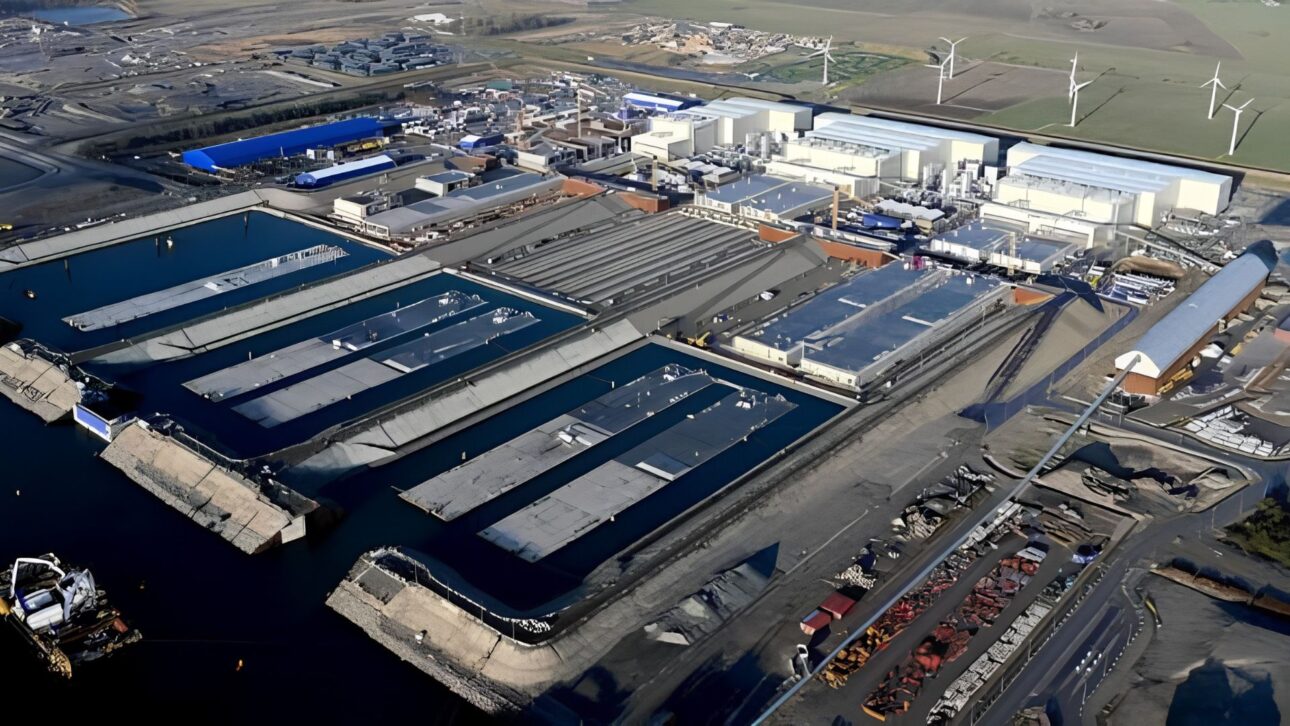
The construction of the Fehmarnbelt required its own industrial infrastructure in Rødbyhavn, where the tunnel elements are being produced.
Femern states that the factory operates with six production lines, of which five are dedicated to standard elements and one to special modules with technical installations.
It was at this plant that the work transitioned from just excavation to also heavy manufacturing. Instead of molding everything directly at sea, the project came to rely on serial production on land, with segmental concreting, internal movement of modules, and subsequent flotation of the finished elements to the work port.

This method was decisive in enabling the largest immersed tunnel on the planet. The combination of a dedicated factory, modular production, and installation in a trench at the sea bottom made it possible to build a road and rail link of this scale without resorting to the classic deep drilling model with tunnel boring machines.
Fehmarnbelt is set to change European logistics with a direct road and rail corridor between Denmark and Germany
Once completed, the tunnel will house a four-lane highway and two electrified railway lines, reinforcing the physical connection between southern Scandinavia and the major industrial markets of Europe. The structure is designed to increase capacity, reduce travel time, and decrease reliance on the ferry for crossing the strait.
For freight transport, the gain will be especially strategic. By shortening the link between Denmark and Germany, the Fehmarnbelt is likely to redistribute rail and road flows and make the corridor between the Nordic countries and central and southern regions of the continent more direct.
The project encapsulates an engineering and logistics logic simultaneously. Denmark is not just sinking giant concrete modules in the Baltic but building a new backbone of continental circulation, capable of altering for decades the way people, trains, and goods cross this part of Europe.