






 Portuguese
  Spanish


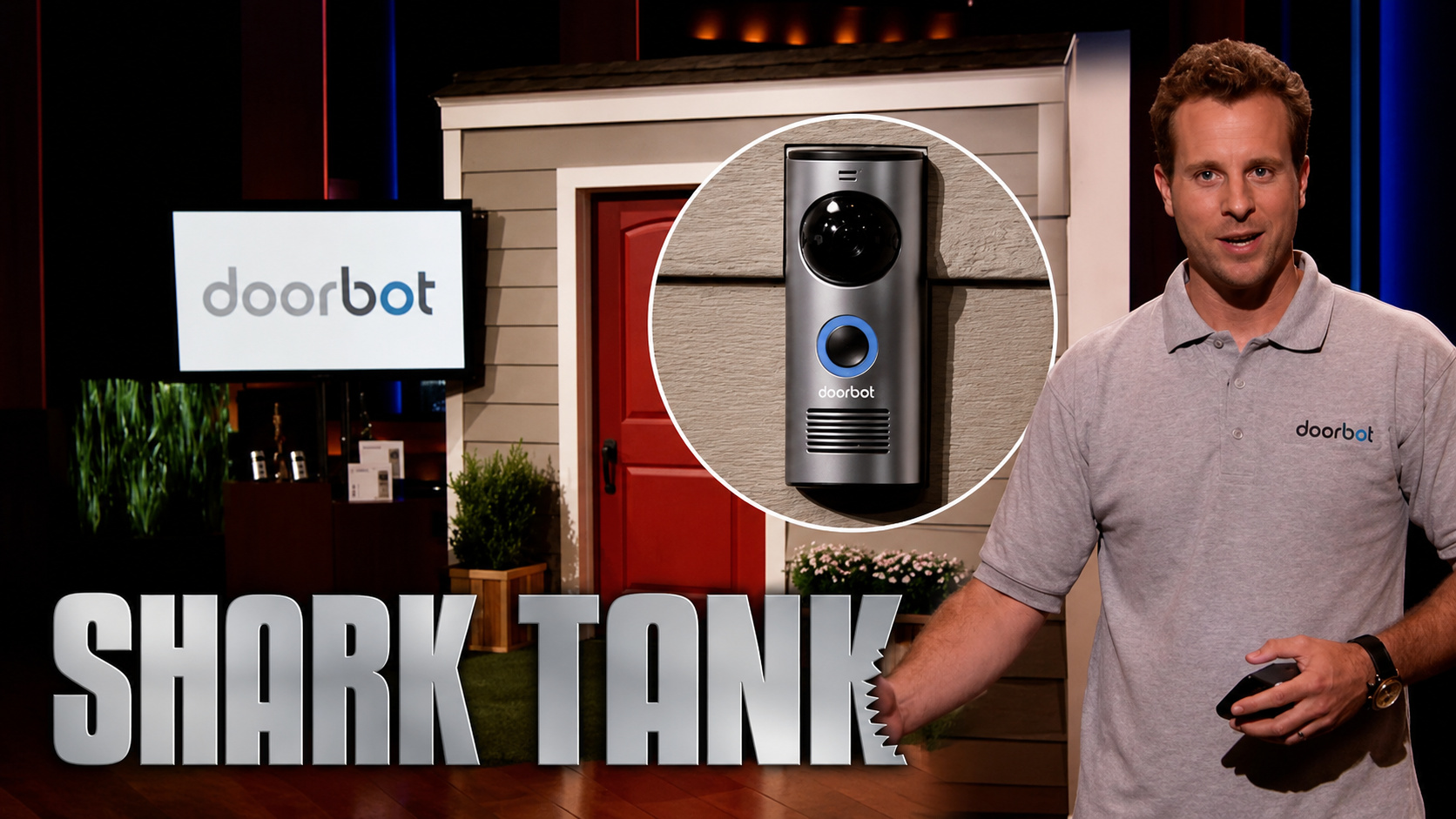

Jamie Siminoff created DoorBot in the garage, was rejected on Shark Tank, transformed the project into Ring, and sold the company to Amazon.
Ring, one of the most well-known brands of smart doorbells and connected home cameras, was born from a simple problem at home. Jamie Siminoff was working in the garage when he realized he couldn’t hear the doorbell ring. Instead of treating it as a common annoyance, he saw an opportunity: to create a doorbell that could connect to the phone via Wi-Fi.
According to an Entrepreneur report based on a conversation with Jamie Siminoff himself, the idea came up in 2011 when he was working in the garage and couldn’t hear the doorbell. Having just bought an iPhone, he imagined there should already be a doorbell connected to the phone on the market, but found nothing similar.
That’s when Siminoff decided to build his own prototype. According to Entrepreneur, he took a camera, improvised components, and created an invention called DoorBot. The device was installed at the front door of the house and allowed him to see who was calling through the phone.
-
Scientists create “electric reefs” on the seabed with low voltage, causing minerals to stick like limestone, and test a solution capable of rebuilding natural barriers against coastal erosion before the ocean swallows entire beaches.

-
Brazil has 100 million hectares of degraded pastures that can become forest, carbon, and income, while Microsoft, Meta, Nestlé, Vale, and Vivo invest in forest restoration; however, there is still a lack of seedlings, operators, and guarantees to turn the billion-dollar promise into standing forest in the field.

-
Goodbye to petroleum-dependent tires: Continental creates a tire with dandelion rubber, rice husk silica, and recycled PET, reducing weight by up to 40% and showing how even tires can enter the circular economy.
-
While digging a trench in his own garden to lay cables, a man stumbled upon a “heavy and magnetic stone,” tossed the rock aside, and ignored it for 31 years, until a laboratory revealed it was the largest stony meteorite ever found in Germany: over 30 kg and 4.5 billion years old.


DoorBot was born as a domestic solution but became a residential security idea
The initial goal was to solve a personal problem: knowing who was ringing the doorbell while he was working. But the perception changed when Siminoff’s wife said the device made her feel safer at home.
According to Entrepreneur, this was the moment he realized it wasn’t just a connected doorbell, but a new way of thinking about home security.


The idea was simple and powerful. The homeowner could see, hear, and speak with someone at the door even when away from home. This transformed the doorbell into a kind of “caller ID” for the door, with video and real-time communication.
According to Investopedia, when Jamie Siminoff appeared on Shark Tank in 2013, he presented DoorBot as a doorbell with an integrated camera, capable of sending alerts and images directly to the owner’s smartphone. The user could see and talk to whoever was at the door or simply ignore the visit.
Shark Tank rejected the project that would later become Ring
DoorBot arrived at Shark Tank in 2013 with an ambitious proposal. According to Investopedia, Jamie Siminoff asked for $700,000 for 10% of the company, valuing the business at $7 million. At the time, the project was already recording about $1 million in annual sales, but still failed to convince the investors.
The publication reports that only Kevin O’Leary made an offer, but in the form of a loan, with participation in future sales and part of the company’s equity. Siminoff declined the offer and left the show without a deal.
The rejection, however, did not destroy the business. On the contrary. The national exposure helped to make the product known. According to Investopedia, after DoorBot appeared on Shark Tank, sales grew by another $5 million, and the company began to attract heavyweight investors.
DoorBot became Ring and started targeting a much larger market
After appearing on Shark Tank, DoorBot was repositioned and rebranded as Ring. The new name helped to better communicate the product’s proposition: a smart, connected doorbell aimed at home security.

According to an Inc. report, the rejection on Shark Tank ended up being just part of the story. The publication noted that the company began to grow, attracted investor interest, and years later, was already appearing as Ring, with 1,300 employees, 10 products, and presence in 1,600 stores.
The rebranding also helped to broaden the business vision. Ring stopped being just a doorbell with a camera and started building a home security ecosystem, with connected devices, cameras, sensors, and integration with other smart products.
This point explains why Amazon became interested in the project. Ring was not just selling a device. It occupied the front door of homes, a strategic space for security, deliveries, monitoring, and home automation.
Amazon bought Ring in a deal valued at over $1 billion
The big outcome came in 2018. According to a Reuters report, Amazon agreed to buy Ring in a deal that valued the company at over $1 billion, according to a source familiar with the transaction. Amazon did not officially disclose the financial terms of the purchase.
Reuters highlighted that the acquisition was a bet by Amazon on home security and solutions related to in-home deliveries. The publication also pointed out that Ring could integrate with products like Alexa and smart camera and lock systems.

In April 2018, Amazon itself officially announced the completion of the acquisition of Ring. In the statement, the company said that the two companies would start working together to accelerate Ring’s mission of reducing crime in neighborhoods with more affordable home security products and services.
In the same statement, Jamie Siminoff stated that the mission to reduce crime in neighborhoods was at the heart of everything Ring did. Amazon also highlighted that the company’s products allowed customers to see, hear, and speak with people on their properties from anywhere.
The rejected invention became a symbol of a billion-dollar turnaround
The journey of Ring became one of the most famous stories of rejection turned into success. A product created because an inventor couldn’t hear the doorbell in the garage turned into a billion-dollar company, changed the way millions of people monitor their front door, and ended up being bought by one of the largest technology companies in the world.
The case shows that rejection on Shark Tank was not the end of DoorBot. It was just a chapter of public exposure.
After the show, Siminoff continued refining the product, improving the brand, attracting investment, and expanding the company until transforming Ring into a global reference for connected home security.
From a garage to a billion-dollar acquisition, Jamie Siminoff proved that a simple domestic pain can turn into a gigantic business when it finds technology, execution, and market at the right time. The doorbell that started as a solution to see who was at the door ended up becoming one of Amazon’s most strategic purchases in the smart home sector.


