Portuguese
  Spanish


While renovating the basement of his own house in Corbeil-Essonnes, France, a resident stumbled upon a skeleton and called in specialists. The excavation revealed a seven-century-old cemetery with 38 graves and ten plaster sarcophagi, used from the end of the Roman Antiquity to the Middle Ages.
A simple basement renovation turned into one of the most curious archaeological discoveries in the outskirts of Paris. According to Newsweek magazine and the website Ancient Origins, a resident of Corbeil-Essonnes, France, accidentally found a human skeleton while working in the property’s basement, and what seemed like an isolated find actually revealed dozens of bodies buried for centuries.
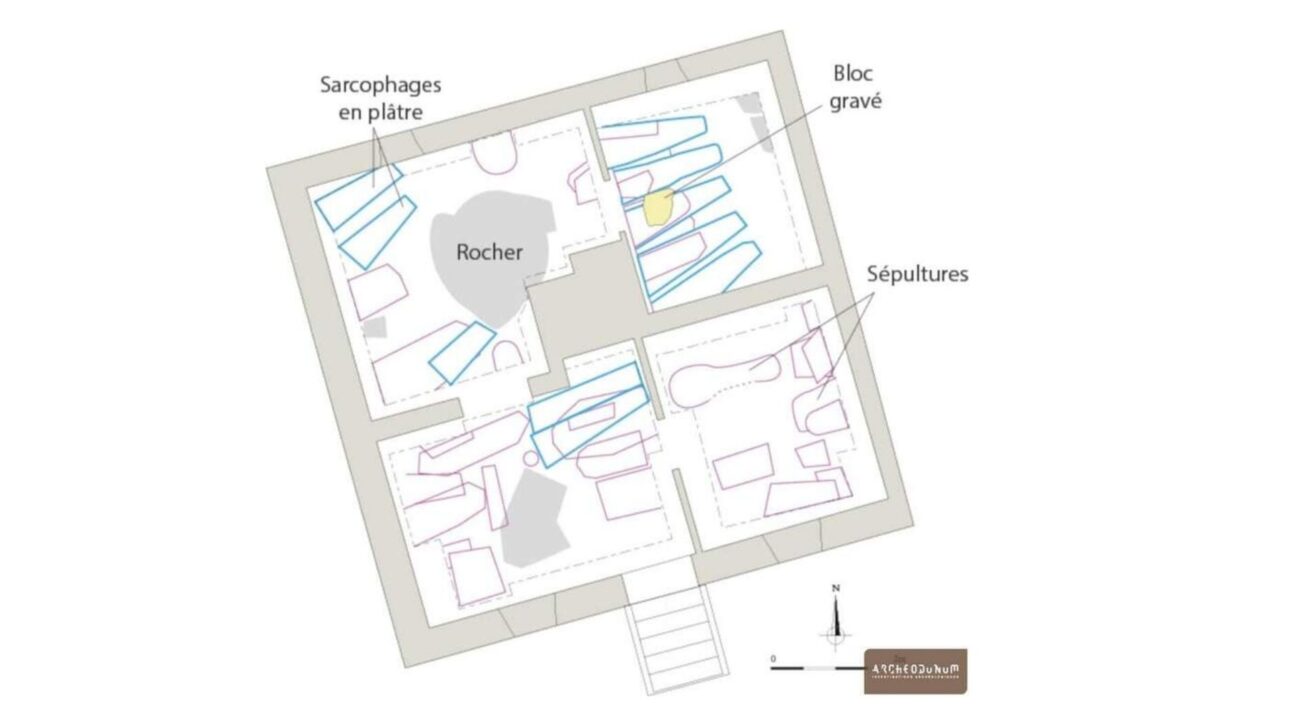
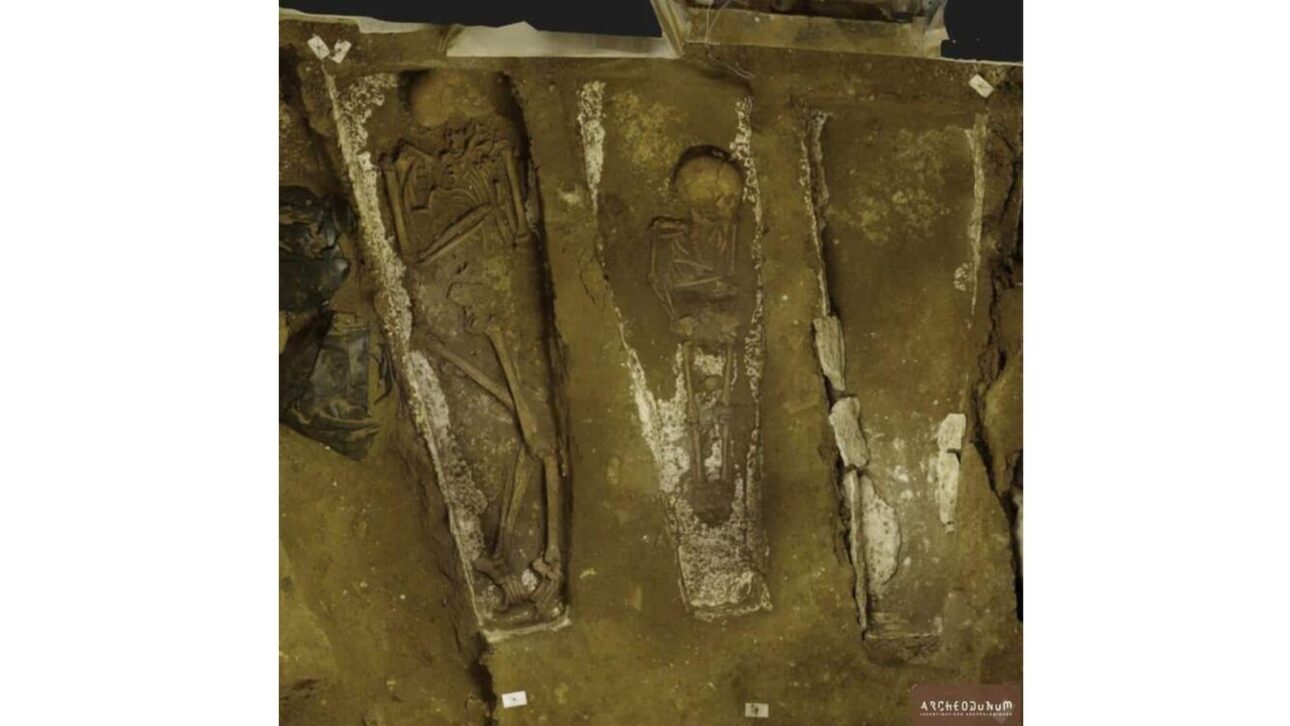
The subsequent excavation, carried out in the winter of 2023-2024, unearthed 38 graves beneath the house, including ten plaster sarcophagi. The burials, dated between the 3rd and 10th centuries, are part of an ancient cemetery that remained hidden under the basement’s dirt floor for over a thousand years.
A routine renovation that turned into an archaeological excavation
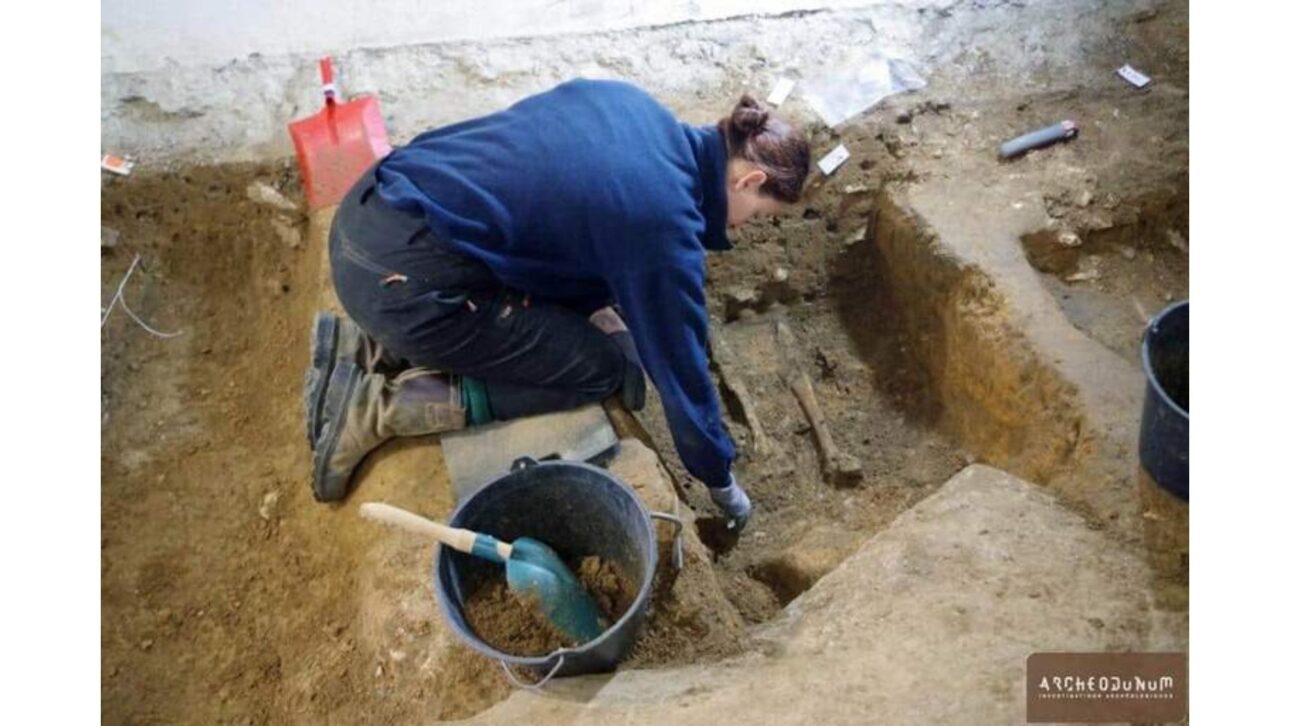
It all started with a home renovation. While renovating the basement of his own house in the Montconseil district, in Corbeil-Essonnes, a suburb south of Paris, the owner came face to face with a human skeleton on the dirt floor. Instead of ignoring it, he called in the specialists, paving the way for a preventive archaeology effort.
-
British couple lifts the floorboards of the hallway in the “dream house” just looking for a pipe and finds an entire hidden floor beneath the flooring, removes more than 70 tons of earth, and gains almost 40 m² and two new rooms that should greatly increase the property’s value.

-
Designed to navigate without a fixed crew, the new Zeelander 8 Solea combines 24 meters of luxury, 4,000 hp of power, a speed of 40 knots, and a range of up to 2,700 nautical miles in a yacht created to transform the owner’s experience at sea.
-
Scientists will live at the bottom of the sea in an “underwater house” at a depth of 17 meters, where up to 4 divers will be able to investigate the ocean for longer and study fragile samples before decompression destroys their secrets.

-
Retiree suspects for over 20 years a strange hole in the living room floor, digs for three days with a bucket and rope, and uncovers a 10-meter medieval well from the 16th century under his own sofa, also unearthing an ancient sword, and covers everything with a glass trapdoor and lighting.


The excavation was carried out by the company Archeodunum during the winter of 2023-2024. What was supposed to be a common renovation ended up revealing much more than the resident could have imagined beneath his own feet.
This type of intervention is not uncommon in France. When construction work encounters traces of the past, preventive archaeology steps in, which halts the work to study and record the site before it is destroyed. This is exactly what ensured the preservation of this rare find.
38 graves hidden in 52 square meters
The numbers are impressive given the size of the space. In a cellar of just 52 square meters (about 560 square feet), divided into four rooms, archaeologists identified 38 graves under the earthen floor of the basement.
The graves were arranged in parallel rows, a clear indication of organization. These were not random burials, but rather part of a structured cemetery that occupied the area long before the house existed.
From the 3rd to the 10th century: a cemetery of seven centuries
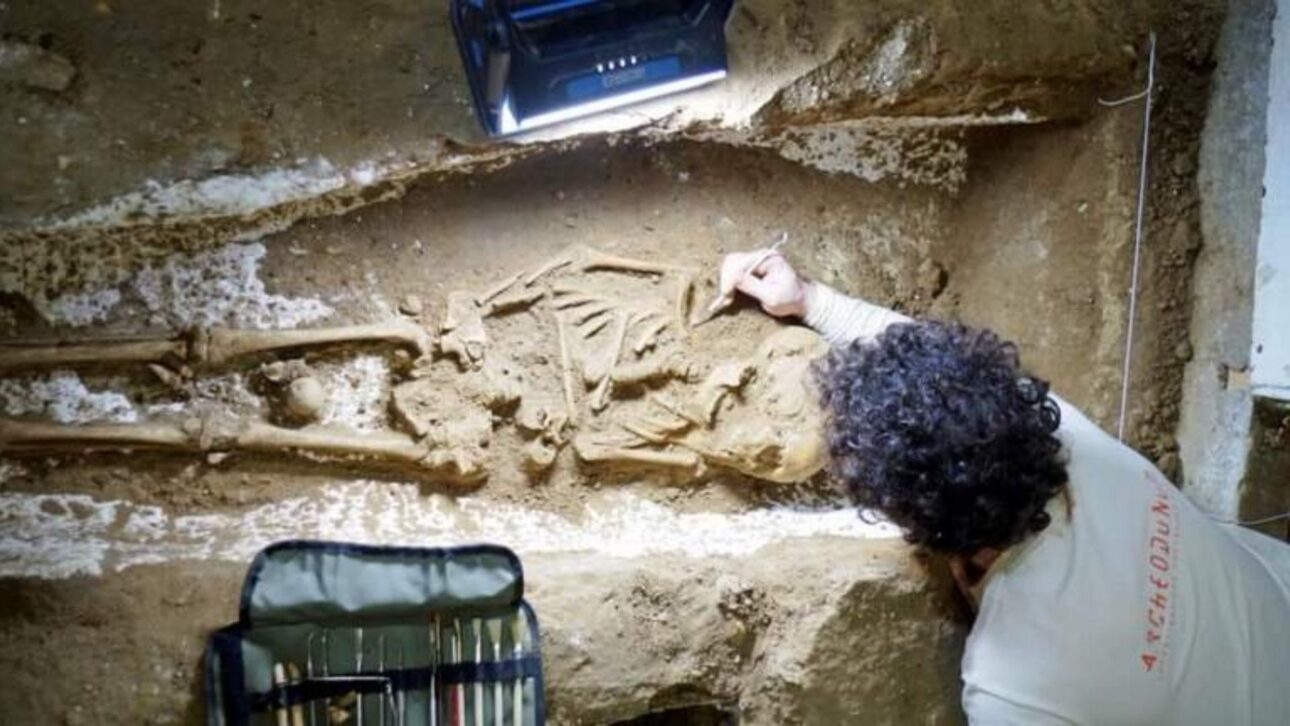
The dating is what makes the find so special. The graves indicate that the site functioned as a cemetery from the 3rd century, at the end of Antiquity, to the 10th century, already in the Middle Ages an interval of about seven hundred years of practically continuous use.
“The preliminary results allow us to better date the use of this cemetery, which spans seven centuries, between the end of Roman Antiquity and the first half of the Middle Ages, which is quite unusual”, said Clément Viau, archeoanthropologist at Archeodunum, to Newsweek. The oldest grave dates back to the 3rd century, in the late Roman period.
Ten plaster sarcophagi arranged in a fan shape
Among the 38 graves, ten drew special attention: they were plaster sarcophagi, typical of a very specific period. They date from the early Merovingian era, a phase of Frankish rule that extended from about 476 to 750.
During the excavation, archaeologists found the ten sarcophagi arranged side by side, in a fan shape, each with a single individual inside. Most had no decoration — a reflection of a very common funerary custom in what is now Île-de-France, the region surrounding Paris.
From Roman coffins to plaster tombs: how burials changed
The cemetery also tells the story of the transformation of funeral rites over the centuries. At the end of the Roman Empire, the dead in that region were usually buried lying on their backs, inside a wooden coffin placed in a deep grave.
With the beginning of the Middle Ages, around the year 500, practices changed. It was then that plaster sarcophagi began to be frequently adopted in the Paris region, the same tradition that now reappears, preserved, under the basement of the house in Corbeil-Essonnes.
The lost chapel of Notre-Dame-des-Champs
The existence of an ancient cemetery in the area had long been suspected. Since the 19th century, several plaster sarcophagi had already been found there, and scholars of the time associated the burials with the chapel of Notre-Dame-des-Champs, supposedly erected in the 7th century on the site of an ancient pagan temple dedicated to a spring.
The problem is that no trace of these constructions has ever been found, and the tombs in the region had never undergone a rigorous scientific study until now. The new evidence suggests that the cemetery is even older than was imagined in the 19th century, with the oldest burials predating the supposed construction of the chapel.
What the bones will still reveal
The discovery is far from over. The human remains found in the basement will now be analyzed in the laboratory to determine the sex of the individuals, the age at which they died, and the conditions in which they lived.
The very context of the burials, such as the positioning of the bones, will also be studied. The expectation is that all this will help to better understand the extent of the cemetery, the funerary practices, and the way of life of the populations that inhabited the region more than a thousand years ago.
Why finds like this are so rare
Finding an entire cemetery under a house is something exceptional. “It is not common to find human remains under a house, because usually the construction destroys them, but it can happen sometimes when circumstances are favorable”, explained Viau.
It was precisely this set of favorable factors that preserved 38 graves and seven centuries of history just below the dirt floor. Proof that sometimes the distant past is much closer than we imagine, requiring only a renovation to bring it back to light.
From a trivial renovation to a cemetery that began to be used about 1,700 years ago, the discovery in the basement of this French house shows how the ground we walk on can hold secrets of centuries.
And you, would you have the courage to continue living above a medieval cemetery? What would you do if you found something like this under your house? Tell us in the comments and tag that friend who is passionate about history and archaeology.