Portuguese
  Spanish


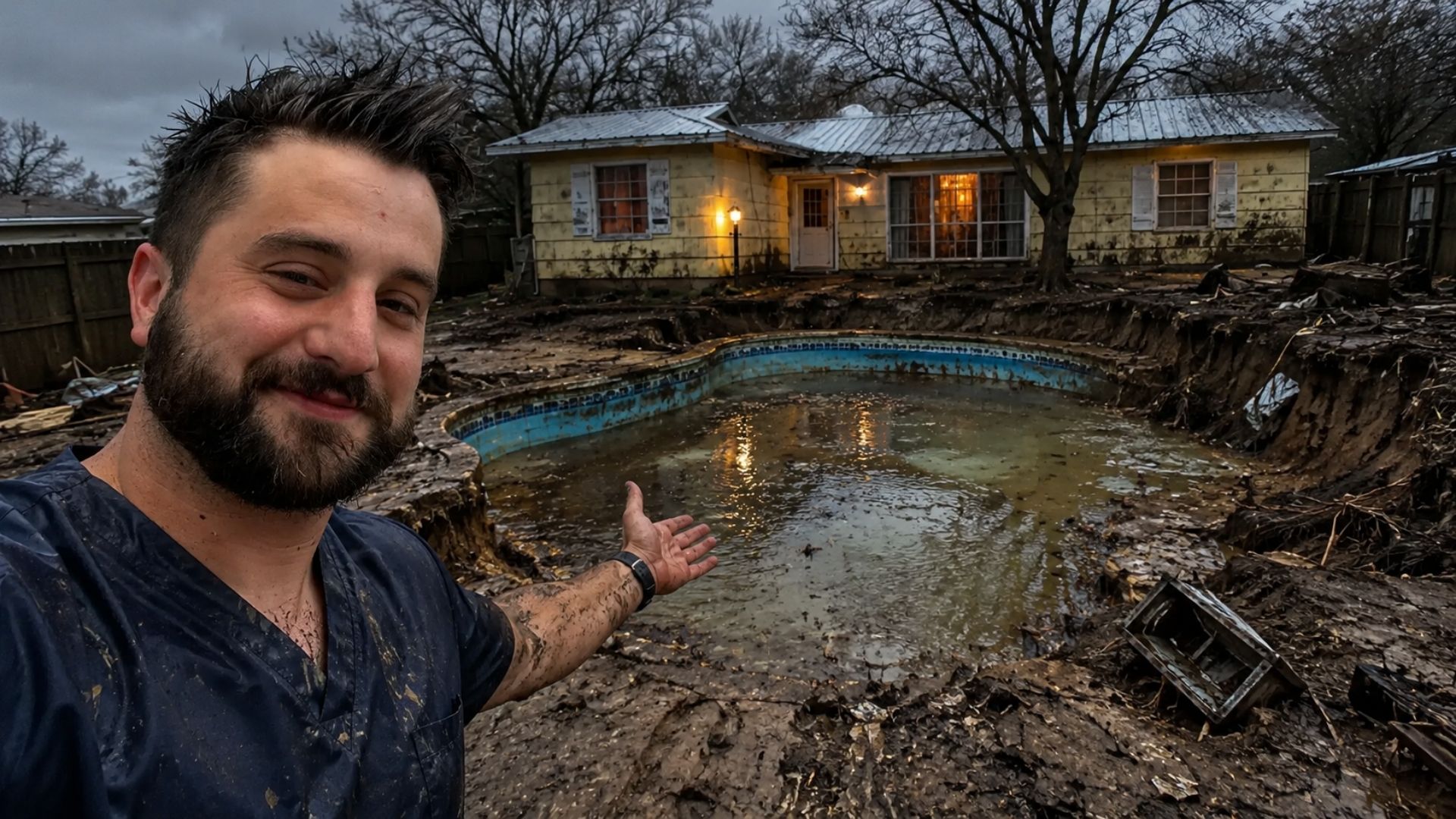

John Reynolds, a 35-year-old nurse from Mineral Wells (Texas), bought a 1955 house almost condemned to demolition to renovate and resell. Three months later, a heavy rain revealed a 40,000-gallon pool hidden under the trash in the backyard, changing all his plans.
When he paid $20,000 for a 1955 house that the county council already had lined up for demolition, the nurse John Reynolds, 35, a resident of Mineral Wells, Texas, only thought about renovating the deteriorated property and reselling it. The building, acquired around 2018, had been abandoned for years: it was occupied by a compulsive hoarder for two decades and had been vacant for over a year after the previous owner’s death.
What he did not imagine was that the backyard hid a treasure. About three months after the purchase, a storm filled to the brim a buried 40,000-gallon pool, hidden under trash and debris. It was the beginning of a turnaround that, reported by the British newspaper The Sun in September 2020, turned a risky investment into what Reynolds calls a “winning lottery ticket.”
The house of 100 cats and accumulated trash
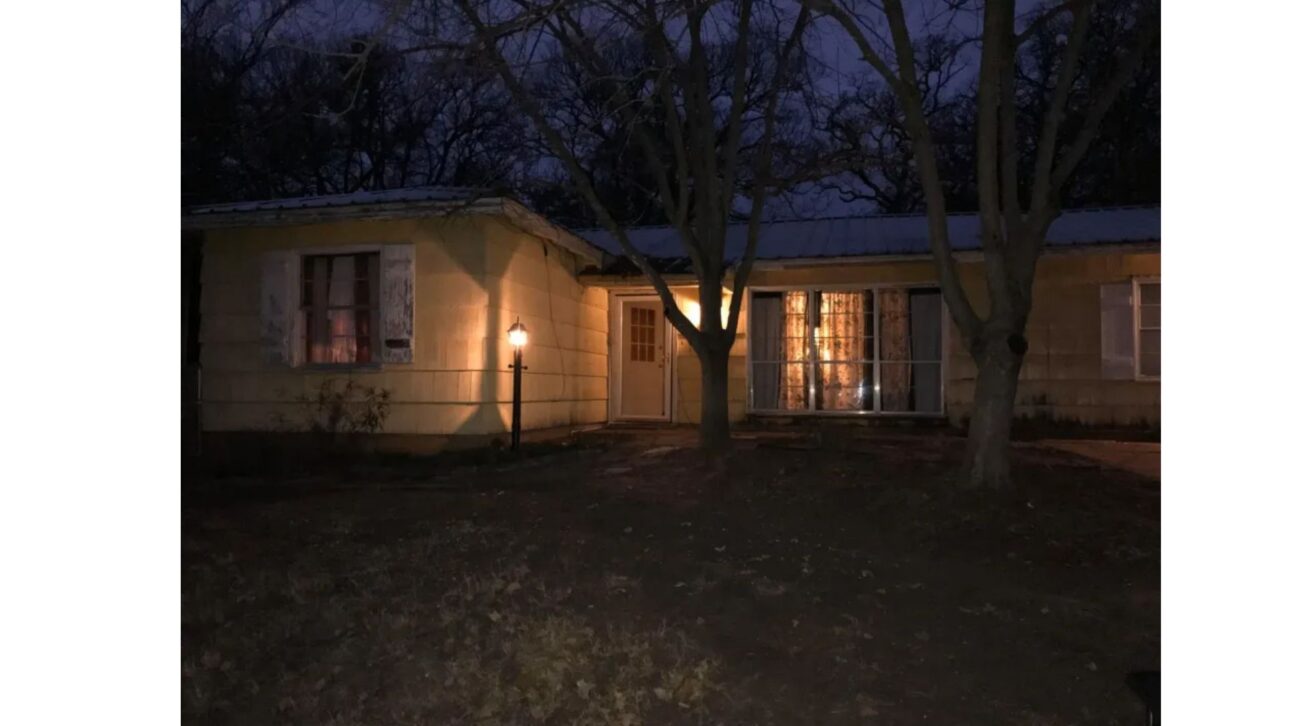
Before becoming a story of luck, the 1955 house was a picture of abandonment. According to Reynolds, the property was inhabited for two decades by a person with hoarding disorder, which left the rooms piled with trash and the backyard turned into a tangle of weeds and debris.
-
The United Kingdom is transforming dog feces left on trails into gas to light a streetlamp through an unlikely and surprising project that shows how even one of the most rejected wastes in cities can generate energy.

-
Goodbye traditional Air Fryer: Philips surprises with a version featuring two baskets, steam cooking, self-cleaning, 9-liter capacity, recipe synchronization, and technology that makes food crispy on the outside and soft on the inside.
-
Russia has built a colossal radio telescope nearly 600 meters in size, composed of 895 metal panels in a gigantic ring, which uses the Earth’s rotation to capture invisible signals coming from the Sun and the most distant regions of the universe.
-
The United Kingdom launched 146 giant concrete coffins into the sea, towed the structures through the English Channel, and erected a colossal artificial port in front of the Normandy beaches in a few days.


There were also about 100 wild cats roaming the property when he took over the keys, just weeks before the demolition machine was set to roll in.
Faced with chaos, the nurse did what any investor would do: prioritized the house and left the garden for later. Even so, one detail bothered him: a part of the land was always waterlogged, “swampy,” even though the city went weeks without rain. He attributed it to some drainage problem and continued with the renovation, unaware of what lay beneath the mud.
A storm and a call from the neighbor
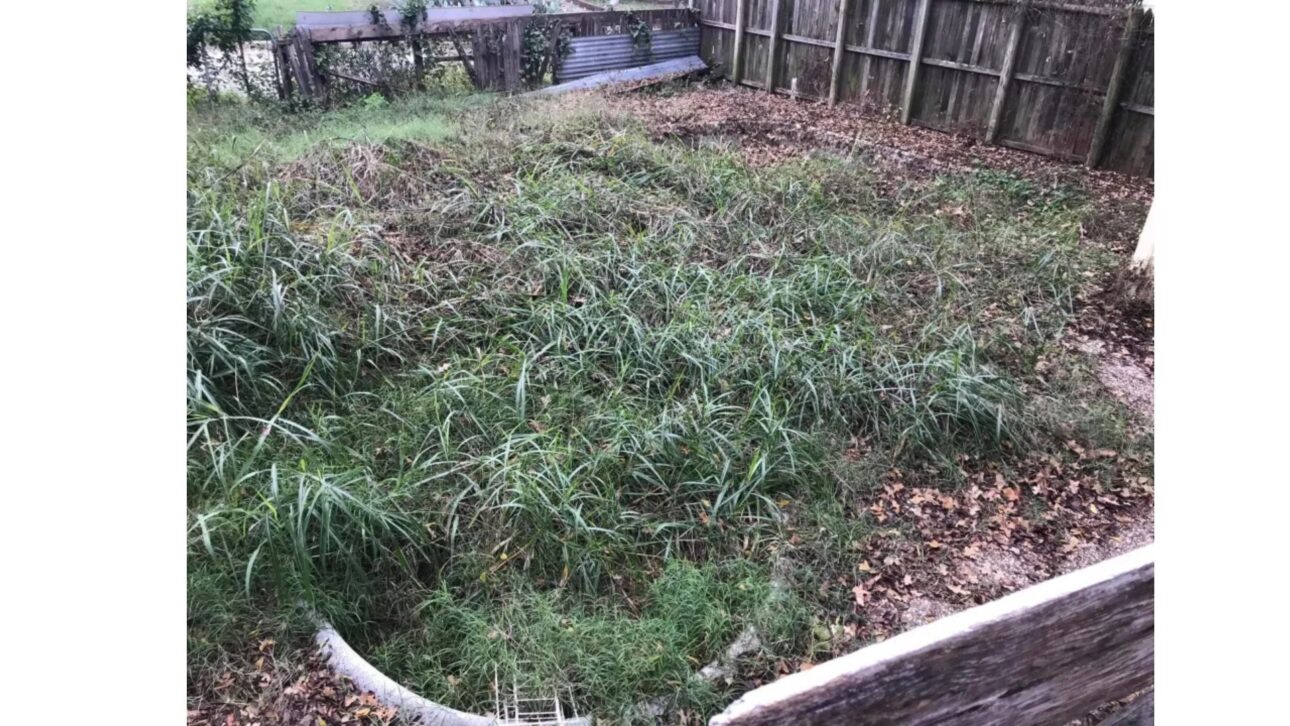
Credit: Mercury Press
The turning point came with bad weather. When a strong storm finally hit, the water displaced some of the scrap and debris and filled the old structure to the brim. Reynolds had noticed a piece of concrete on the surface before, but thought it was a patio remnant or another flower bed — never the edge of a pool.
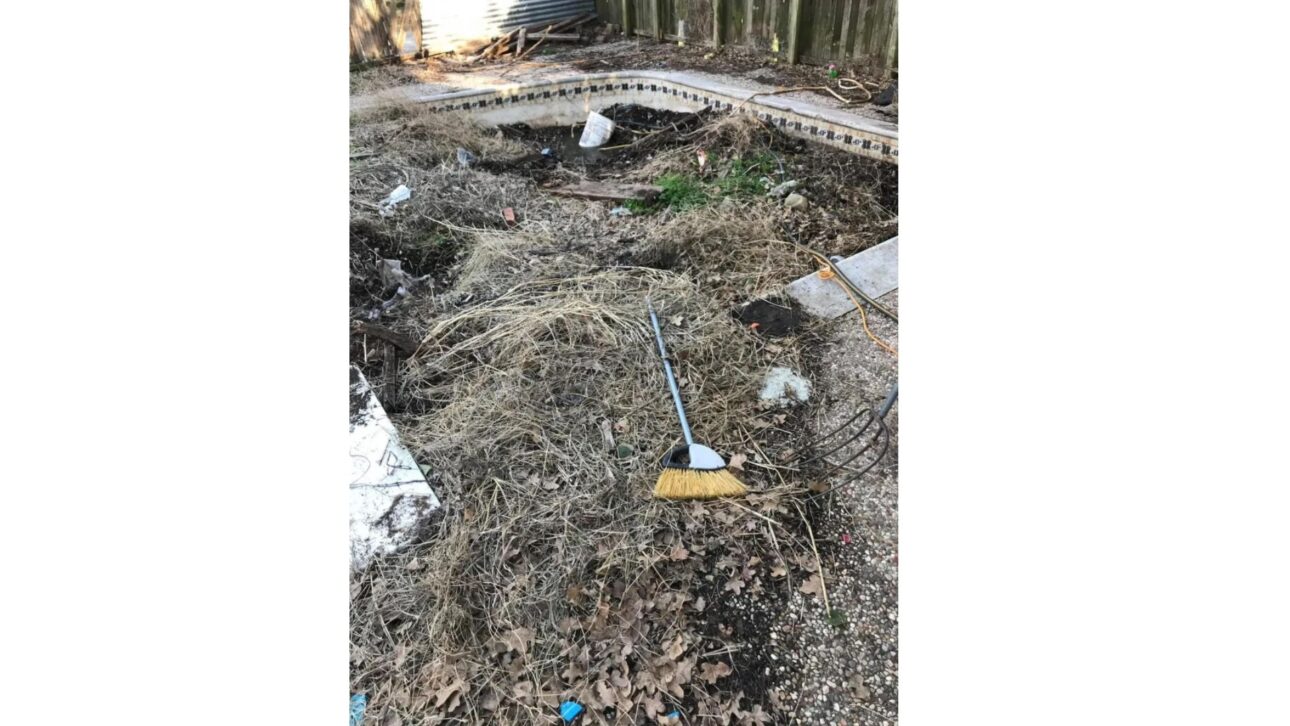
Credit: Mercury Press
The realization only came with a phone call. It was the neighbor who informed him: asked if he had seen the pool. “I said: I don’t know what you’re talking about, I don’t have a pool. And he replied: yes, you do,” recalls the nurse. When he went outside to check, he was faced with the waterline and the stagnant water beside it. “I was in shock,” he sums up, about the moment he realized that the backyard had been hiding a whole buried pool for years.
US$ 10,000 to recover what would cost US$ 160,000
Credit: Mercury Press
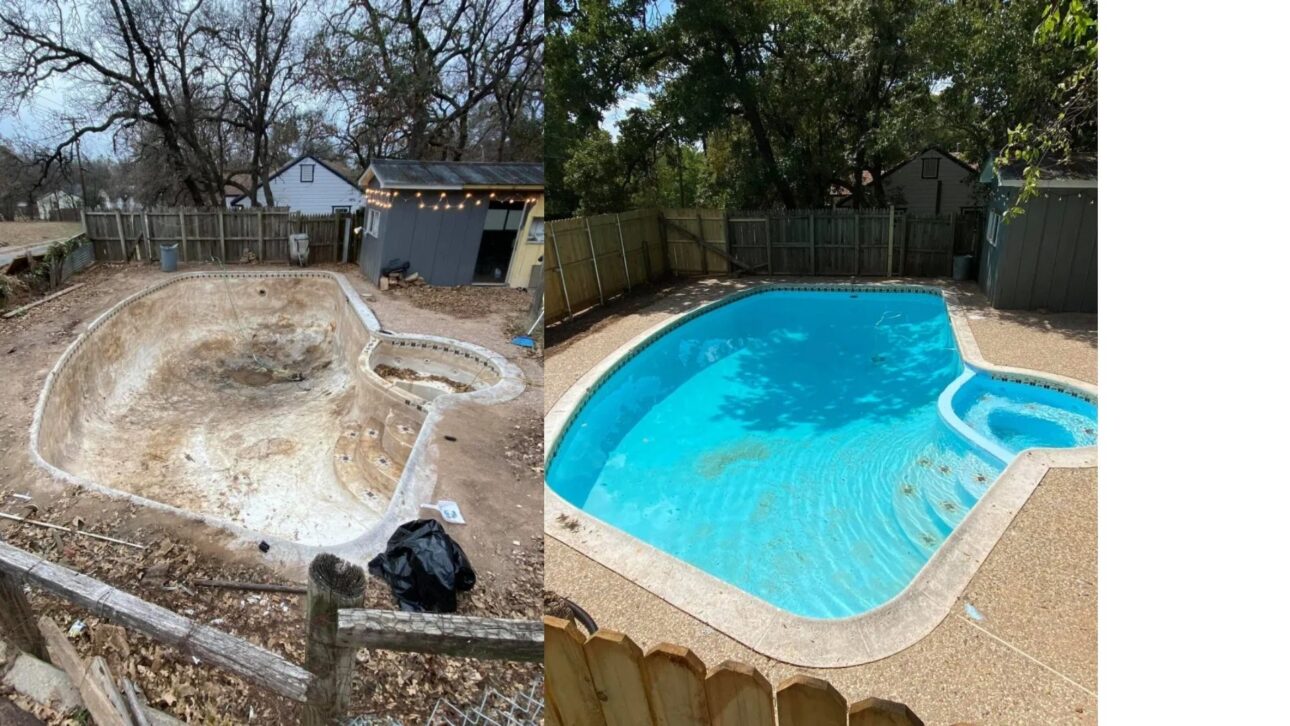
The hidden structure was not small: a 40,000-gallon pool (about 151,000 liters) and 32 by 17 feet (approximately 9.75 by 5.18 meters). Before thinking of clean water, Reynolds had to remove old furniture and even parts of old cars that had been thrown in there over the years of neglect.
Then came the hard work, done by himself. About $10,000 was spent to fix leaks, clean, repaint, and refill the pool a fraction of the $160,000 that, according to the owner himself, it would cost to build an equivalent structure today. In total, the house underwent 18 months of renovations to regain its former splendor.
From investment to home: the house he no longer wants to sell
The initial plan was clear: renovate and resell. But the pool changed the script. “I bought it as an investment, intending to renovate and resell, but it held so many surprises for me that I don’t know if I can part with it,” admits Reynolds, who now uses the pool every day, for hours on end, alongside friends.
The outcome tastes like a reward. The 1955 house, bought for $20,000 on the brink of demolition, is now worth about $220,000 — and the nurse decided to keep it. “I never imagined, not in a million years, when I bought the property, that one day I would be swimming in my own pool,” he says. “You couldn’t wish for a greater reward in your own backyard.”
John Reynolds’ story is the kind of gamble that almost went wrong: a 1955 house falling apart, full of trash and cats, just steps away from demolition, hid in the backyard a pool that became the best room of the property.
Would you have the courage to buy an abandoned property like this in the hope of finding a “treasure” or do you think it’s too risky to bet on what no one wants? Tell us in the comments here.