Portuguese
  Spanish


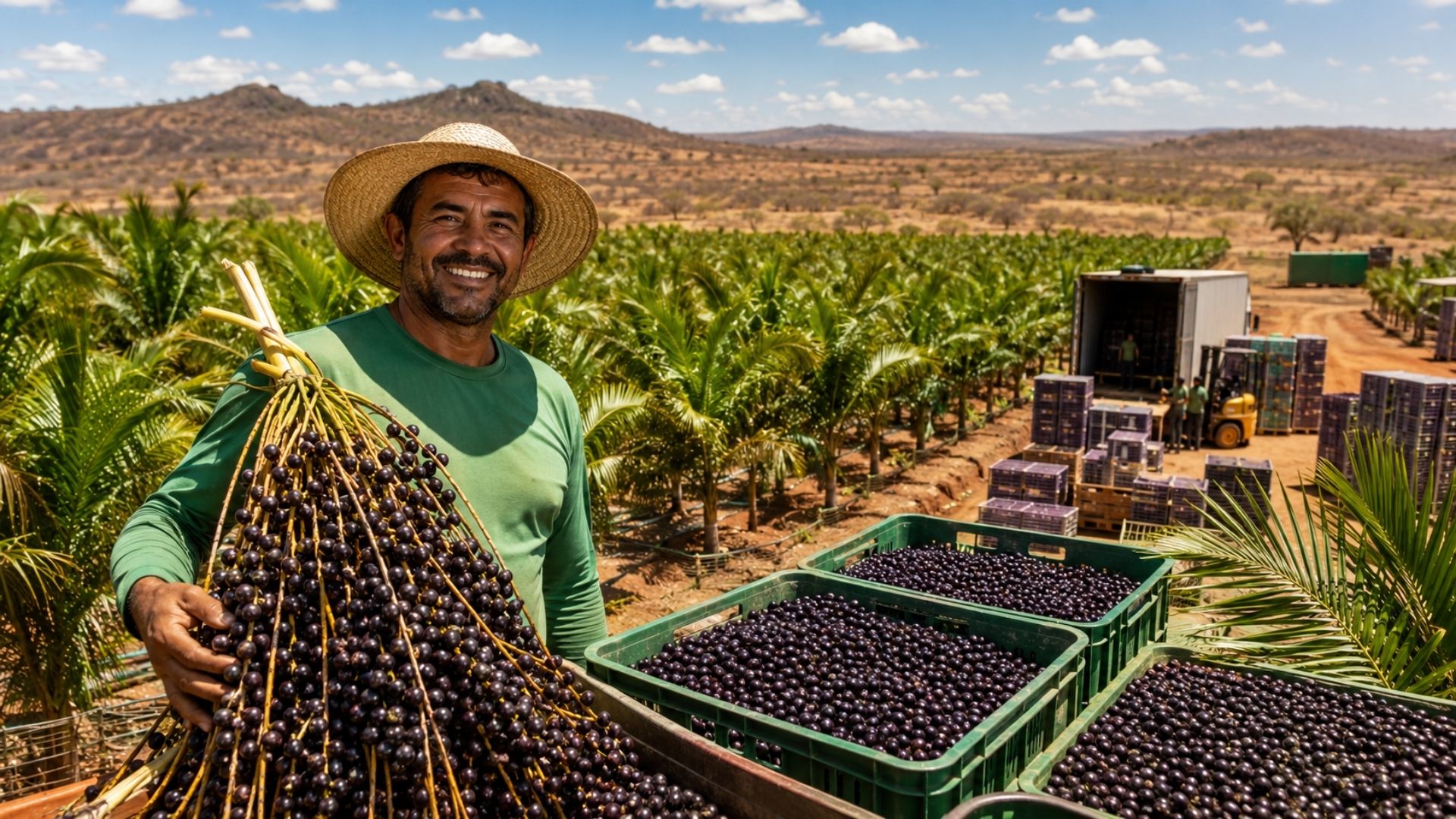

Pioneira Agrícola, from Touros and Pureza (RN), expanded from 20 to almost 80 hectares of açaí since 2016, processes about 350 tons of fruit per harvest and plans to export half of the production in 2025/2026 with Kuwait as the main destination, alongside Italy and the Netherlands.
When he decided, in 2016, to switch from traditional agriculture to a venture that almost no one took seriously, producer Rodrigo Moura Pires da Cunha and partners Daniel França and Carlos Frederico chose an unlikely path: planting açaí on the coast of Rio Grande do Norte, thousands of kilometers from the Amazon. Almost a decade later, Pioneira Agrícola, with lands in Touros and Pureza, expanded from 20 to almost 80 hectares and became an agribusiness case that already crosses borders.
According to information released by the Tribuna do Norte portal, the trajectory has clear dates: the first harvest came in 2020, the processing industry opened in 2021 and, at the end of 2024, the company closed the contract that would change its horizon, the export of pulp to Kuwait. Today, the company plans to send half of the 2025/2026 harvest production abroad and aims high: reaching 150 hectares by 2027.
Why açaí “caught on” where almost no one expected
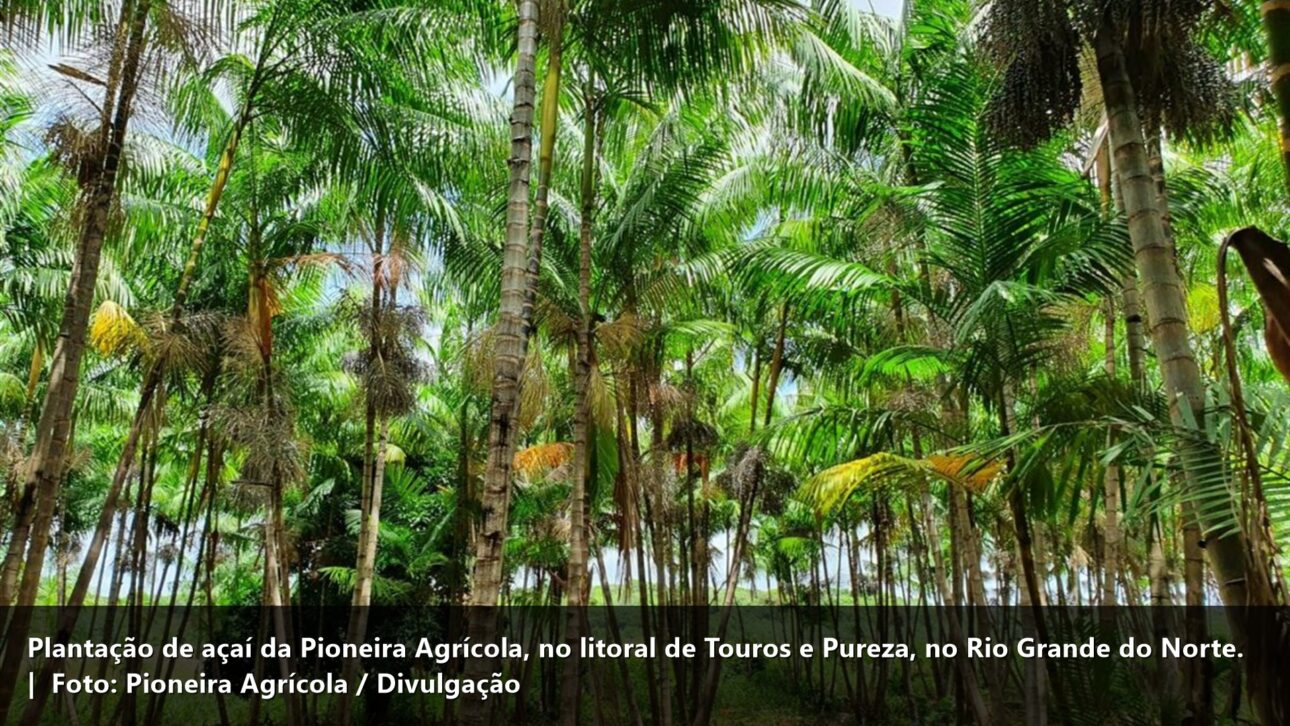
The explanation for the unlikely lies in the meeting of climate and market. According to Rodrigo Moura, the region has plenty of light, good soils, and water underground, conditions in which the palm tree thrives. The first area was planted with the BRS Pai d’Égua variety (Euterpe oleracea), developed by Embrapa, and the demand plays in their favor: Brazil is practically the only global producer, with 94% of the harvest concentrated in Pará, which opens up space for those producing far from the North.
-
A company from SC that moves R$ 125 billion in agribusiness is integrated into an international group, maintains its headquarters and jobs in Chapecó, and is preparing to expand software for cooperatives, grain companies, and industries while targeting new markets without leaving the western region of Santa Catarina.

-
Producer receives news and had to cull almost the entire herd, bounced back with the help of compensation, and is now producing 450 liters of milk per day in SC.

-
Quail Eggs Reveal a “Secret Code” on Their Shells Explaining Unique Patterns and Colors

-
Rare Tropical Fruit Canistel, with Egg Yolk Color and Caramel Flavor, Gains Interest from Researchers and Small Producers in Brazil


The size of the market helps to understand the boldness. Studies by Embrapa indicate that the demand for the fruit is currently 12% to 15% greater than the supply, which causes the price to skyrocket in the off-season. While the demand for the superfood grows worldwide, the supply is hindered by time: the açaí palm takes five to six years to yield the first harvest, and it is precisely this scarcity that makes it attractive to plant where no one planted before.
From the Pará seedling to 350 tons per harvest
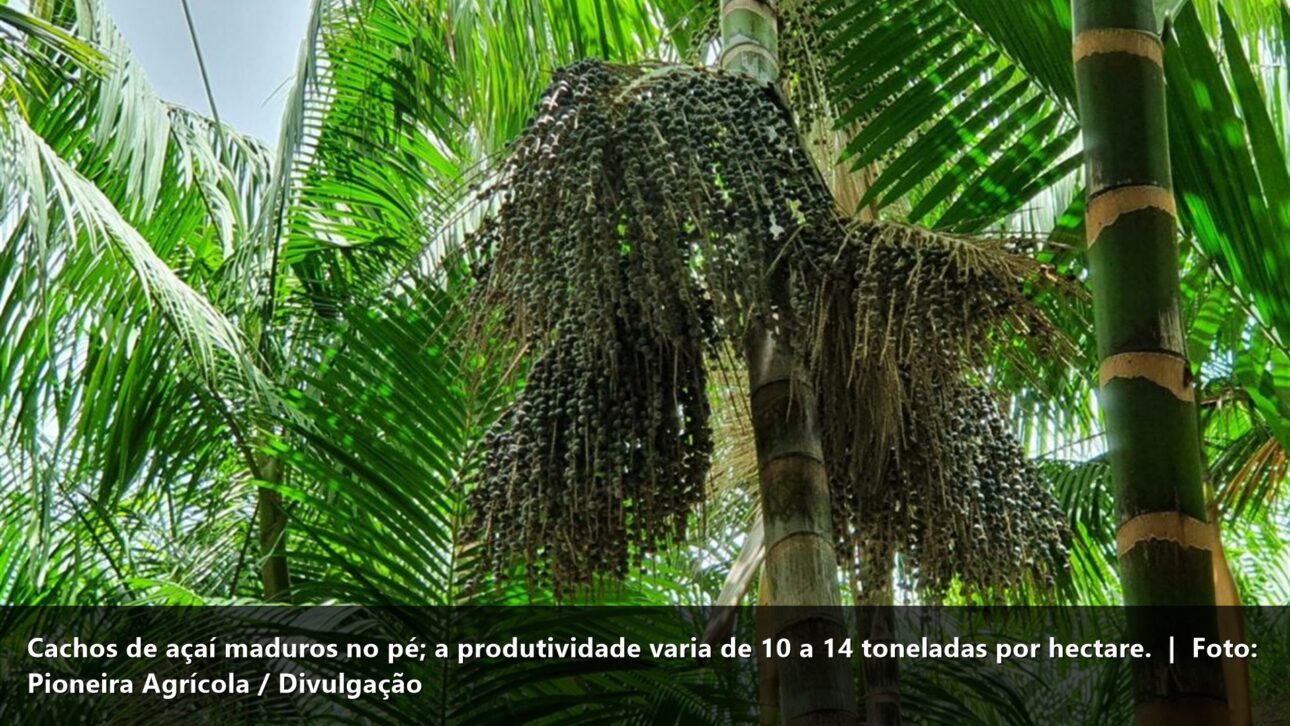
The scale leap is impressive for such a new crop in the state. Each year the plantation practically doubles, and the processing industry, opened in 2021, already processes about 350 tons of fruit per harvest. Productivity varies between 10 and 14 tons per hectare, a number that, according to the producer, tends to stabilize around the seventh or eighth year of the plant.
The secret lies in speed. The company harvests and processes the fruit within 24 hours — a timeframe that preserves flavor and aroma, because açaí is unforgiving with delay: out of time, it turns brown instead of purple and gains an acidic taste, losing what makes it açaí. To maintain quality, the harvest uses a tool that prevents the fruit from touching the ground, and the pulping occurs in a closed circuit, without the employees’ hands touching the product.
Kuwait on the plate: how Potiguar pulp reaches abroad
The export vocation was born along with the industry. Realizing the fruit’s potential, the partners began investing in the pulp with the external market in mind, and the turning point came at the end of 2024, with the first contract in Kuwait expected to receive 100 tons in the 2025/2026 harvest. The first container left in July 2025 and the second in October.
The destination adds to old European partners. All exports go through an Italian partner, who also forwards shipments to Italy and the Netherlands; the ice cream line, in turn, already reaches Kuwait, Italy, and Amsterdam, as well as the Brazilian Southeast, especially São Paulo. In the domestic market, the pulp is sold in six states — and, to expand contacts, the company attended Fruit Attraction in Madrid, one of the largest fruit-growing events in the world, where they met with eight buyers in business rounds.
Innovation in the field and factory
Technology is what sets Pioneira at a different cost from others, in the words of the producer himself. In the field, management relies on organic fertilization and biological control, in the soil and the plant; chemical pesticides are almost restricted to weed control, as, according to Rodrigo Moura, the region has few diseases capable of threatening açaí.
Irrigation is automated and calculates water per clump, each with three productive stems, as happens with the banana plant. In the industry, freezing is quick: as soon as it becomes pulp, the product is bagged and goes straight to the cold chambers, in an effort not to lose color, flavor, or aroma. It is this set of choices, from planting to freezer, that sustains the competitiveness of a product coming from an “unlikely land.”
An effect that spreads through Mato Grande
The pioneering spirit began to create a chain. The idea of planting açaí in RN came from a consultant at ELI Agro (Local Innovation Ecosystem of Agribusiness), linked to Sebrae/RN, and gained momentum when other producers began visiting the farm. Today, at least ten rural producers in the Mato Grande region already cultivate the palm, many of them aiming to sell the fruit to Pioneira itself.
The model is simple: partners plant, the industry buys, processes, and exports. The bet is on growth without the risk of oversupply in the next 15 to 20 years, precisely because the fruit takes time to produce. Meanwhile, the company that still cultivates coconut and cassava concentrates almost all investment in the açaí chain and is already planning a new step: starting to plant cocoa.
A seedling brought from Pará, planted where “it wouldn’t work,” turned into pulp that now travels to Europe and the Middle East and even dragged a dozen neighbors along the same path. It is proof that innovation in the field can be born in the most unlikely place.
Do you think “exotic” crops like açaí are the future of agribusiness outside traditional regions, or is it too risky a bet for the small producer? Tell us in the comments here.