






 Portuguese
  Spanish
 5 min of reading
  3 comments


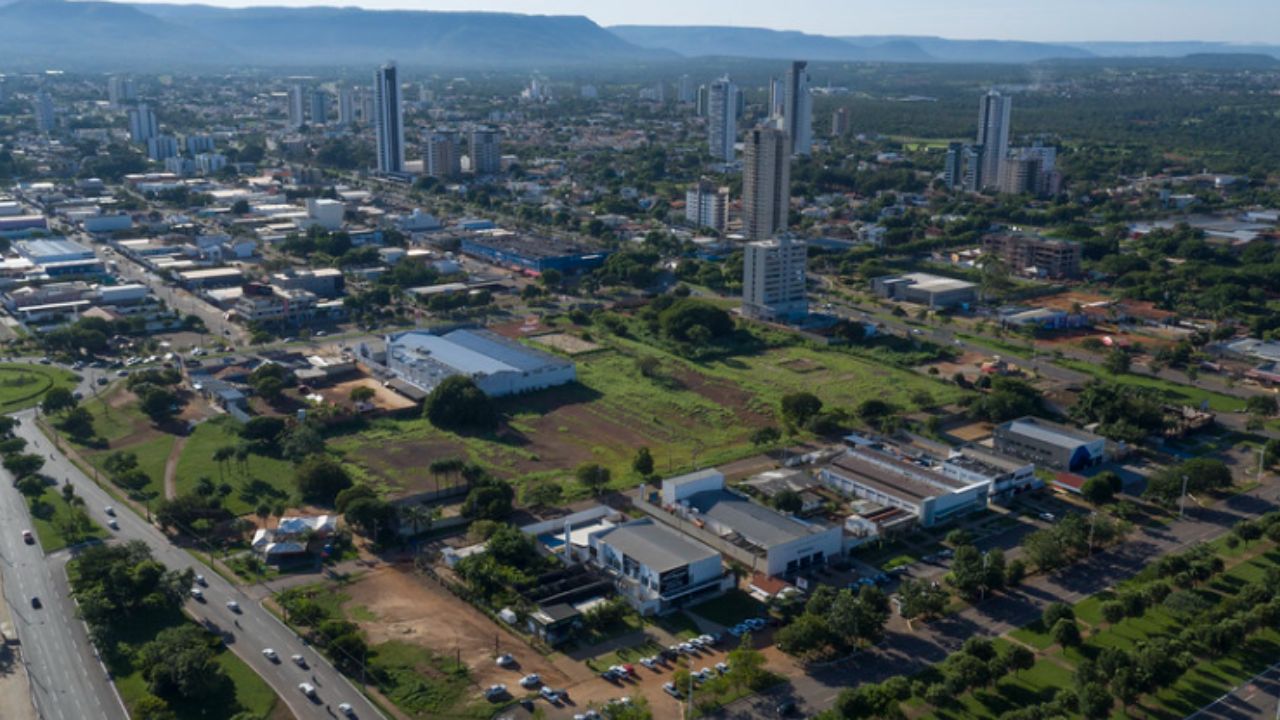


Born From Scratch in the 80s, Palmas Was Designed to Be the City of the Future, But the Urban Design of the Last Planned Capital of Brazil Created an Unexpected Climatic Phenomenon, Reveals Scientific Studies.
Built in record time in the heart of the Cerrado, Palmas is the realization of an old political dream and the most recent major experiment in Brazilian urbanism. Conceived to be the engine of development for the newly created state of Tocantins, the city stands out for its monumental avenues, with up to eight lanes, and a block organization that sought to learn from the mistakes and successes of Brasília.
However, behind the rational planning, an unforeseen consequence emerged: a significant alteration in the local microclimate. Although many attribute the change to the gigantic lake that borders the city, in-depth research points in another direction. The true cause of the temperature increase is not the water, but the concrete and asphalt structure of the last planned capital of Brazil.
A Capital By Decree: The Geopolitical Choice Behind Palmas
The creation of Palmas was not an accident, but a deliberate political act. With the promulgation of the 1988 Constitution, which formalized the creation of the state of Tocantins from the dismemberment of northern Goiás, the need for a new capital became immediate. The decision of the first governor, Siqueira Campos, was bold: instead of adapting an existing city, he chose to build a metropolis from scratch, a symbol of the new state. The choice of the exact location, however, was purely strategic and geopolitical.
-
Survivor of 1966 SS Daniel J. Morrell Shipwreck in Lake Huron Recounts 38-Hour Ordeal in Extreme Cold

-
The Greatest Hoax in World Cup History? The Film That Denied Brazil’s 1958 Victory and Exposed How Fake Evidence Can Seem Convincing on TV
-
Fake South Korean Online Stores Offer Shopping Thrill Without Spending Money or Receiving Products
-
The War of Jenkins’ Ear: How a Severed Ear Sparked One of the 18th Century’s Most Unusual Conflicts


According to the article “Architects Reveal Details of the Creation of the Palmas Project”, which reports on a lecture with the city’s creators, Luís Fernando Cruvinel Teixeira and Walfredo Antunes de Oliveira Filho, the technically most suitable location was dismissed. The decision to build the capital on the right bank of the Tocantins River aimed to promote development in a historically marginalized area, breaking away from the old power axis and creating a new growth hub. The cornerstone was laid on May 20, 1989, and the capital was officially transferred on January 1, 1990.
The DNA of Palmas: Late Modernism and the Correction of Brasília
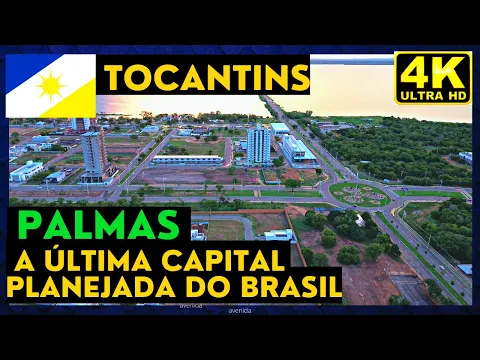

The Palmas project is profoundly influenced by its predecessors, especially Brasília. The academic article “The ‘Last Planned Capital of the 20th Century’: The Palmas Project and Its Modern Condition” situates the city in a context of “late modernism”. The architects adopted the monumental scale and functionalist logic seen in the federal capital but sought to revise and adapt the concepts to create a more integrated city with a greater sense of community.
The main innovation lies in the concept of the residential block. Unlike Brasília’s superblock, characterized by buildings on pilotis within vast green areas, the Palmas block was designed to be a “self-sufficient citadel”. The original idea was for each large block to house daily commerce and services, recreating the convenience of a traditional neighborhood. It was an attempt to correct what many criticized in Brasília: the strict zoning that separated housing, work, and leisure, generating a strong dependence on automobiles.
Eight-Lane Avenues: A City Designed for Cars
Despite the attempt to create a richer community life in its blocks, the macrostructure of Palmas is a tribute to motorized transport. The urban layout is defined by a strictly hierarchical and orthogonal road grid, crossed by monumental axes such as the Teotônio Segurado (North-South) and Juscelino Kubitschek (East-West) avenues. The wide avenues, some with up to eight lanes, were designed to ensure flow and speed.
This structure, inherited directly from modernist urbanism, prioritizes vehicle circulation over pedestrians and cyclists. Although the plan succeeded in avoiding chronic traffic congestion, it also consolidated the car as the primary mode of transport. This characteristic, combined with the low population density and the large extension of the city, profoundly shaped the lifestyle of its residents and, as would later be discovered, the very climate of the city.
The Lake That Changed the Landscape, but Not the Climate
One of the most iconic elements of Palmas is the immense artificial lake formed by damming the Tocantins River for the Luís Eduardo Magalhães Hydroelectric Plant. With an area of 626 km², the reservoir transformed the landscape and became the main entertainment and tourism hub of the capital. The popular perception that this vast body of water “changed the climate” of the region is widely held, but science points in another direction.
The master’s thesis “The Influence of Vegetation on the Urban Climate of Palmas-TO”, by architect Luis Hildebrando Ferreira Paz, is the crucial scientific source for this analysis. The research demonstrated, through measurements in the city, that urban morphology (built areas versus areas with vegetation) is the main factor altering temperature, much more than the influence of the artificial lake.
Heat Island: The True Climatic Phenomenon of Palmas
The study by Luis Hildebrando Ferreira Paz identified the formation of the Urban Heat Island (UHI) phenomenon in Palmas. His measurements revealed a strong correlation between built areas and rising temperatures. In contrast, areas with dense vegetation, such as parks, act as “cool islands”, with significantly lower temperatures, with differences reaching up to 8 °C during the research.
The conclusion is categorical: the main driver of the thermal change felt by residents is not the lake, but the city itself. The vast surfaces of asphalt and concrete absorb and retain solar heat much more efficiently than the native vegetation of the Cerrado. The effect of the lake is confined to its immediate vicinity, being overshadowed by the heating generated by the urban sprawl. The shape of the city, with its paved areas, is the true cause of microclimatic change.
A Success Model with Sustainability Challenges
The last planned capital of Brazil is, therefore, a case study on the unintended consequences of urban planning. Although it has succeeded in many quality of life indicators, its development model, focused on individual transportation, has generated a tangible environmental challenge. The heat felt in downtown Palmas does not come from the Cerrado nature, but from the success of a project that favored concrete over greenery.
The way a city is designed directly impacts its climate and the quality of life of its residents. Have you noticed a similar effect in your city? Do you think modern urban planning takes environmental consequences into account? Leave your opinion in the comments; we want to know how you see the future of Brazilian cities.





Mais uma vez vocês trouxeram uma matéria espetacular e educativa,informática
Parabéns.
Your blog is a shining example of excellence in content creation. I’m continually impressed by the depth of your knowledge and the clarity of your writing. Thank you for all that you do.
Bulk commenting service. 100,000 comments on independent websites for $100 or 1000,000 comments for $500. You can read this comment, it means my bulk sending is successful. Payment account-USDT TRC20:【TLRH8hompAphv4YJQa7Jy4xaXfbgbspEFK】。After payment, contact me via email (helloboy1979@gmail.com),tell me your nickname, email, website URL, and comment content. Bulk sending will be completed within 24 hours. I’ll give you links for each comment.Please contact us after payment is made. We do not respond to inquiries prior to payment. Let’s work with integrity for long-term cooperation.