Portuguese
  Spanish


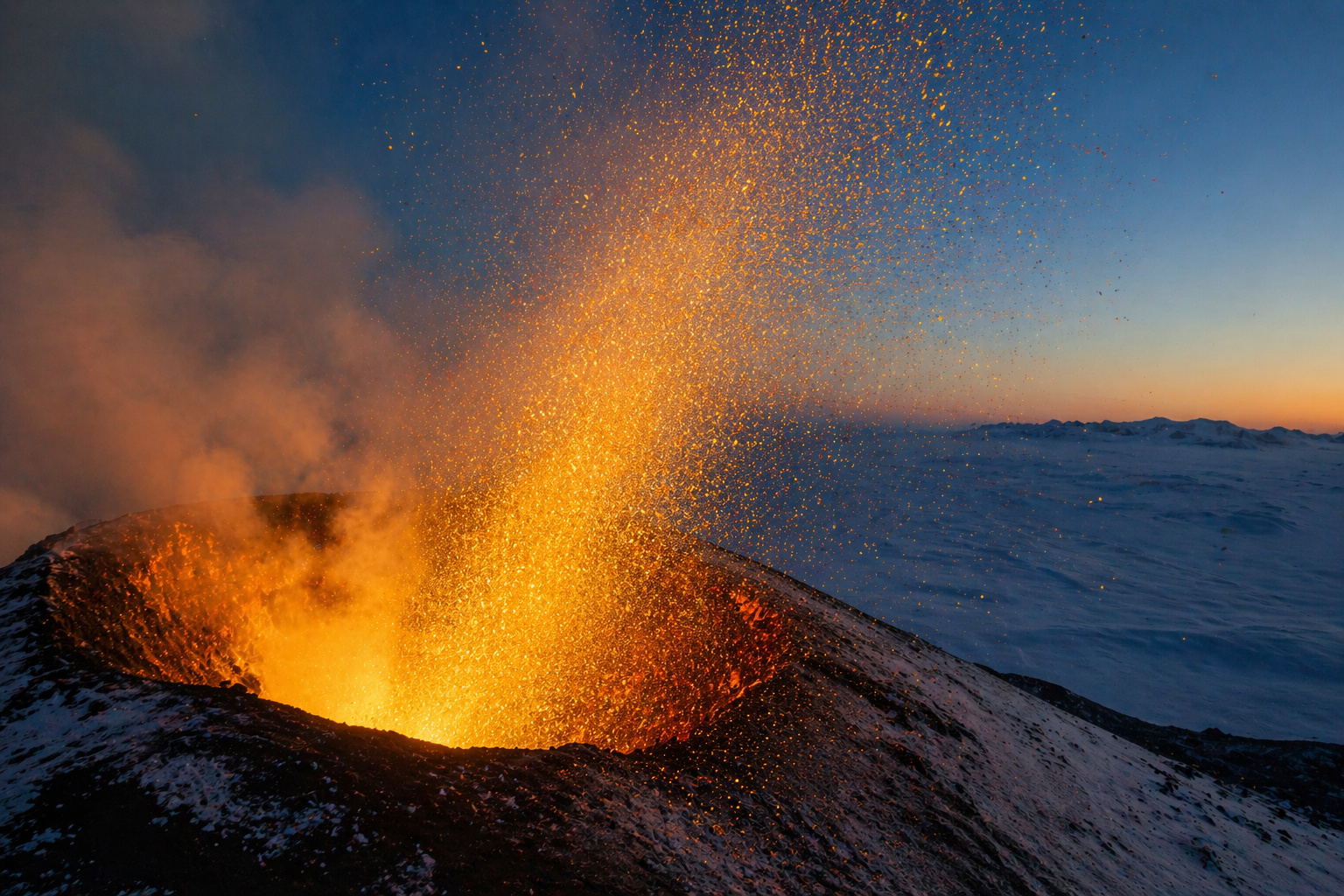

Continuous volcanic activity in the South Pole disperses microscopic gold and expands scientific understanding of extreme geological processes
An unusual geological occurrence has been observed in Antarctica.
Mount Erebus, one of the continent’s few active volcanoes, daily releases microscopic gold particles into the atmosphere.
Scientific records consolidated since 1972 and recent analyses cited by researchers associated with NASA and the Mount Erebus Observatory indicate continuous activity.
-
Spain Launches World’s Largest Floating Dry Dock: 56-Meter Giant Produces Massive Concrete Structures in A Coruña Using Technology Proven in Brazil

-
AI-powered toys that talk, recognize faces, and collect data face scrutiny from Brazilian government over children’s privacy concerns

-
4,000-Year-Old Child’s Skull Unveils Ancient Burial in 7,500-Year-Old Norwegian Rock Shelter, Impressing Archaeologists

-
Norway Defeats Brazil in World Cup but Invests Billions to Preserve the Amazon, Strengthens Amazon Fund, and Joins Brazil in Leading Global Effort Against Tropical Deforestation


Approximately 80 grams of pure gold are released into the air every 24 hours, amidst the extreme conditions of the South Pole.
This process, though barely visible to the naked eye, represents one of the most unique geological events of our time.
Technical investigation reveals unusual magma dynamics
Mount Erebus’s behavior differs from most known volcanoes.
The presence of a permanent lava lake makes the scenario even rarer on the planet.
This lake releases hot gases that carry metallic particles.
The gases transport microscopic gold crystals, formed while still within the magma.
Experts explain that the specific chemical composition of the magma allows for this early crystallization.
The volcano acts as a natural system that releases refined material into the atmosphere.
Erebus functions as a geological chimney, expelling metallic particles directly into the polar environment.


Gold dispersion reaches great distances
The released material does not remain restricted to the crater.
Antarctic air currents transport these particles over long distances.
Recent atmospheric measurements indicate that gold fragments have been detected up to one thousand kilometers away.
The material gradually deposits onto the snow.
This process causes the gold to mix with the continent’s ice layers.
Key points observed:
- High reach: particles travel great distances
- Continuous deposition: gold accumulates on the icy surface
- Possible tracking: equipment identifies the material with precision
Even in small quantities, the phenomenon leaves a detectable trace.
Gold exploration is considered unfeasible
Collecting this gold is not considered viable.
Mount Erebus is located in an extremely remote region.
Severe climatic conditions, with intense winds and very low temperatures, hinder any operation.
Attempts at exploration would face significant logistical challenges.
The size of the particles represents another relevant obstacle.
The gold has microscopic dimensions, measured in micrometers.
Separating the material would require a complex industrial process.
The cost of the operation would outweigh any possible economic benefit.
The value of the phenomenon remains essentially scientific.
Monitoring helps understand climate and volcanic activity
Mount Erebus is monitored with the aid of satellites.
Scientists monitor both the gases and metallic particles released.
Dispersed gold acts as a natural indicator of wind currents.
This behavior contributes to understanding the region’s atmospheric dynamics.
Recent data from the Mount Erebus Observatory show the importance of these analyses.
These measurements help predict variations in the volcano’s activity.
Monitoring also allows for evaluating changes in the composition of the polar atmosphere.
Phenomenon expands knowledge of geological processes
The existence of this active volcano reinforces the complexity of Earth’s natural processes.
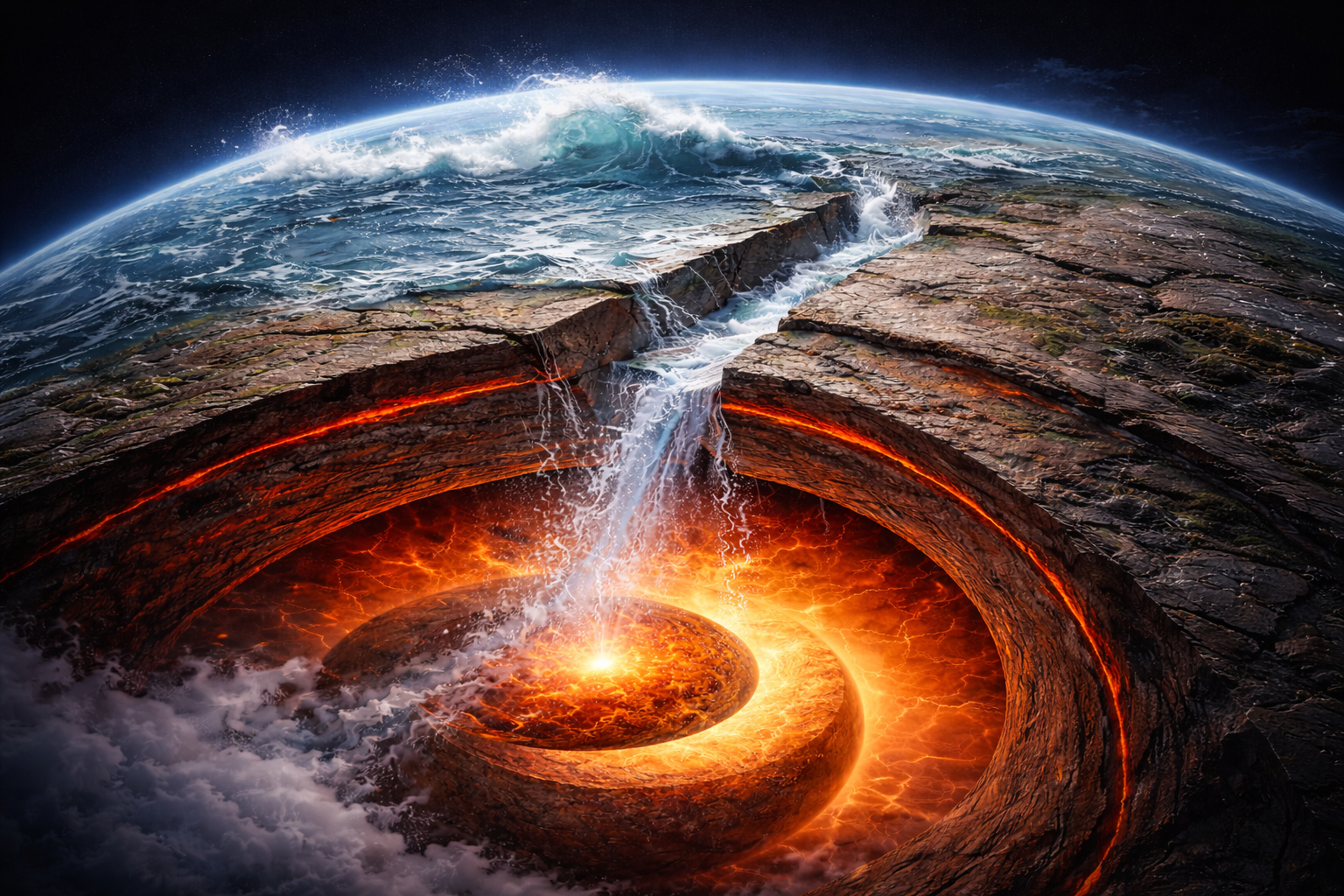
Mount Erebus acts as a natural geological laboratory.
Researchers use the site to study the relationship between heat, pressure, and metal formation.
This data helps understand the behavior of elements within the Earth’s crust.
Antarctica confirms itself as an environment of extremes.
The interaction between fire and ice creates processes that continue to surprise modern science.
How many other similar phenomena still remain hidden beneath the ice of the Antarctic continent awaiting discovery?