






 Portuguese
  Spanish
  4 min of reading
  0 comments


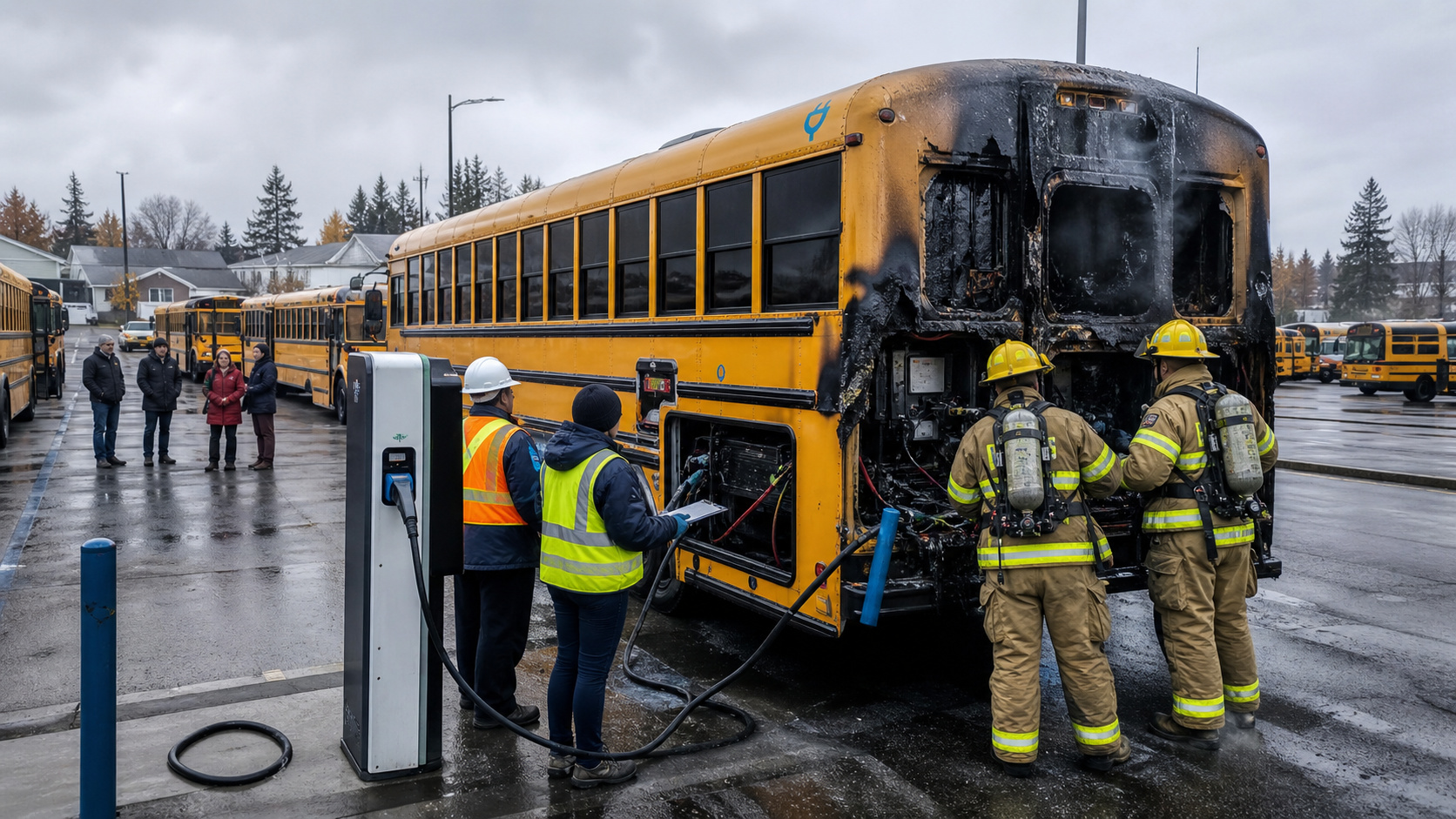
An electric school bus fire took about 1,200 Lion vehicles off the streets in Quebec, affecting families, disrupting school routines, and putting battery safety at the center of the debate
About 1,200 Lion electric school buses were taken out of service in Quebec after a fire in one of the manufacturer’s vehicles. The preventive measure affected schools, transportation services, and families who rely on school routes every day.
The investigation was published by Global News, a Canadian news portal. The case gained widespread repercussion because it involves electric school buses, children, suspended routes, and public trust in the transition to less polluting vehicles.
Even without casualties, the incident became a warning. A single fire was enough to paralyze a significant part of the electric school fleet and raise doubts about safety, maintenance, and emergency response.
-
Bali transformed volcanoes into a sacred system with 5 rice terraces, water temples, and 19,500 hectares, but the ancient engineering that supports farmers now faces tourism, construction, and the risk of losing its living landscape on the volcanic island.

-
Two young inventors create a terracotta brick that uses water, air, and solar energy to cool cities, and the idea points to buildings that stop worsening urban heat.

-
Without power for millions, Madagascar receives a proposal for a floating hydroelectric plant inspired by the baobab that promises clean energy, greenhouses, and tourism, but still needs to be realized.
-
China has a giant rice terrace carved over 1,300 years in the mountains, with up to 3,000 terraces, 82 villages, and 445 km of canals, but the ancestral work that overcame droughts now faces growing tourism, landslides, and rural abandonment.


One fire was enough to take about 1,200 electric school buses off the streets
The removal of the vehicles occurred as a preventive measure after the fire in a Lion electric school bus. The decision affected about 1,200 electric school buses in Quebec.


The most striking point was the proportion of the measure. It was not just about removing a specific vehicle from circulation. An almost entire electric school fleet was taken off the streets for inspections.
This type of reaction shows how school transportation requires maximum care. When the service involves children, any sign of risk increases pressure on authorities, manufacturers, and operators.
Suspended routes affected schools, families, and the routine of those who depend on transportation
The bus stoppage had an immediate impact on school transportation. Routes were suspended, and services had to reorganize to serve students and families.
For many parents, the concern was practical. Without the usual school bus, it was necessary to deal with schedule changes, extra commutes, and uncertainty about the service’s return.
The most felt consequence was the temporary loss of trust. The case placed electric school transportation at the center of a discussion that blends safety, technology, and family routine.
Global News detailed the case that turned a fire into a debate about electric buses
Global News, a Canadian news portal, detailed the central points of the case involving the manufacturer Lion and the preventive withdrawal of electric school buses in Quebec.
The measure put the company under public pressure. Lion was at the center of the debate because the vehicles taken off the streets belonged to the manufacturer, responsible for a significant part of the local electric school fleet.
The episode also showed how an isolated failure can gain greater weight when it involves a technology still in the process of acceptance. For part of the public, the fire became a symbol of fear. For authorities and experts, the challenge was to separate real risk from technological panic.
Battery safety entered the debate even with the case still treated as a preventive measure
The fire brought back a common concern in electric vehicles: battery safety. For the lay public, large batteries are still viewed with suspicion, especially when linked to a fire incident.
However, the case requires careful interpretation. The bus withdrawal was preventive and does not authorize hasty conclusions about all electric buses or all technology.
The most important debate involves maintenance, inspection, and rapid emergency response. In school vehicles, these points need to be clear to operators, schools, and families.
The electric transition in school transportation came under public pressure
The electrification of school transportation is seen as part of a larger shift in mobility. It seeks to replace traditional vehicles with electric models, with lower emissions during use.
The fire in Quebec, however, showed that the transition does not depend solely on environmental promises. It requires trust, oversight, and simple communication with the public.
When about 1,200 electric school buses are taken out of service after a single event, the public message is strong. Technology is then judged not only by what it delivers, but also by how it responds when something goes wrong.
The Lion case became a warning for manufacturers, schools, and governments
Lion began to face public backlash because the incident involved vehicles of the brand and directly affected school service. In the transportation of children, the tolerance for failures is much lower.
For schools and governments, the case reinforces the need for response plans. An electric fleet needs regular maintenance, clear inspections, and guidance for emergency situations.
For families, the main question is simple: are the buses safe to transport children every day? This doubt explains why the incident gained so much traction even without victims.
A single fire showed how trust can stop along with the fleet
The case in Quebec left a direct lesson. The transition to electric school buses needs to advance alongside safety, transparency, and quick responses when an incident occurs.
The removal of about 1,200 Lion electric school buses from the streets showed that a single fire can cause much greater effects than damage to the vehicle. Routes were affected, parents were put on alert, and public trust was tested.
The incident does not end the debate about school electrification, but it makes it clear that new technology requires permanent care. When children are involved, safety becomes the main point.
Would you trust a fleet of electric school buses after a case like this, or do you think the preventive withdrawal was the most correct decision? Leave your opinion in the comments and share the publication.


Be the first to react!