






 Portuguese
  Spanish
  4 min of reading
  1 comment


Ammonia Is Emerging as a Promising Fuel of the Future for Heavy-Duty Transportation, Offering a Sustainable Alternative to Fossil Fuels
In recent years, electric vehicles and, more recently, hydrogen-powered vehicles have gained attention as eco-friendly alternatives to fossil fuels. However, there is a new fuel of the future that has been gaining attention: ammonia.
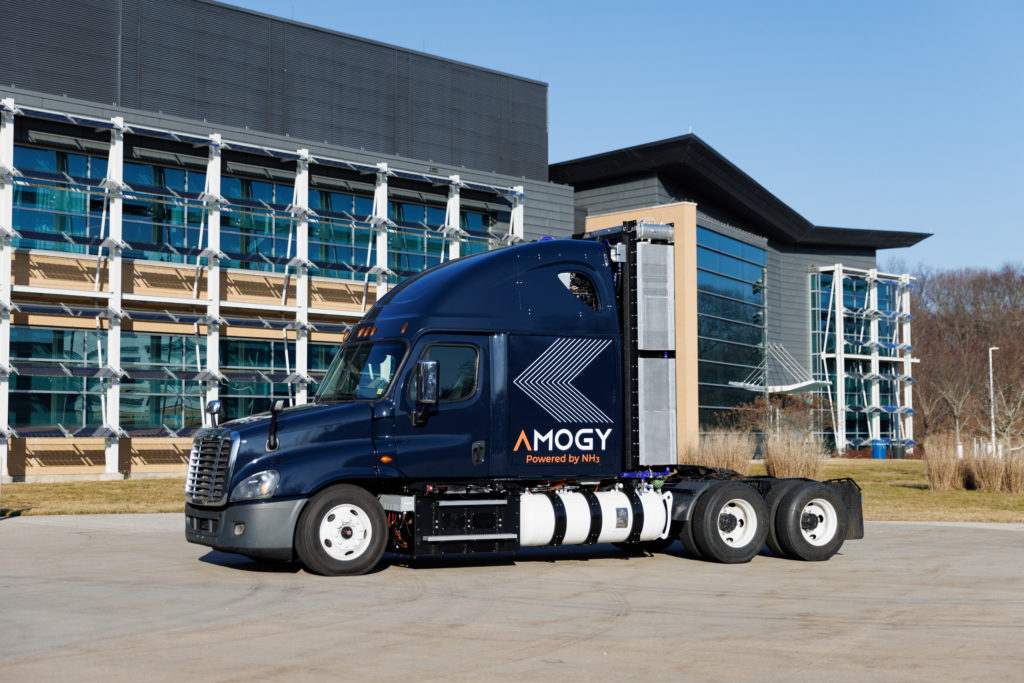
The transportation industry, particularly in the heavy sector, is beginning to explore this compound as a solution to help combat the climate crisis. One of the most innovative companies in this field is Amogy, based in Brooklyn, USA, which is testing ammonia-powered engines as a clean energy alternative, positioning it as a fuel of the future.
Is It the Fuel of the Future?
Ammonia, composed of hydrogen and nitrogen, is emerging as a potential source of fuel for the future, especially for heavy transportation. Amogy, for example, uses liquid ammonia to generate hydrogen, which can be used in hydrogen-powered engines or fuel cells.
-
Goodbye traditional laundry: Roborock launches washer and dryer with super hydrolysis, microbubbles, 99.99% sterilization, low-temperature drying, automatic detergent, app control, and cycles to remove stains, odors, mites, and bacteria from clothes.

-
It is now possible to generate energy without batteries: new flexible material transforms body heat into electricity and paves the way for more efficient, autonomous, and comfortable wearable devices, with the potential to revolutionize personal electronics in the coming years.

-
Leaving the charger plugged in without a phone consumes energy or is it a myth? Experts call the phenomenon “phantom consumption” and warn that dozens of devices on standby can add up on the bill over the year.
-
It accompanies Earth, but it is not a moon: Chinese probe reaches Kamo’oalewa and begins an unprecedented mission to investigate where the strange asteroid came from, what its internal structure is like, and whether its origin is linked to an ancient collision that launched fragments of the lunar surface into space.


These engines operate similarly to traditional hydrogen engines, but with a significant advantage: ammonia, when decomposed, releases oxygen, providing the necessary fuel.
Ammonia is already widely known for its application in fertilizer production, as it provides the essential nitrogen for plant growth. Furthermore, ammonia is considered safe owing to specific safety protocols for its distribution and commercialization, which facilitates the introduction of new systems that use it as fuel.
Even though it is toxic, the use of ammonia in vehicles involves safety mechanisms to ensure that there are no leaks into the environment.
Amogy and Its Tests with Ammonia
Amogy has demonstrated how ammonia can be a viable solution across various sectors. The company is testing the use of liquid ammonia in different types of vehicles, such as drones and tractors. One of the most impressive tests involves a 100 kW John Deere agricultural tractor. This tractor utilizes a liquid ammonia-hydrogen engine system and has shown promising results.
Additionally, Amogy is developing a truck with this engine system. This truck has a production potential of up to 900 kWh with just three ammonia tanks, making it up to five times more powerful than traditional electric trucks. Another positive aspect is the refueling time. While electric trucks can take several hours to recharge their batteries, refueling with ammonia takes only eight minutes.
Safety in the Use of Ammonia
While ammonia is known for its toxicity, Amogy assures that ammonia-powered engines are very safe. The engine and exhaust systems are sealed to prevent any ammonia leaks into the environment. The exhaust from these vehicles emits primarily nitrogen and small amounts of water vapor, both of which are harmless. Any residual ammonia is decomposed or neutralized before being released into the atmosphere.
According to Seonghoon Woo, CEO of Amogy, ammonia has incredible energy density and can be stored as a liquid at room temperature, making it ideal for heavy-duty transportation applications. Woo also highlights that the infrastructure needed for the distribution of ammonia is largely already in operation, which facilitates the transition to using ammonia as a fuel of the future.
For him, ammonia could be a key player in the decarbonization of heavy transportation, an area that still poses a significant challenge in the global emission reduction targets.
Challenges in Adopting Ammonia as the Fuel of the Future
Despite the advantages of ammonia, there are still challenges to overcome. The main barrier to its widespread adoption is the need for infrastructure, which will need to be expanded and adapted for use in transportation. Additionally, issues of safety, regulation, and the technology needed to enable the use of ammonia in large vehicles still need to be addressed.
Ammonia holds great potential as a hydrogen transport medium, especially for sectors that require high energy density and long distances, such as maritime transportation and heavy trucks. However, its mass adoption will depend on continuous innovation and collaboration among different sectors to solve these technical and logistical challenges.
Currently, companies like Toyota and Hyundai are conducting tests with ammonia in their projects, and the maritime industry is also exploring its use as a fuel.
If these challenges are overcome, ammonia could indeed play a key role in the decarbonization of global transportation. However, it is likely to take several years before it becomes a widely applied reality.
With the continuous evolution of technology and the support of global partnerships, ammonia has the potential to become a fuel of the future. Amogy, for example, continues to invest in research and development, aiming to expand its use not only in heavy-duty vehicles but in various other applications.
The future of ammonia as a fuel of the future will depend on overcoming the existing challenges, but initial results show that it could be an important piece in the puzzle of decarbonizing the transportation sector.





Melhor rir que comentar