






 Portuguese
  Spanish
  5 min of reading
  0 comments


Cell phone charger consumes energy without use, but the isolated expense is usually very small
Chargers and devices in standby continue to consume energy even when they seem turned off, and this is not a myth. What changes from one case to another is the size of this invisible expense. According to the Lawrence Berkeley National Laboratory, the so-called phantom consumption is the electricity used by devices that are turned off or in low-power modes but remain connected to the outlet.
In the case of a modern cell phone charger, the isolated impact is usually small. The Stanford Magazine, citing tests from the Berkeley Lab, reports that cell phone chargers in no-load mode consume about 0.26 watt. The problem appears when this discreet consumption is repeated in dozens of devices scattered around the house, operating 24 hours a day without drawing attention.
What is phantom consumption and why does it continue to exist even with the device “turned off”
Phantom consumption, also called standby power, phantom power or vampire power, happens because many devices continue to power internal circuits even when not in use.
-
It accompanies Earth, but it is not a moon: Chinese probe reaches Kamo’oalewa and begins an unprecedented mission to investigate where the strange asteroid came from, what its internal structure is like, and whether its origin is linked to an ancient collision that launched fragments of the lunar surface into space.

-
Space technology used to search for water on Mars is now hunting for invisible leaks under the streets of São Paulo, using satellites, AI, and chlorine signals to help Sabesp recover up to 6.7 billion liters of water.

-
Japan sends ship to extract mud rich in rare earths at nearly 6,000 meters deep in the Pacific, attempts to lift 350 tons per day from the seabed, and transforms sediments near Minamitori Island into a strategic weapon to reduce dependence on China.
-
Venus Aerospace promises a rotating detonation hypersonic engine that takes the Stargazer to Mach 9 and crosses oceans in 1 hour, but the flight that made history barely surpassed the speed of sound.




According to the Lawrence Berkeley National Laboratory, this occurs to maintain functions such as digital clocks, sensors, configuration memory, remote control receivers, and other systems that are ready to respond immediately when the device is turned back on.
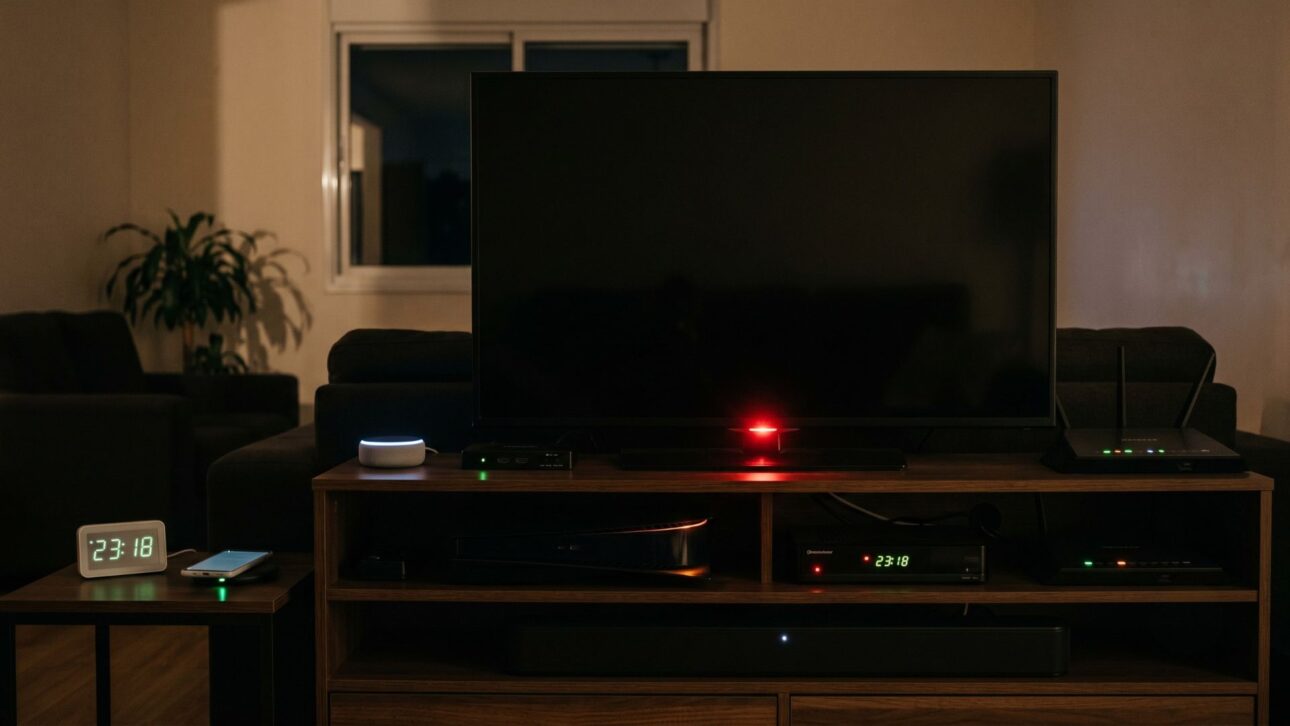
The laboratory states that this consumption is not always a sign of defect. In many cases, it exists because the equipment needs to maintain a useful function in the background.
In others, it is the result of inefficient design. The difference is that today, newer products tend to waste less energy than models from decades ago.
According to the same research center, about twenty years ago, the standby consumption of typical products ranged between 1 and 3 watts. Today, many devices already operate near 0.5 watt or less. This helps explain why the warning about “unplugging everything” remains technically correct but needs to be interpreted more precisely than in the past.
Cell phone charger consumes energy without use, but the isolated expense is usually very small
Yes, leaving the charger plugged into the outlet continues to generate consumption, even without a phone plugged in. Stanford Magazine reports, based on tests from Berkeley Lab, that modern cell phone chargers in no-load mode are around 0.26 watt, a very low level to produce a significant impact alone on the electricity bill.


The contrast appears when looking at other external sources. In the same reference, laptop chargers in no-load mode reached 4.42 watts, showing that not every connected source wastes the same amount of energy.
This means that the size of the problem depends on the type of equipment, the age of the product, and the efficiency of the electronic design.
In practice, a single modern cell phone charger is unlikely to be responsible for noticeably increasing the electricity bill.
The mistake is in turning this specific case into a rule for the whole house, because relevant phantom consumption rarely comes from just one device. It grows when several devices remain connected all the time.
The real weight is in the sum of TVs, video games, routers, speakers, and dozens of electronics on standby
The Lawrence Berkeley National Laboratory highlights that most modern products on standby consume less than 0.5 watt, but they still accumulate. The laboratory states that a typical home can have many items continuously drawing power and that, together, these devices account for about 5% to 10% of residential electricity use.

This is precisely why phantom consumption often goes unnoticed. Televisions, video games, TV boxes, microwaves with clocks, printers, monitors, speakers, smart assistants, and routers can maintain small permanent consumptions. Separately, they seem irrelevant; summed over days, months, and years, they become a fixed expense.
The logic, therefore, is simple: the empty charger consumes, but the electricity bill feels the whole house in standby mode more than a single adapter forgotten in the socket. It is this silent sum that turns an invisible expense into continuous waste.
Regulations reduced waste, but did not eliminate the standby problem
The international pressure to reduce standby waste is not new. The International Energy Agency records policies based on the 1 watt standard for equipment in standby, adopted in different markets as a way to force the improvement of product efficiency.
These measures helped to reduce the consumption of many modern devices and explain why the individual impact of a current charger is usually much less than in the past. Still, the existence of regulatory limits does not mean zero consumption. The equipment continues to consume some energy, just at a lower level.
Therefore, the discussion has shifted from just “does the charger consume or not” to “how much does it consume and in what context does it matter”. In new and efficient products, waste has decreased. The problem is that households have started to concentrate more and more electronic devices connected at the same time.
When it is worth unplugging and which devices deserve more attention at home
Unplugging the charger is still a correct measure, but the isolated financial gain is usually small when it comes to a modern cell phone model.
The best result appears when the house reduces entire sets of equipment that remain permanently on standby, especially in entertainment and IT areas.
Instead of focusing only on the cell phone adapter, it makes more sense to observe which products stay on unnecessarily for long periods. Routers, TV boxes, video games, monitors, printers, and old power supplies tend to deserve more attention than a single efficient charger.
In many cases, turning off groups of devices through a power strip with a switch can be more effective than hunting down one adapter at a time.

In the end, the answer is straightforward: chargers and devices in standby do consume energy. However, the real impact on the electricity bill does not usually come from a single modern charger forgotten in the socket, but from the set of electronics that continuously consume small amounts of energy all the time, without almost anyone noticing.








Be the first to react!