






 Portuguese
  Spanish
  4 min of reading
  0 comments


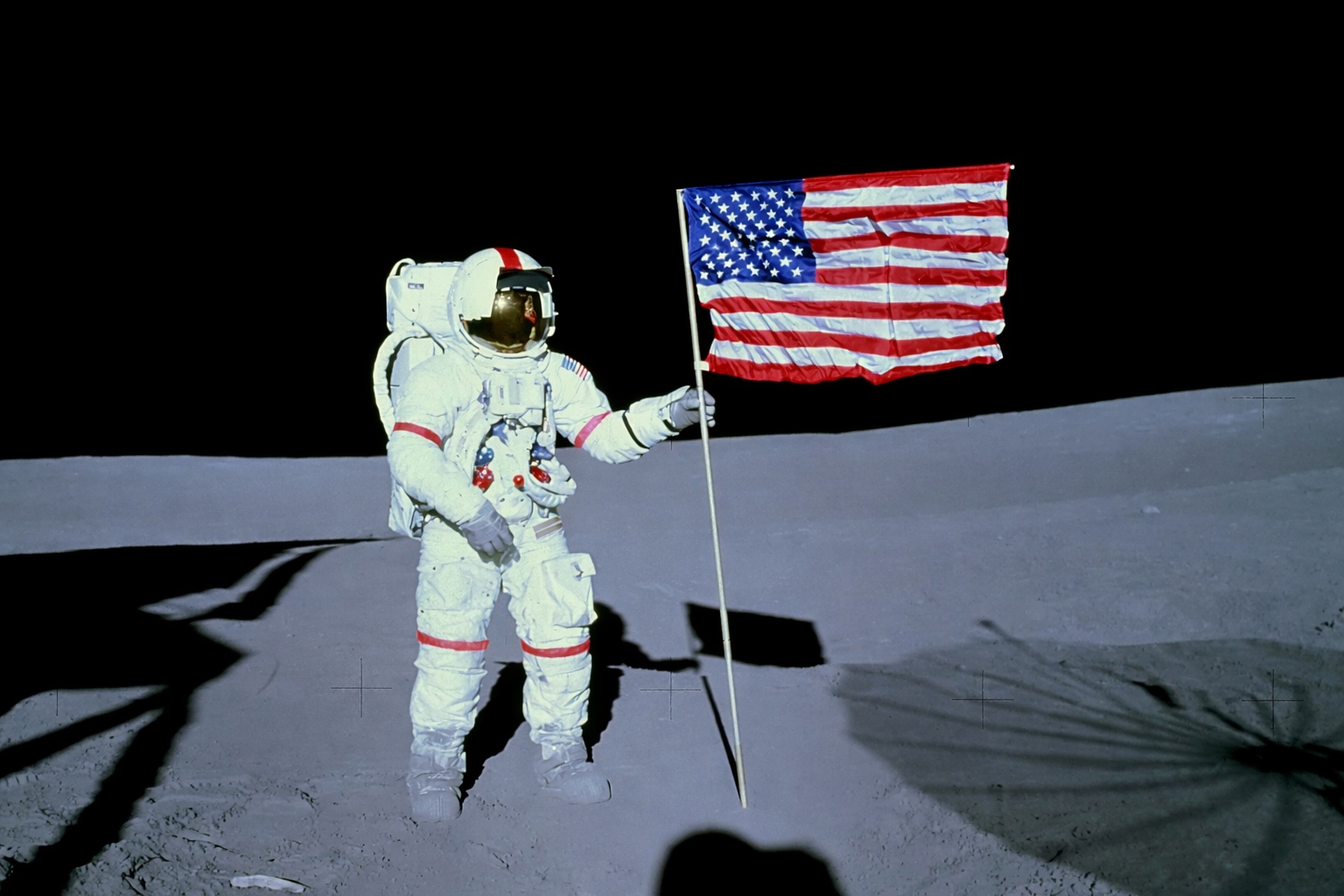
In Washington, Host Jesse Watters Claimed That the United States Owns the Moon, Despite the 1967 Outer Space Treaty Prohibiting Any Country from Having Sovereignty Over Celestial Bodies, Reigniting the International Debate on Space Exploration and Resources
Space exploration has returned to the center of global discussions following an unexpected statement on American television. During a program aired on January 20, Host Jesse Watters claimed that the United States would own the Moon.
This remark came while he was commenting on themes related to the country’s territorial expansion and strategic interests.
The statement sparked immediate reactions on social media and raised an important question: can any country actually own the Moon?
-
Survivor of 1966 SS Daniel J. Morrell Shipwreck in Lake Huron Recounts 38-Hour Ordeal in Extreme Cold

-
The Greatest Hoax in World Cup History? The Film That Denied Brazil’s 1958 Victory and Exposed How Fake Evidence Can Seem Convincing on TV
-
Fake South Korean Online Stores Offer Shopping Thrill Without Spending Money or Receiving Products
-
The War of Jenkins’ Ear: How a Severed Ear Sparked One of the 18th Century’s Most Unusual Conflicts


The 1967 Outer Space Treaty That Prevents Any Country from Claiming the Moon
In 1967, two years before the first human landing on the Moon, the United States, the United Kingdom, and the Soviet Union signed the Outer Space Treaty.
The document became the legal foundation that governs space exploration to this day.
Right in Article I, the text establishes that space exploration should benefit all countries and be considered the heritage of all mankind.
Article II is even more direct. It states that space, including the Moon and other celestial bodies, cannot be appropriated by any country, whether by declaration of sovereignty, use, occupation, or any other means.
In simple terms: no country can claim to own the Moon.
The TV Statement and the Political Context Involving Greenland
Watters’ statement was made during a debate about the United States’ strategic interests.
In the same commentary, he cited historical episodes such as the Louisiana Purchase, the acquisition of Alaska, the annexation of the Philippines, and the control of the Marshall Islands after World War II.
The topic also involved threats of invasion of Greenland, a territory belonging to Denmark, mentioned in the context of American foreign policy.
It was in this scenario that the phrase about the United States having the Moon emerged.
The remark provoked laughter in the studio but also immediate criticism online.
The Quest for Sovereignty Involves Space Mining and Lunar Resources
Although the treaty is clear about sovereignty, there is a point that generates debate among experts.
In 2015, then-President Barack Obama signed a law in the United States interpreting that the country cannot claim territory on the Moon but can own the resources extracted from there.
In practice, this means that if an American company or mission extracts minerals from the lunar surface, those materials could belong to whoever extracted them.
This interpretation is not an international consensus and opens the door for future disputes.
According to experts in space law, the wording of the treaty is considered broad and, in some points, vague.
What If a Country Builds a Base or Plant on the Moon
Another point generating discussion involves operational security.
If a nuclear plant or launch base is constructed on the Moon in the future, it would be necessary to establish a safety area around the facility.
The question is whether this delineation could be considered a form of indirect territorial possession.
So far, no country has initiated lunar mining operations. Some nations have brought Moon rocks for scientific research, but there is no active commercial exploration.
Nonetheless, the rapid advancement of space technology and the growing interest in resources beyond Earth indicate that this debate may gain momentum in the coming years.
A Nearly 60-Year-Old Treaty Facing a New Space Race
The Outer Space Treaty is about to complete six decades.
Since 1967, technology has changed radically. Private companies have entered the sector, commercial missions have become a reality, and lunar exploration projects have returned to the global agenda.
Experts argue that the agreement needs to be updated before real disputes occur.
What seemed like science fiction in the 60s is now part of the plans of governments and companies in the aerospace sector.
The statement on television may have been light-hearted, but the topic is serious and involves international law, space engineering, and billions of dollars in potential resources.
The discussion about who can explore, extract, and utilize the Moon’s wealth could define the course of the next global technological race.
Do you believe the 1967 treaty is still sufficient to regulate space exploration, or does it need urgent updating? Share your opinion in the comments.





Be the first to react!