





 Portuguese
  English
  Spanish
  3 min of reading
  0 comments


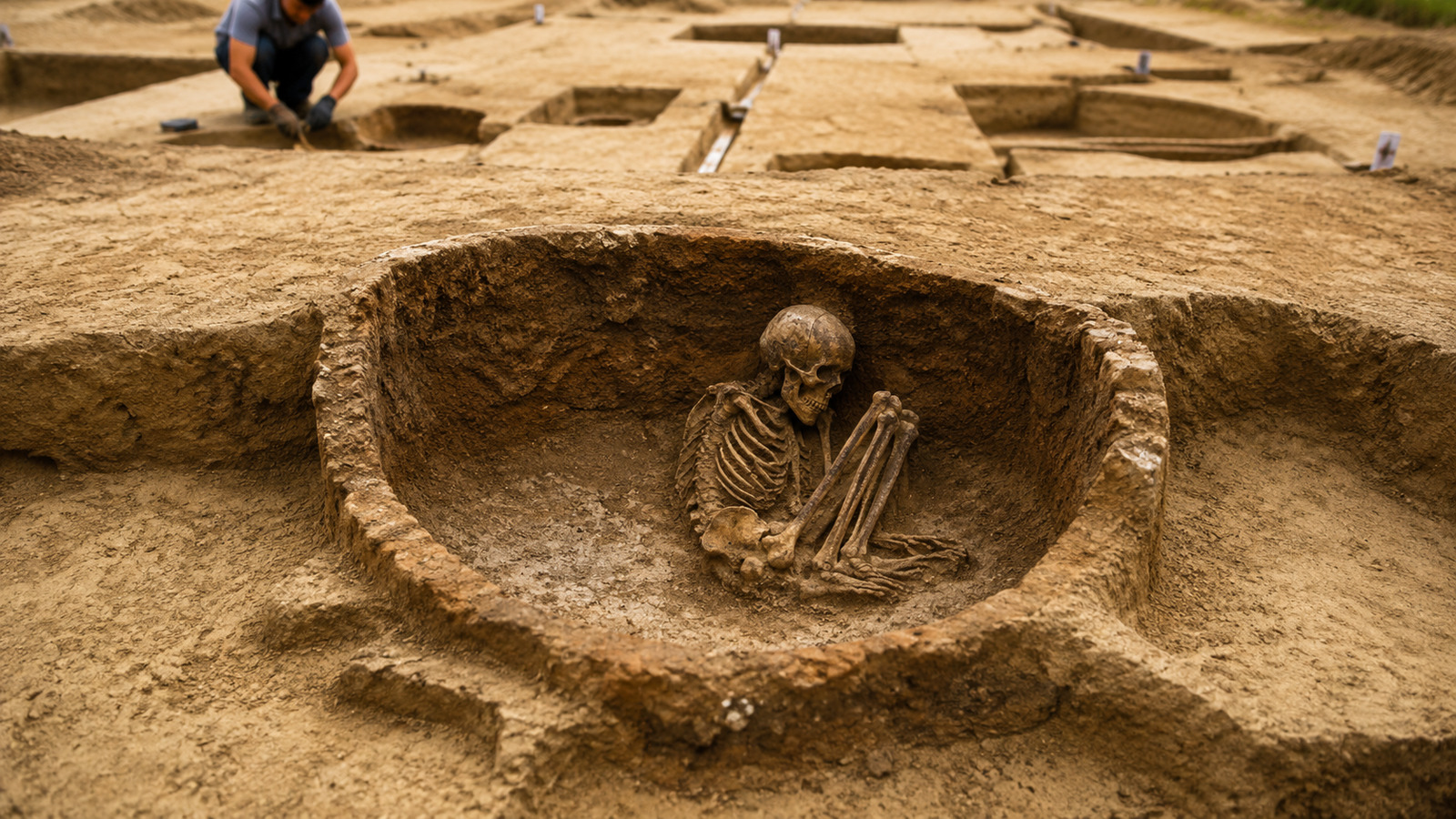
Excavation in Dijon revealed 18 Celtic men buried sitting about 2,400 years ago, with aligned graves, signs of violent deaths, and indications of a funeral ritual reserved for specific groups
Eighteen Celtic men were found buried in a sitting position in Dijon, France, in a discovery made next to a primary school between 2025 and 2026. The burials, dated to the end of the Iron Age, drew attention for their rarity, the organization of the graves, and signs of violent deaths.
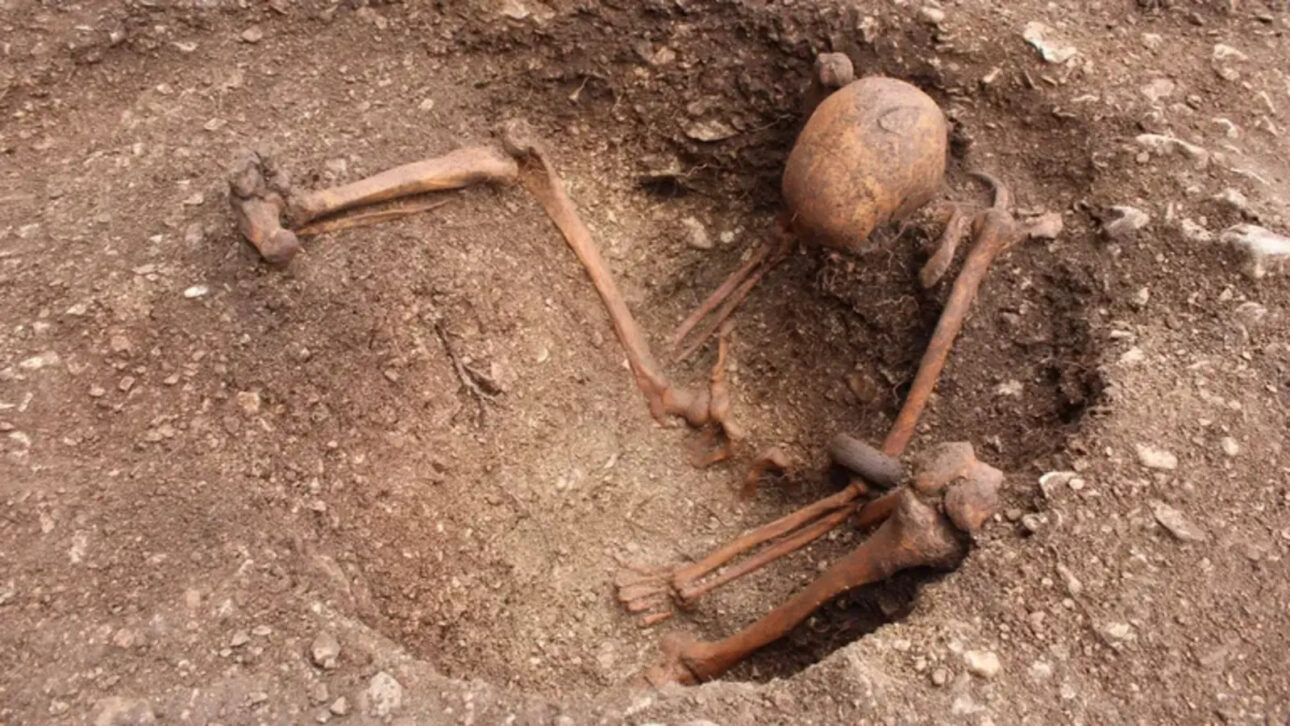
(Image credit: © Hervé Laganier/Inrap)
Celtic burials in an unusual position
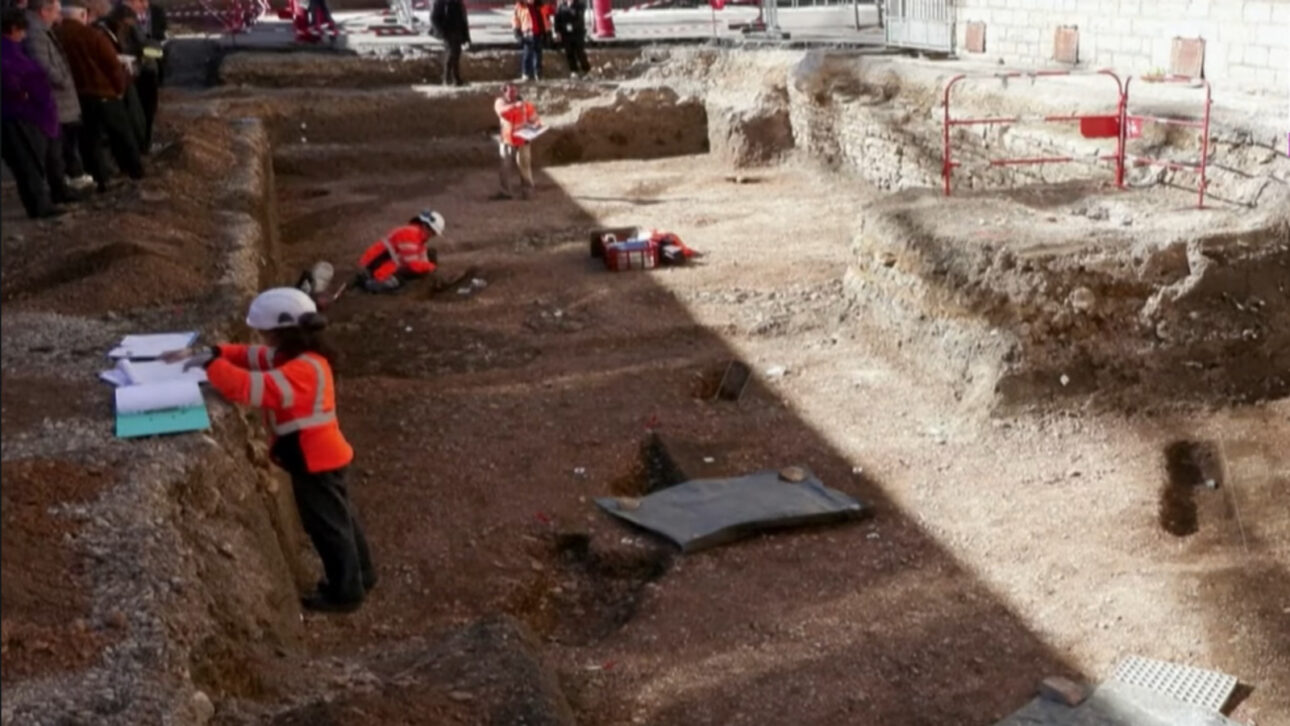
The discovery was announced by the French National Institute for Preventive Archaeological Research, Inrap. The graves were arranged in two straight lines, with regular spacing between them.
Each grave was circular in shape and about 1 meter in diameter. The dead were placed sitting at the bottom of the structures, facing west, with their arms at their sides and legs open.
-
Creator of Claude calls for a global pause on artificial intelligence and rekindles the fear that increasingly powerful systems may bypass human oversight too quickly.

-
Researchers develop “new cement” from pulp industry waste and concrete produced with açaí seeds and discarded tires, reducing environmental impacts without compromising the standards required by the construction industry.

-
5,300-year-old mummy surprises scientists after live fungi turn into artisanal bread: yeast extracted from Ötzi withstands time, digests aggressive chemical compound, and may reveal why the modern body lost part of its own ancestral microbiota
-
Error on the FIFA website releases free tickets for the 2026 World Cup for $0, surprising around 60 fans and now puts buyers against the clock to pay before cancellation.



The burials belong to the end of the Iron Age, a period between 450 and 25 BC, when the Gauls, formed by different Celtic tribes, lived in the region that now corresponds to France.
Healthy men and signs of violence
The initial analysis indicated that all the skeletons were of physically active and healthy men. They died between the ages of 40 and 60, an age considered advanced for many ancient contexts.
Despite this, several bones showed unhealed cut marks, indicating injuries that occurred near the time of death. This data reinforces the possibility of violent deaths.
One of the skeletons was found with a black stone armband around the left elbow. The style of the accessory helped archaeologists date this man’s death between 300 and 200 B.C.
His skull showed signs of two blows caused by a sharp object, such as a sword. At least five other skeletons had cuts on the arm bones, possibly associated with combat.


Rarity may indicate specific group
According to Inrap, seated skeletons are uncommon finds. About 50 similar graves have been identified at approximately a dozen archaeological sites in France and Switzerland.
All these cases are dated to the end of the Iron Age. The graves usually appear on the outskirts of settlements and always gather seated or crouched male skeletons.
This repetition suggests that the ritual was reserved for specific people. Among the possibilities mentioned are warriors, important ancestors, or members of political or religious elites.
Same location had Roman cemetery and medieval convent
In the same excavation, archaeologists also found a cemetery from the Roman era. It gathered 22 children’s graves dated to the 1st century A.D.
The children were buried lying on their backs or sides, in stone or wooden coffins. Some graves contained coins or pottery as funeral offerings.
After the abandonment of the Celtic and Roman cemeteries, the area began to be used for grape cultivation. In 1243, the Cordeliers convent was founded at the site by Franciscan friars.
Today, the archaeological site is located next to a primary school in Dijon, gathering remains from different periods of occupation on the same land.
This article was prepared based on information from the National Institute of Preventive Archaeological Research of France, Inrap, with data, numbers, and statements preserved as per the consulted material.





Be the first to react!