






 Portuguese
  Spanish


Research on sustainable cement uses cellulose waste, açaí, and tires to reduce carbon emissions and expand the circular economy.
The search for more sustainable alternatives for civil construction has driven research in the Northern Region of Brazil. In a scenario where cement production is associated with high levels of carbon dioxide (CO₂) emissions, researchers from the Federal Institute of Pará (IFPA) have been developing materials capable of reducing environmental impacts without compromising the quality required by the sector, according to g1.
Among the initiatives is a new type of cement produced with waste from the cellulose industry, materials derived from açaí seeds, and concrete made with rubber from tire retreading.
The research arises in the face of a global challenge. According to data from the United Nations (UN), the cement industry accounts for about 7% of global carbon dioxide emissions. Furthermore, the production of one ton of cement generates approximately one ton of CO₂ throughout its production chain, from limestone extraction to the distribution of the final product.
-
China Left 51 Rocket Bodies in Low Earth Orbit Between 2021 and 2025, Doubling Previous Period, Report Warns of Space Debris Threatening Satellites for Decades

-
Brazilian Researcher Uses Low-Cost Sensors to Measure Cyclists’ Pollution Exposure in São Paulo

-
18 Iron Age gold coins discovered by a teacher using a metal detector in a Suffolk field sell for £33,200 at auction, exceeding estimates.
-
Chinese Farmer with No Formal Education Builds Over 60 Homemade Robots from Scrap Metal, Each Bearing His Surname


In this scenario, researchers, specialists, and industry representatives seek solutions that reconcile economic development, competitiveness, and environmental preservation.
How does cement contribute to carbon emissions?
Few materials have such an important role in the expansion of cities as cement. Present in homes, buildings, roads, and infrastructure works, it has become indispensable for urban development.
However, the production of the product involves stages that require high energy consumption and result in significant carbon emissions. One of the main contributors to this impact is clinker, a component obtained by burning limestone at high temperatures.
For this reason, various studies seek to reduce dependence on this material, replacing part of it with alternative components that maintain the necessary performance for use in civil construction.
Cement developed with waste from the cellulose industry
One of the studies conducted at IFPA seeks to utilize waste generated by the cellulose industry to produce a composite cement with lower environmental impact.
The project was developed by Professor and Doctor in Civil Engineering Marco Oliveira. The proposal consists of using two materials normally discarded during cellulose production to partially replace clinker.
The waste materials used are:
- Biomass Fly Ash (BFA);
- Biomass Limestone Filler (BLF).
According to the researcher, these materials come from the Amazon region of Maranhão and can replace up to 50% of the clinker used in cement manufacturing.
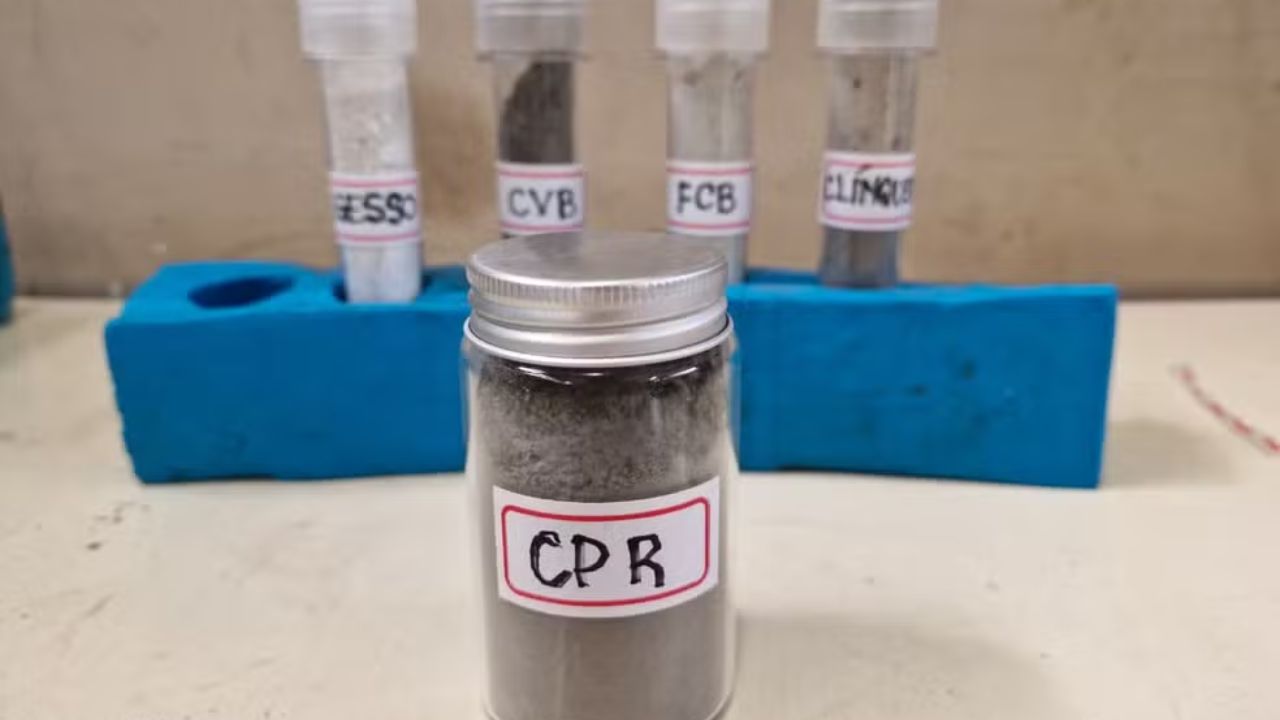
Throughout the study, more than 30 different formulations were developed and evaluated for various applications in civil construction.
The tests indicated potential use in:
- Mortar for laying bricks;
- Plasters;
- Structural masonry systems.
Additionally, the materials met the requirements established by the Brazilian Association of Technical Standards (ABNT). Another advantage pointed out by the researchers is the product’s ability to capture and fix CO₂, enhancing its environmental benefits.
Marco Oliveira states that the solution has the potential for large-scale production due to the strong presence of the cellulose industry in the country. According to him, the cost remains competitive compared to products already available on the market.
Circular economy transforms waste into raw material
The research conducted at IFPA shares a concept that is gaining relevance in different sectors: the circular economy. The proposal consists of reinserting waste into the production chain, avoiding waste and reducing the need for the extraction of new natural resources.
In this model, materials that would previously be discarded are now used in the manufacture of new products. Master in Biodiversity Conservation and Sustainable Development Marjorie Azevedo highlights that initiatives of this type demonstrate how economic development and environmental preservation can go hand in hand.
According to her, the adoption of sustainable solutions does not represent an obstacle to economic growth. On the contrary, it seeks to create alternatives capable of promoting economic expansion with environmental responsibility and social inclusion.
Açaí Pit Also Becomes an Alternative to Traditional Cement
Another study developed at the institute uses a well-known residue in the Amazon region: the açaí pit. The research began in 2013 and is coordinated by professor and doctor in materials engineering Laércio Gouvêa Gomes.
The work arose from the need to find new materials to complement or replace components used in cement manufacturing.
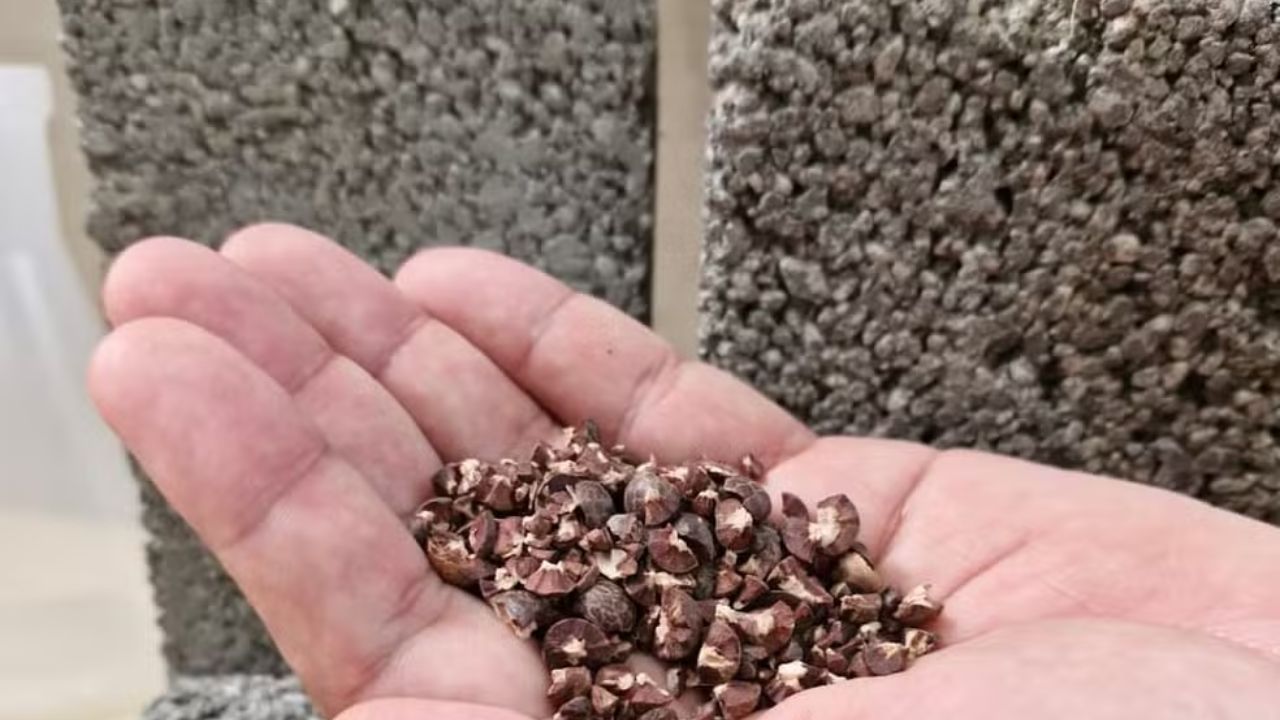
The process involves the calcination of the açaí pit. In simple terms, the material is subjected to high temperatures to modify its physical and chemical characteristics.
After this stage, the residue is ground into a fine powder, used as a substitute for conventional cement. Besides utilizing a material often improperly discarded, the initiative seeks to create a regional alternative for the civil construction sector.
Draining Floor Bets on Abundant Residues in the Amazon
Marco Oliveira also coordinates research aimed at developing draining floors using treated açaí pits as aggregate. The goal is to replace materials traditionally used in construction, such as pebbles and gravel, whose extraction also generates environmental impacts.
The proposal can particularly contribute to cities facing recurrent flooding problems. To assess the project’s feasibility, studies were conducted on the availability of raw materials and potential demand for the product.
The results indicated that the supply of the residue would be sufficient to meet not only Pará and other states in the Northern Region but also different areas of the country. According to Marco Oliveira, the production capacity observed during the research demonstrates potential to supply markets beyond the Amazon.
Discarded Tires Give Rise to Concrete for Tactile Flooring
Another initiative developed by IFPA aims to give a new purpose to used tires. In this project, waste from tire retreading replaces part of the sand used in the production of concrete intended for the production of tactile paving.
After arriving at the Material Characterization Laboratory, the tires undergo a separation process. Then, the rubber is transformed into granules of different sizes. These granules are incorporated into the mixture that contains water, cement, and other materials used in concrete production.
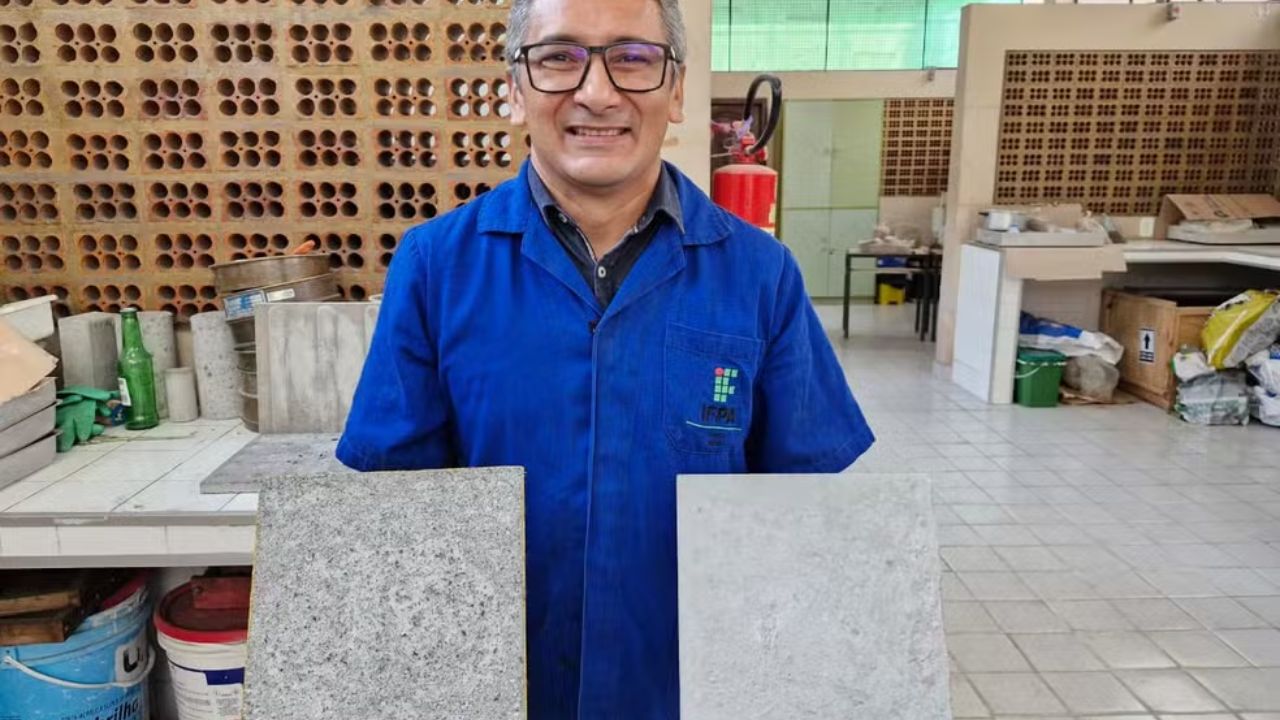
Laércio Gouvêa Gomes explains that the goal is to reduce sand extraction and, at the same time, reuse waste that could end up being improperly discarded. The researcher also highlights an additional benefit: the presence of rubber provides greater flexibility to the flooring, reducing impacts during people’s movement.
Currently, the materials are already used in the tactile flooring of the educational institution itself and meet the resistance requirements set by ABNT.
Challenges to Expand the Use of Sustainable Cement
Despite the advances achieved in research, experts recognize that the expansion of these solutions still faces obstacles.
Researcher Natasha Costa, a doctor in structures and professor at the Federal Institute of Amapá, emphasizes that any new material needs to present economic viability to compete with existing products.
According to her, resistance, durability, and mechanical performance are fundamental factors for the alternatives developed by academia to reach the market.
Moreover, large-scale production remains one of the main challenges faced by researchers. Natasha Costa also highlights the importance of tax incentives and partnerships between educational institutions and companies to accelerate the adoption of more sustainable materials.
Industry Invests in Reducing Cement Emissions
While research advances in universities, the industry also seeks to reduce its environmental footprint.
According to Fábio Cirilo, sustainability and energy manager at Votorantim Cimentos, the expansion of new technologies mainly depends on two factors: production scale and economic viability. The company has been working for decades to reduce emissions associated with cement manufacturing.
The strategies adopted include:
- Gradual reduction of clinker use;
- Replacement of fossil fuels;
- Use of industrial waste as an energy source;
- Investments in energy efficiency;
- Development of technologies for carbon capture and storage.
In the state of Pará, for example, açaí seeds have been used as fuel in an industrial unit located in Primavera.
Since 2018, the company has been collecting the material in the Metropolitan Region of Belém. In the last year cited by the research alone, 48 thousand tons of açaí seeds were used, avoiding the emission of approximately 44 thousand tons of carbon.
Brazil stands out in the search for sustainable solutions
The advances observed in academic research and industrial initiatives reinforce Brazil’s potential in the search for more sustainable production. Among the factors highlighted is the presence of natural materials that can be incorporated into cement, reducing the need for components with a higher environmental impact.
According to experts, the so-called Amazonian pozzolans are among the most reactive materials in the world for this type of application. As a result, cements produced in Brazil emit, on average, 11% less CO₂ than equivalent products manufactured in other regions of the planet.
The combination of scientific research, waste reuse, and industrial investments has positioned the country prominently in the search for alternatives capable of reducing emissions in the cement sector without compromising economic competitiveness.
With information from g1.


