






 Portuguese
  Spanish


An excavation carried out before a wind energy project brought to light medieval remains associated with an ancient German settlement, with wooden structures, ceramics, and signs preserved underground.
Archaeologists identified remains of the ancient Echene, a medieval settlement known from historical records, but without a proven location until the excavation carried out southwest of Borgentreich, in the Höxter district, Germany.
The discovery was announced on May 29, 2026, by the Landschaftsverband Westfalen-Lippe, the LWL, the regional body responsible for archaeological work in the region.
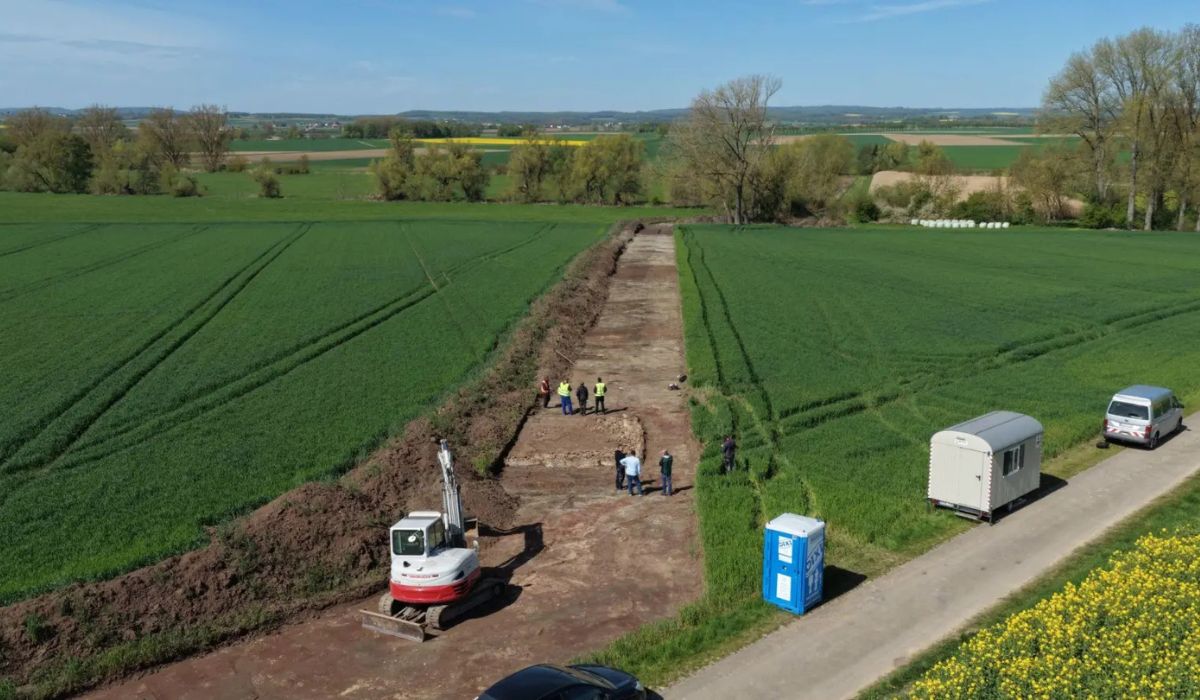
The investigation took place before the installation of a power line connected to new wind energy structures.
-
Artisanal Well Transforms 4 Hectares in Brazil’s Semi-Arid Region into Productive Farmland with Drip Irrigation

-
Recycled PET Bottles to Become Eco-Friendly Insulation Solution by 2026: Reduces Heat and Noise, Resists Moisture and Mold

-
2,500-Year-Old Biblical Figurine Discovered by Israel Antiquities Authority Sheds Light on Ancient Child Protection and Fertility Rituals in the Negev Desert

-
Young Innovator from the Brazilian Amazon Develops Acai Seed Brick, Turning Fruit Waste into Building Material, Wins Over 25 Awards, Showcases Globally


At the site, the team found marks of wooden houses, ceramic fragments from the 10th and 11th centuries, two wells, and the stone foundation of a medieval cellar.
According to the LWL, the excavated area is near the Mühlenbach, a watercourse cited by the body as an important part of understanding human occupation at that point.
The ancient Echene was first mentioned in documents in the year 944 and reappeared in medieval records in the following centuries, but the last known references are from the 15th century.
Medieval settlement Echene was known in historical records
Echene did not emerge for researchers from the excavation.
The name of the settlement already appeared in written sources, but its exact location had not yet been securely identified.
Until the discovery, one of the clues was the field name “Echeln,” recorded northwest of the Mühlenbach, which indicated a connection with the settlement mentioned in medieval documents.
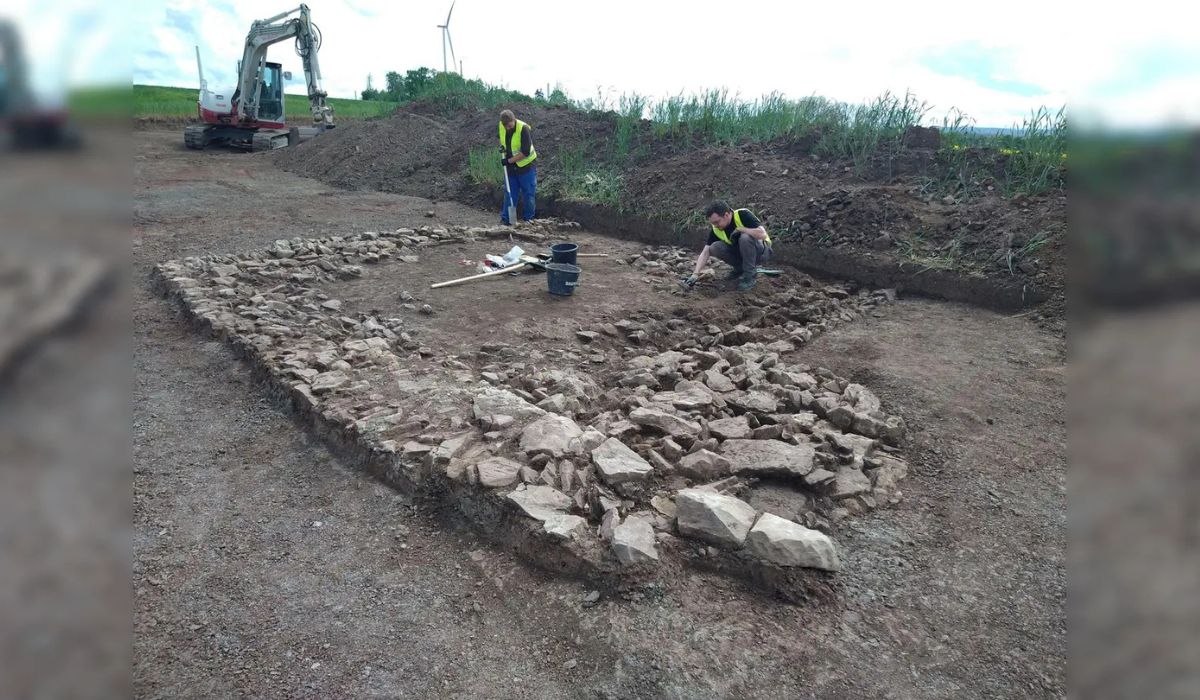
The excavation added material evidence to this set of information.
The remains of the occupation found underground extend to the low area near the stream.
Based on this distribution, LWL specialists assess that the settlement may have continued on the other side of the watercourse as well, although this extension has not yet been confirmed by excavation in the opposite area.
The head of LWL-Archaeology in Bielefeld, Sven Spiong, stated that after the last medieval mentions, the settlement “fell into oblivion” until it was rediscovered weeks before the official announcement.
The statement was presented by the organization in a communiqué about the location of the ancient settlement.
Wooden houses and medieval ceramics appeared under the soil
Among the oldest remains are post holes, marks left by wooden structures that were not fully preserved.
These changes in the soil help archaeologists estimate the position of ancient houses and auxiliary buildings.
According to the LWL, the main dwellings of that period usually had more than 20 meters in length.
The smaller annexes, about three by four meters, were partially dug into the ground and reached approximately one meter in depth.
Ceramic fragments dated from the 10th and 11th centuries were also found.
In an archaeological excavation, this type of material helps relate soil layers to periods of occupation and reconstruct aspects of daily life, such as the circulation of objects, domestic use, and changes in the settlement over time.
The marks of the wooden constructions indicate earlier phases of occupation.
From the end of the 11th century, according to the LWL, half-timbered houses began to appear at the site.
In many cases, only cellars or basements remained preserved underground, as the upper parts of the constructions were made of perishable materials.
Stone cellar indicates change in medieval constructions
One of the identified structures was a cellar with masonry walls and a north-facing entrance.
The find was made by archaeologist Normen Posselt, a member of the LWL team.
The construction differs from other cellars of the period described by the organization, which generally had wooden walls.
For this reason, the LWL considers the structure an important element for understanding changes in construction techniques used in the settlement.
The team also located two wells during the work.
The presence of these structures, along with the proximity to the Mühlenbach, reinforces, according to the interpretation presented by Spiong, the relationship between water, housing, animal husbandry, and agricultural areas in the formation process of these small settlements.
The archaeologist stated that, by the latest from the 10th century, the region’s landscape was marked by several small settlements near streams or spring areas.
According to him, the water necessary for people and animals, in addition to the neighboring fertile lands, guided the choice of locations where families built their properties.
Borgentreich helps contextualize rural settlements
The discovery also contributes to the understanding of the period before the founding of Borgentreich as a fortified city.
According to the LWL, Borgentreich was established in this way in the 1280s, but the surrounding area had been occupied for centuries by small rural communities.
About a kilometer south of the new archaeological site, near Christinenhof, another medieval settlement had been partially excavated in 1987.
The materials found there range from the 9th or 10th century to the 14th century, indicating an occupation partly contemporary to that of Echene.
The LWL reports that this other area may correspond to the ancient Broktrup, another abandoned locality known from written sources.
The formulation remains a possibility in the data released by the agency, without definitive confirmation in the statement.
This context shows a network of small rural settlements around Borgentreich before the urban consolidation of the fortified city.
Some of these places remained recorded in documents, while others left few visible signs in the current landscape.
Archaeologists are still analyzing the remains of Echene
The field stage does not end the work of the archaeologists.
After the excavation, the team needs to analyze boxes with ceramic fragments, date each identified pit, and compare the remains with the structures found on the site.
According to Spiong, this process will be necessary to reconstruct the development of the settlement from its initial phases to abandonment, at least in the part already investigated.
The researcher stated that “the excavation provides a good view of the daily life of people in a rural settlement, with its transformations over the centuries,” in a free translation of the LWL statement.
The mayor of Borgentreich, Nicolas Aisch, also commented on the discovery.
According to him, the finding shows “how much history is still hidden beneath our feet,” a statement attributed by the LWL in an official release.
Aisch also stated that discoveries of this kind are important for archaeology and regional identity.
The assessment was presented as the mayor’s position, without the text attributing an unmeasured impact to the finding by the researchers.
Wind energy project revealed remnants from another period
The relationship between the wind energy project and the archaeological discovery appears in the release as part of the excavation context.
Before the installation of the power line, the remnants and findings are being documented and collected by the team accompanied by the LWL.
In the case of Echene, the elements found do not form a monumental landscape but record aspects of medieval rural life.
Post holes, wells, ceramic fragments, and a stone cellar help document where the constructions were located, how the space was organized, and what construction techniques appeared in different phases of the settlement.
The research still depends on the analysis of the collected material.
Until this stage progresses, the exact date of the excavation’s start and the full extent of Echene beyond the area already opened by the archaeologists remain publicly unconfirmed.
Based on the data released so far, the ancient settlement is no longer just a name preserved in medieval documents and now has a physical correspondence in the terrain.
From the upcoming studies, the team will be able to better detail how the settlement was formed, changed, and ceased to appear in known records.


