






 Portuguese
  Spanish


The Voltz EVS electric motorcycle appeared with a claimed range of up to 180 km, charging from a standard outlet, and a price of R$ 19,990. Later, delays, complaints, and judicial recovery changed the perception of the manufacturer, without erasing the market’s interest in urban electric vehicles in the country and new national models.
The Voltz EVS electric motorcycle was presented as a Brazilian alternative for urban commuting, with a proposal for simple charging, connectivity, and less fuel dependency. In 2022, specialized reports highlighted a claimed range of up to 180 km with two batteries, an initial price of R$ 19,990, and charging from a standard outlet.
The case began to be observed from another angle when Voltz Motors faced delays, consumer complaints, and judicial recovery. The EVS ceased to be just an example of innovation in urban mobility and began to show how technical promise, production, service, and trust need to go hand in hand in the electric vehicle market.
The EVS proposal aimed at a simpler urban routine
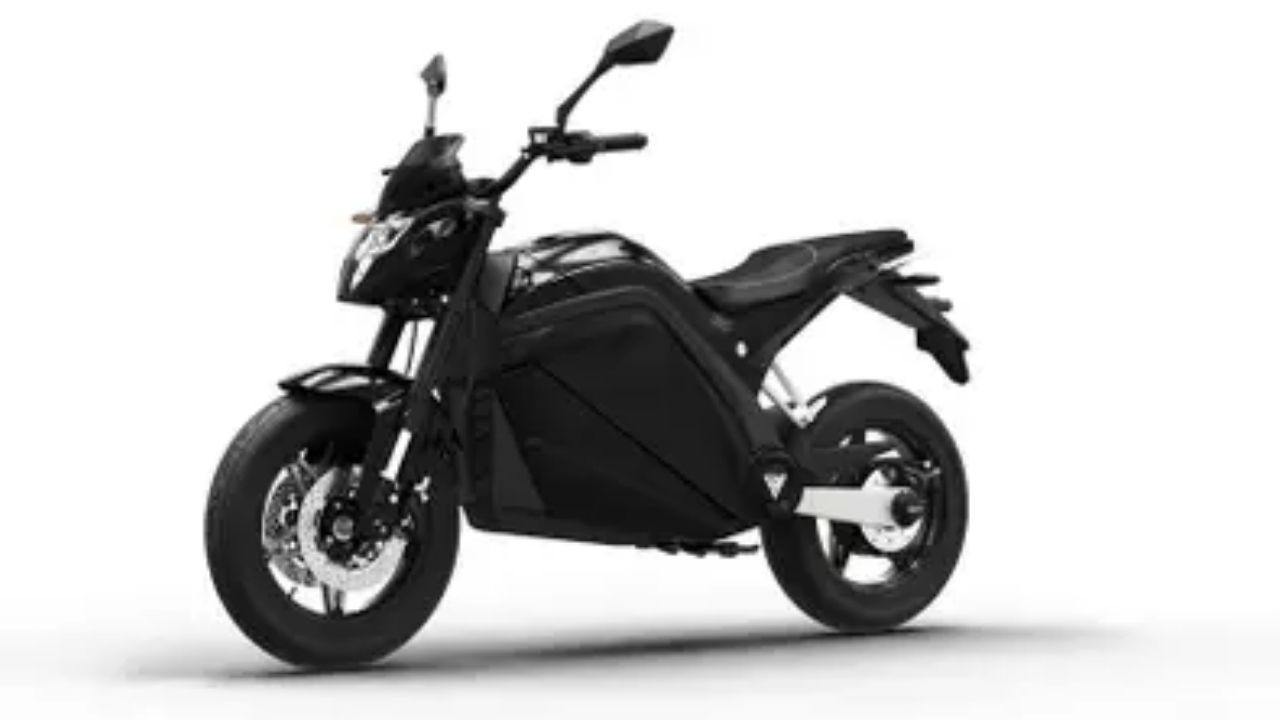
When it gained prominence, the Voltz EVS attracted attention by trying to occupy a specific space in Brazil: that of the urban electric motorcycle with the appearance of a street model and a proposal for daily use. The idea was to offer an electric motorcycle aimed at short and medium commutes, without relying on gasoline and with home charging.
-
Chery Stockman 2026 Unveiled: Larger Than Toyota Hilux, Featuring Unique Plug-In Hybrid Diesel Engine, 3.5 Ton Towing Capacity, and 1,000 kg Payload to Challenge Traditional Off-Road Trucks

-
Does a Flag on Your Car’s Hood Overheat the Engine? Expert Reveals the Overlooked Danger for Drivers

-
How to Identify and Remove Superficial Scratches Before Spending on Car Bodywork

-
Electric Car with Extended Range: Company Patents Hybrid Transmission System Using Gasoline Engine for Backup


In a June 2022 publication, TecMundo reported that the EVS could be purchased with one or two batteries. With two modules, the claimed range reached 180 km at an average speed of 35 km/h. With one battery, the estimated range was 120 km, according to data attributed to the manufacturer at that time.
The strength of the proposal was in bringing the electric vehicle closer to the common routine of cities. Instead of relying on complex charging infrastructure, the model promised an experience closer to the urban consumer who already uses a motorcycle for work, study, or daily commutes.
The electric motorcycle was also presented with a 3,000-watt motor, peak of 7,000 watts, acceleration from zero to 60 km/h in six seconds, and a maximum speed of up to 120 km/h. These numbers helped position the EVS as a more robust alternative than a basic electric scooter.
Competitive price and common outlet increased interest in the model
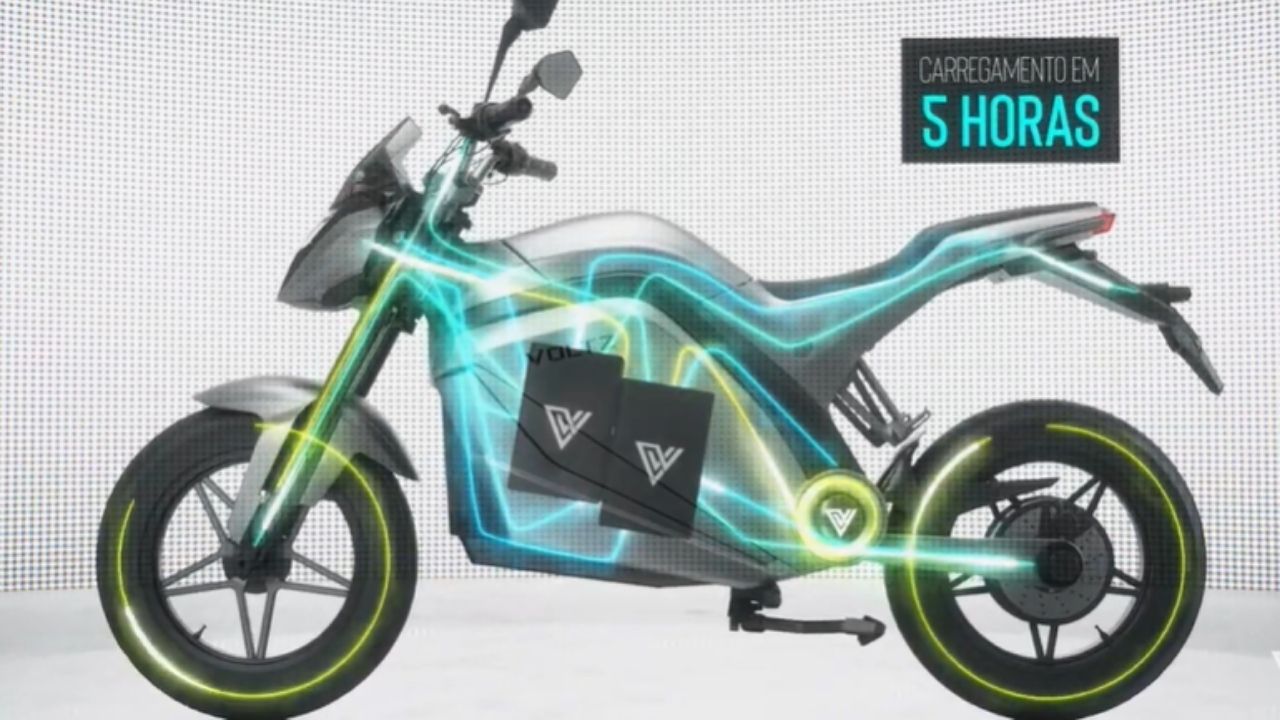
One of the points that most attracted attention in the Voltz EVS was the charging in a common outlet. According to the information released in 2022, each battery module consumed 2.4 kWh and could be charged in about five hours. In practice, this detail brought the electric motorcycle closer to consumers who did not have a dedicated charger at home.
The price also played an important role in the repercussion. The EVS appeared with a price starting at R$ 19,990 with one battery. The version with two modules had an increase in the final price but delivered greater announced autonomy, which reinforced the appeal for those seeking an urban solution with more range per charge.
The combination of autonomy, common outlet, and competitive price helped create expectations around the brand. For a market still in formation, the EVS seemed to gather attributes that the Brazilian consumer usually considers before migrating to an electric vehicle: cost, practicality, and real use in daily life.
At the same time, the 2022 material itself already indicated a sensitive point: the waiting period. The publication mentioned that, after the reservation, the consumer could wait at least 24 weeks to receive the motorcycle. This data showed that demand and delivery capacity were already relevant elements in the model’s trajectory.
Embedded technology elevated the value promise of the Voltz EVS
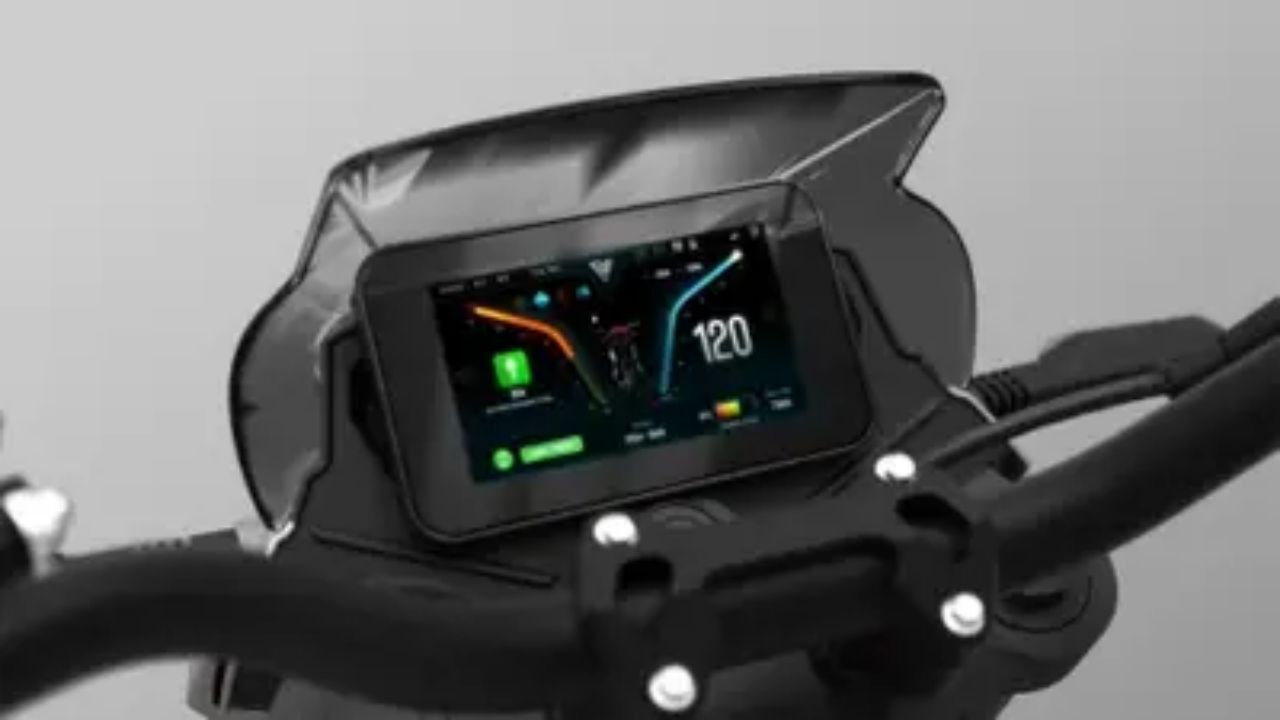
The EVS was not only promoted as an economical electric motorcycle. Voltz also focused on connectivity, app, battery monitoring, location, and smart features. The model was part of the brand’s digital ecosystem, integrating with the Hello Voltz app and sending data to the company’s servers.
The smart dashboard allowed users to track information such as charge, speed, driving mode, location, and usage data. There were also GPS tracking features, alerts if someone tampered with the motorcycle, and functions related to vehicle monitoring via smartphone.
This technological package increased the perceived value of the EVS, but also raised expectations regarding support and continuity. In electric vehicles, the consumer experience depends not only on the engine or battery but also on software, assistance, parts replacement, and post-sale communication.
This is a central point to understand the change in perception about Voltz. When a product is presented as smart and connected, the consumer expects the company’s structure to match the promise. Innovation then depends on operation, service, and the ability to keep the vehicle running over time.
Delays and complaints began to weigh on the manufacturer’s image
With the increase in sales and reservations, the EVS’s trajectory also began to be accompanied by reports of delays and consumer complaints. In February 2025, the Procon of Santa Catarina reported that it had received records related to the non-delivery of Voltz electric motorcycles.
The agency also cited complaints accumulated on consumer service platforms. For a brand that had attracted attention with its national electric mobility proposal, this movement shifted the focus of the conversation: the discussion no longer revolved solely around autonomy, price, and technology.
Trust became as important as the technical specifications. In a new market, especially when it involves electric vehicles, consumers look not only at the product but also at delivery time, service, assistance, parts availability, and operational stability.
Therefore, the EVS became a relevant case for understanding the electric transition in Brazil. The interest in the product showed that there is demand for urban electric solutions, but the delays and questions reinforced that scaling a manufacturer requires more than launching a competitive model.
Judicial recovery entered as a sign of business reorganization
The judicial recovery of Voltz added a new layer to the understanding of the company. Instead of treating the issue as a legal dispute, the most relevant point for the market is to understand that the manufacturer went through a phase of financial and operational reorganization.
This context affects consumer perception because vehicles depend on continuity. Those who purchase an electric motorcycle need to consider maintenance, battery, parts, software, warranty, and service channels. When the manufacturer experiences instability, confidence in after-sales tends to become a decisive factor.
The case shows that electric mobility does not depend solely on product innovation. A company in the sector needs to maintain production, logistics, technical assistance, and clear communication with buyers, especially in a segment still new in Brazil.
In this sense, judicial recovery appears as part of a broader picture: the difficulty of turning a promising proposal into a sustainable operation. Voltz EVS caught attention for what it promised to deliver, but the brand’s continuity began to depend on business factors beyond the technical specifications.
An attractive product is not enough when after-sales becomes a doubt


The trajectory of EVS helps to separate two different things: consumer interest in an electric motorcycle and a company’s ability to sustain that interest after the sale. The first point was clear from the model’s prominence. The second became more delicate with delays, complaints, and uncertainties about service.
In the automotive sector, after-sales is part of the product. This is even more true for electric vehicles, which depend on batteries, electronic components, updates, specific parts, and skilled assistance. A motorcycle may have good advertised range, but the user experience depends on the entire operation.
Voltz EVS entered the debate because it combined a promise of the future with execution problems in the same case. For consumers, the story reinforces the importance of observing reputation, deadlines, and support before buying from a new or expanding brand.
For the market, the reading is broader. Brazil has room for urban electric motorcycles, especially in large cities, deliveries, and low-cost commutes. But this growth depends on manufacturers capable of delivering scale with predictability.
What EVS leaves for the electric vehicle market in Brazil
Voltz EVS showed that there is real appeal for a Brazilian electric motorcycle with urban range, competitive price, and charging from a common outlet. The proposal resonated with a concrete demand: reducing fuel costs, simplifying commutes, and bringing the electric vehicle closer to the consumer’s routine.
At the same time, the case made it clear that the Brazilian consumer has started to look beyond the promise. Today, delivery time, assistance, parts, support, company situation, and service history weigh as much as autonomy and maximum speed.
The big question left by EVS is not whether there is interest in electric motorcycles in Brazil, but which brands will be able to turn that interest into lasting trust. The product caught attention, but the market experience showed that innovation needs to be accompanied by structure.
Would you buy an electric motorcycle from a new brand in Brazil or wait to see deliveries, assistance, and after-sales consolidated before closing the deal? Leave your opinion in the comments and tell us if the Voltz case would change your purchase decision.


