






 Portuguese
  Spanish
  2 min of reading
  0 comments


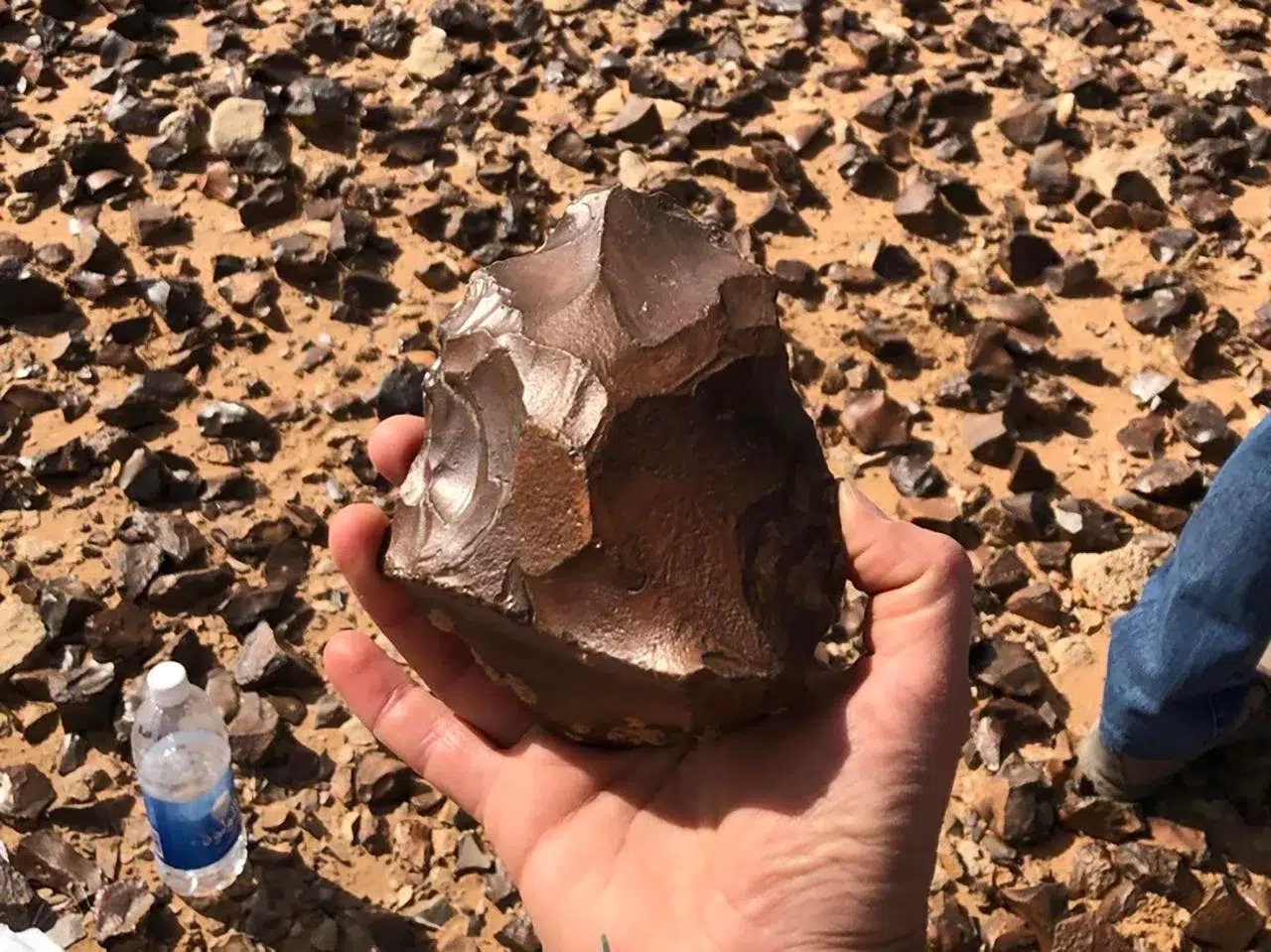
Excavation in the Iraqi Desert Reveals 850 Artifacts Dating Back to 1.5 Million Years, Offering New Perspectives on Human Evolution in the Arabian Peninsula
An excavation started in the Iraqi desert revealed more than 850 artifacts, dating back to 1.5 million years, providing a new perspective on human evolution in the Arabian Peninsula.
The research, conducted by an international team of archaeologists, takes place in an area previously dominated by a large lake during the Pleistocene, revealing signs of early human presence.
Carried out between November and December, the excavation was the starting point for a deeper study of the geological and archaeological history of the Iraqi desert.
-
Survivor of 1966 SS Daniel J. Morrell Shipwreck in Lake Huron Recounts 38-Hour Ordeal in Extreme Cold

-
The Greatest Hoax in World Cup History? The Film That Denied Brazil’s 1958 Victory and Exposed How Fake Evidence Can Seem Convincing on TV
-
Fake South Korean Online Stores Offer Shopping Thrill Without Spending Money or Receiving Products
-
The War of Jenkins’ Ear: How a Severed Ear Sparked One of the 18th Century’s Most Unusual Conflicts


The region, known for its aridity, has often been underestimated when it comes to evidence of ancient civilizations. However, recent results prove that Iraqi territory was the site of human activity much earlier than previously thought.
Excavation in Iraq
The team led by archaeologists Ella Egberts, Jaafar Jotheri, and Andreas Nymark located seven Paleolithic sites.
Among the artifacts found, hand axes over one million years old stand out, as well as Levallois reduction flakes, dated between 300,000 and 50,000 years ago.
These tools are of utmost importance, as they help to better understand the habits and technological advances of early human societies.
According to Egberts, the fieldwork was a great success: “We conducted a systematic survey to understand the spatial distribution of the artifacts and perform initial analyses on the tools found.”
With this initial success, the team intends to expand the research to other areas of the region and deepen the study of the findings.
Training of New Researchers and Local Awareness
In addition to the excavations, the researchers took the opportunity to involve the local community.
During the fieldwork, three students from Al-Qadisiyah University in Iraq were trained in the field of archaeology, which also helped to generate greater awareness about the importance of this field of study in the country.
The archaeologists believe that other sites yet to be explored in the region will likely reveal similar discoveries.
The fieldwork can be considered a sample of what is to come. For the researchers, the recent findings are not just destroyed materials but valuable evidence of early human land use, a significant milestone in the history of human evolution.
More information about the discovery can be found at Interesting Engineering.





Be the first to react!