Portuguese
  Spanish


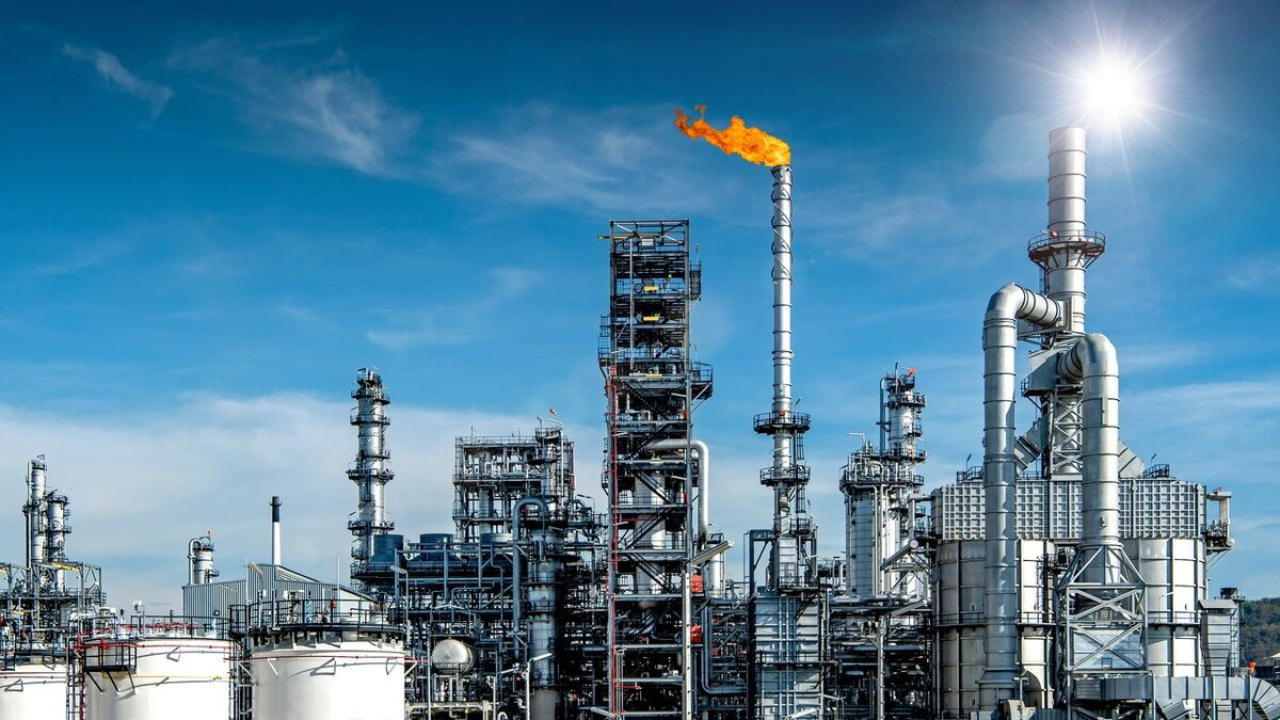


US Control Over Venezuelan Oil Favors American Refineries, Such As Valero and Marathon, That Profit From Cheaper Heavy Oil While Producers Face Greater Risks.
The expansion of US control over Venezuela’s oil industry is generating uneven impacts within the energy sector. While public attention focuses on the major oil companies, the biggest initial winners of this movement are not the oil producers, but rather the American refineries responsible for transforming crude oil into gasoline, diesel, and other derivatives.
Refining companies like Valero Energy and Marathon Petroleum are in a favorable position. This is because these companies adjusted their industrial plants decades ago specifically to process Venezuelan oil, known for its heavier and more complex characteristics.
Characteristics of Venezuelan Oil Favor Specific Refineries
Not all oil is created equal. The main type of crude oil extracted in Venezuela is viscous, dense, and similar to tar. Because it is more difficult to refine, it is usually sold at lower prices than oil produced in the United States. However, this factor makes it especially attractive to refineries equipped to handle this type of oil.
-
Petrobras to Double Natural Gas Supply in Northeastern Brazil with New Investment

-
Petrobras Approves $1.2 Billion Refinery in Brazil to Produce Aviation Fuel and Diesel from Plants
-
Petrobras Secures $2.2 Billion Contract to Build and Operate Four Support Vessels for Brazil’s Offshore Oil Fields
-
Oil production grows in Rio, but reserve replacement raises a warning sign



In the Gulf Coast of the US, several refineries have technologies capable of processing this heavy oil efficiently. Thus, expanded access to Venezuelan oil represents a direct opportunity for operational and financial gain for these companies.
Lower Risk Exposure Differentiates Refineries From Producers
While producers like Exxon Mobil and ConocoPhillips need to assess political, legal, and operational risks to operate directly in Venezuela, refineries face a different scenario. They do not need to take on long-term commitments or relocate employees to the country.
This lower level of exposure makes the business more attractive. As a result, refineries can benefit from Venezuelan oil without bearing the same risks faced by exploration and production companies.


Financial Market Reacts to the New Oil Scenario
Investors quickly identified this asymmetry. Since US forces captured Nicolás Maduro, the president of Venezuela, shares of PBF Energy, a mid-sized refinery, have risen about 15%, far outpacing the performance of the broader market.
Larger companies have also recorded significant gains. Valero’s shares have risen approximately 10%, while Marathon Petroleum’s stocks have seen an increase of nearly 6%.
“Having more Venezuelan crude oil available is just an advantage for US refineries,” said Rick Weyen, a retired executive who previously coordinated oil shipments for a refinery in Texas.
Timing Was Already Favorable for the Refining Sector
This new momentum occurs at a time that is already positive for refineries. Historically, these companies benefit from lower oil prices, as long as demand for fuels remains robust. This was exactly the scenario observed during and shortly after the COVID-19 pandemic, when recovery in consumption boosted profit margins.
Therefore, the potential increase in the flow of Venezuelan oil is likely to strengthen an already profitable phase for the sector.
Import Historical Data Shows Room for Growth
It is still early to accurately define how oil flows will behave following Maduro’s ouster. However, historical data suggests that imports could grow. In 2018, before the more severe sanctions imposed by Donald Trump during his first term, the United States was importing about 506,000 barrels of Venezuelan oil per day.
By last fall, this volume had dropped by approximately 75%. The resumption of American control over the sector opens the door for a partial reversal of this trend.
Plan Calls for Prolonged Control of the Oil Industry
Last week, the Trump administration presented a plan that envisions control over Venezuela’s oil industry “for an indefinite time.” The strategy would start with something between 30 million and 50 million barrels, possibly already stored in the country or on tankers anchored near the coast.
Although the Venezuelan government has not confirmed all the details, large global trading companies, such as Trafigura and Vitol, are already helping to line up buyers for this oil.
Geographical Proximity Reduces Costs and Favors the US
A large portion of the available oil is expected to go to the United States. In addition to being suitable for American refineries, Venezuela is relatively close to the Gulf Coast, which reduces logistical costs and makes the operation even more attractive.
“We are more than happy as this opportunity expands to invest even more in our refineries and produce more,” said Lane Riggs, CEO of Valero, during a recent meeting between industry executives and President Trump at the White House.
Riggs highlighted that the company has refineries “uniquely configured to process Venezuelan oil.”
Potential Impacts on Consumers and Competitors
With the arrival of more cheap oil, American consumers may benefit from slightly lower prices for fuels, such as diesel and jet fuel. Nevertheless, any reduction is likely to be modest, as Venezuela accounts for about 1% of global oil production.
At the same time, an increase in Venezuelan imports may hurt Canadian producers, currently the main suppliers of heavy oil to the US.
Doug Terreson, a former energy analyst and current advisor to Phillips 66 refinery, downplayed the impact of the initial volumes. “Is it a significant amount of oil? It doesn’t disrupt, but it’s two days of supply,” he said, noting that the United States refines about 17 million barrels per day.