






 Portuguese
  Spanish


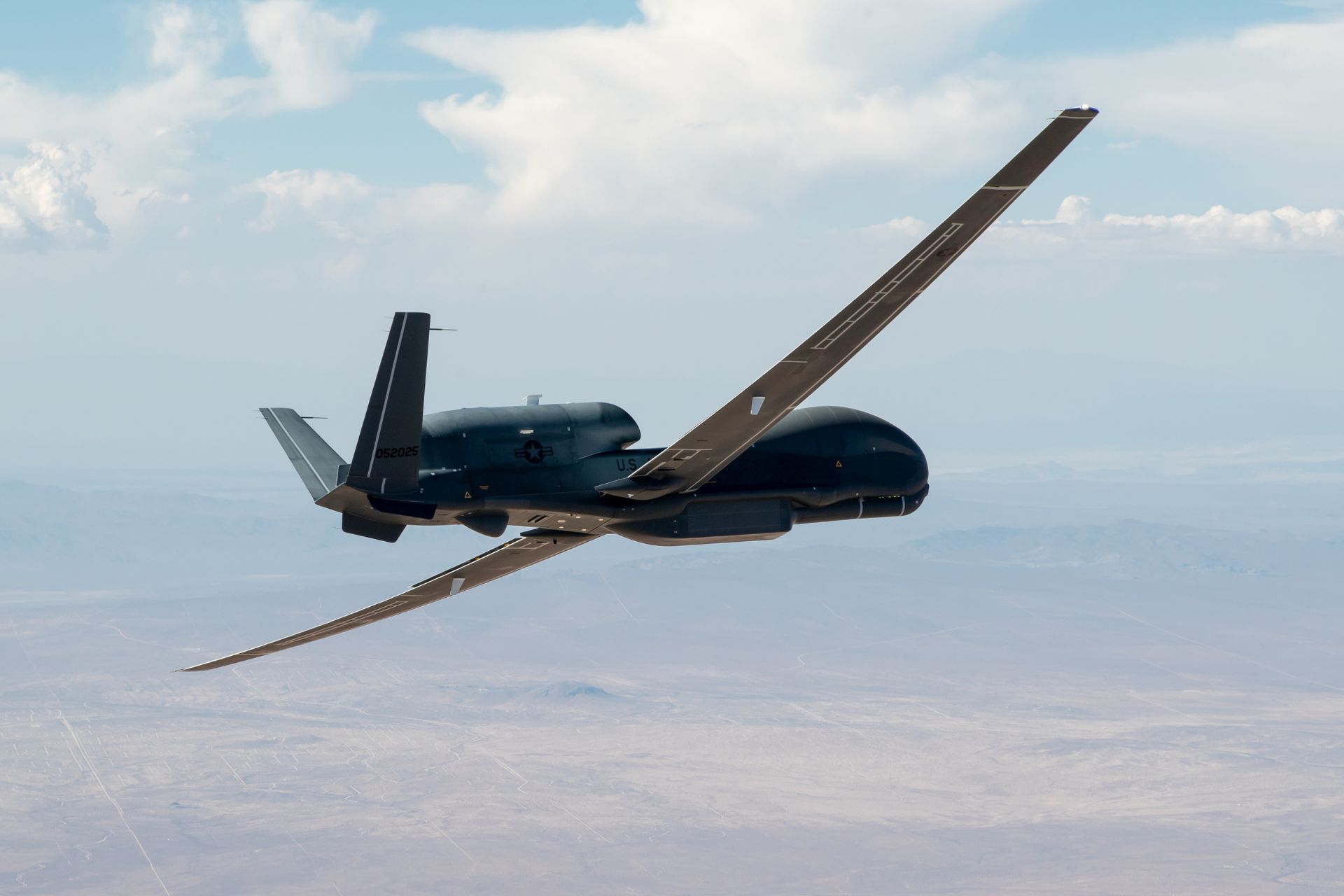


The $325.5 million contract signed on May 14 between the U.S. Army and Northrop Grumman transforms already retired Global Hawk RQ-4 drones into a new fleet called RangeHawk, 40-meter wingspan flyers that will stay airborne for 34 hours at 18,000 meters altitude just to time the speed of their own hypersonic missiles.
The contract runs until 2031, linked to the Test Resource Management Center, a Pentagon office that manages weapons testing infrastructure.
The choice to recycle the Global Hawk RQ-4 is not symbolic. The model was phased out by the U.S. Air Force at the beginning of this decade, deemed too expensive for espionage missions that satellites already cover better.
But the original hull has rare characteristics: 130-foot wingspan, 34-hour autonomy, and a ceiling of 60,000 feet, almost double the maximum altitude of a commercial jet.
-
France doubled the firepower of the new frigates and increased the missiles from 16 to 32 tubes ready to fire.

-
Spain sent its most advanced frigate to Cyprus and set up an anti-missile shield in the Mediterranean with an eye on Iran.
-
India places 52 spy satellites in orbit for R$ 16 billion to monitor every meter of its own borders.
-
Poland took control of its own constellation of radar satellites in less than a year and now sees through clouds and darkness.


The cost of a platform of this size flying from scratch is prohibitive. Reusing planes that were going to the depot is much cheaper.
What the RangeHawk Really Does
The drone will carry a package of instruments called PANTHER, with phased-array antennas, electro-optical and infrared sensors, telemetry recorders, and encrypted communications.
Everything serves to track missiles flying at Mach 5 and faster, recording speed, trajectory, surface temperature, and performance of each flight stage.
The list of programs includes the Army’s Dark Eagle and Long-Range Hypersonic Weapon, the Navy’s Conventional Prompt Strike, and boost-glide vehicles still in development.

Today, each hypersonic test depends on a fleet of instrumented ships stationed at specific points in the ocean.
George Rumford, director of the Test Resource Management Center, explains that these ships take weeks or months between tests just to reposition.
The RangeHawk shortens this to “a few days,” according to the contract documentation. Flying high and for a long time, the drone tracks launches anywhere in the Pacific or Atlantic without needing to dock.
Why the Pentagon is in a Hurry
China tested a hypersonic glider vehicle in the past decade and has been operating the DF-17, the first missile of its kind in active use, for several years. Russia has kept the Avangard and Kinjal models in service since the late 2010s.
The United States was late to the start. The Dark Eagle was supposed to enter service in the Army in 2023 and was delayed several times due to launcher issues.
Timing flights accurately is the next bottleneck. Without clean telemetry data, development stalls because engineers can’t understand where to make corrections.

We often think of weapons as final objects, but the real work is in iterating tests with precise data.
With the RangeHawk in the air, the Pentagon hopes to fire a series of tests every few days and use telemetry to adjust before the next flight.
Drones that Leave the Depot and Become Instruments
Each RangeHawk repurposes an RQ-4 retired from active service, saving the original investment and cutting the cost of manufacturing a new fleet.
Northrop is not alone in this American race for new unmanned platforms. The same company flew, two weeks ago on May 12, another experimental drone, the XRQ-73 hybrid-electric from DARPA’s SHEPARD program, in Edwards.
And on May 21, Boeing delivered the first units of the MQ-25A Stingray to the U.S. Navy, an autonomous tanker drone.

The contract with Northrop runs until 2031, a timeline that coincides with the expected cycle of new American hypersonic programs, from X-51 air-breathing derivatives to long-range scramjets.
The most curious detail might be the economy of the operation: drones that were going to the scrapyard return to the air, now not to spy on enemies, but to time their own weapons in development.
I confess the whole game has a somewhat paradoxical air: paying 325 million to use retired drones as flying timers for missiles that haven’t even entered the field yet. But the Pentagon’s logic is clear: without precise telemetry, nothing moves forward. And you, tell us in the comments if you think this type of military investment is productive or a symptom of an unchecked race.
Does it make sense to pay $325 million to resurrect retired drones just to time American hypersonic missiles?








