Portuguese
  Spanish


In Itajubá, a family lives 10 minutes from downtown without connection to Cemig or Copasa supply, using solar panels, motorcycle battery, spring water, and wood stove to face dark nights, cold showers, food without refrigeration, and waiting for property regularization in the local Santa Helena neighborhood.
A family from the Santa Helena neighborhood, in Itajubá, in the south of Minas, has lived for over 50 years without electricity and without piped water in a house built in the 1970s. The case came to light on August 14, 2025, and shows a routine marked by improvisations just 10 minutes from the city center.
In the property, live today the retiree Jorge Matias de Oliveira and his wife, Adélia Aparecida Leite. Without a formal energy connection and regular water supply, the couple relies on improvised solutions to light the house, preserve food, take baths, and perform basic household tasks.
House is close to the Center, but was never connected to the power grid
The house where the family lives was built in the 1970s and, according to the presented account, was never connected to Cemig’s grid. Even being in a neighborhood of Itajubá and just minutes from the Center, the property remained for decades without conventional electricity.
-
Creative Uses for Toilet Paper Rolls That Will Change Your Perspective

-
Crab Trapped in Plastic Bottle for 62 Days Near Okinawa Highlights Little-Known Impact of Marine Pollution on Small Animals
-
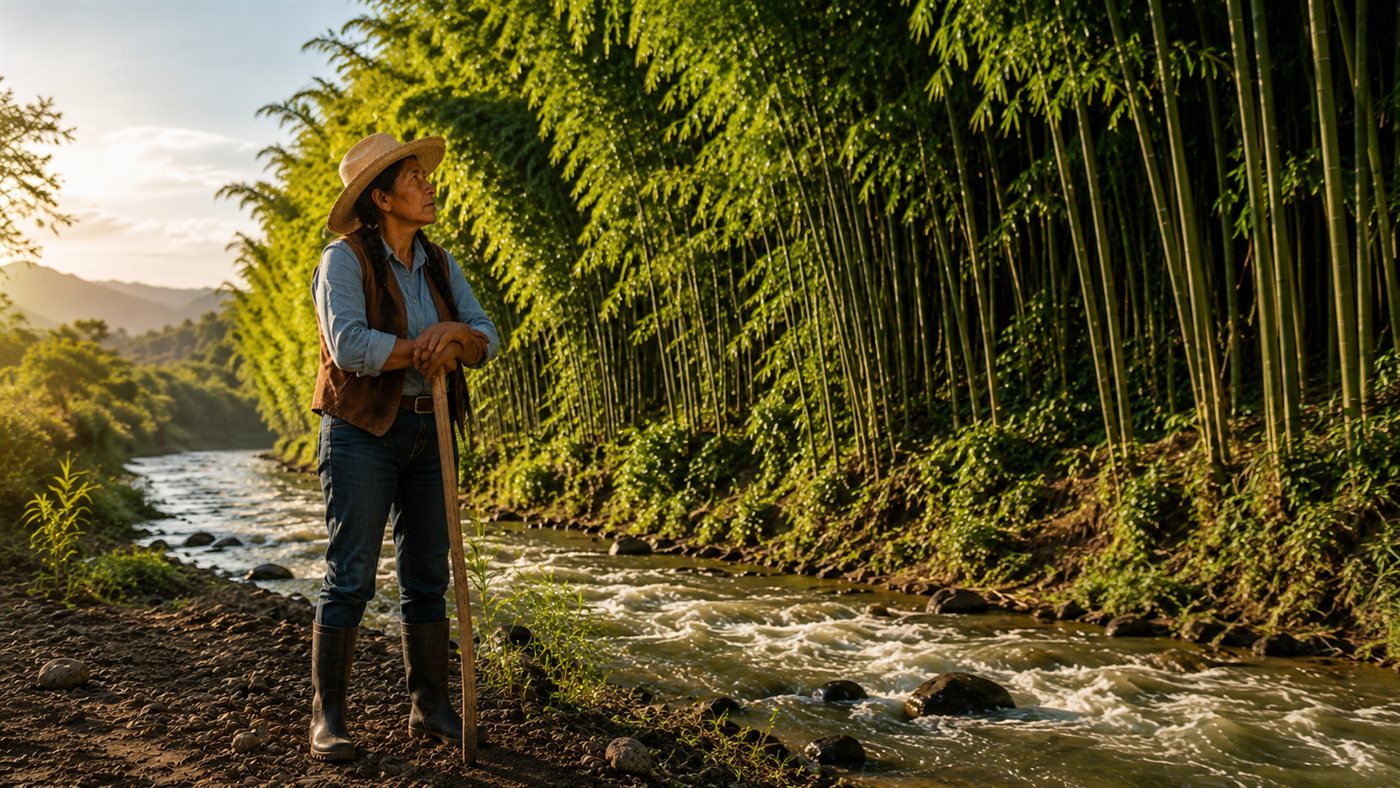
Esperanza’s Bamboo Barrier in Oaxaca Redirects River and Reduces Erosion by 85% in Five Years

-
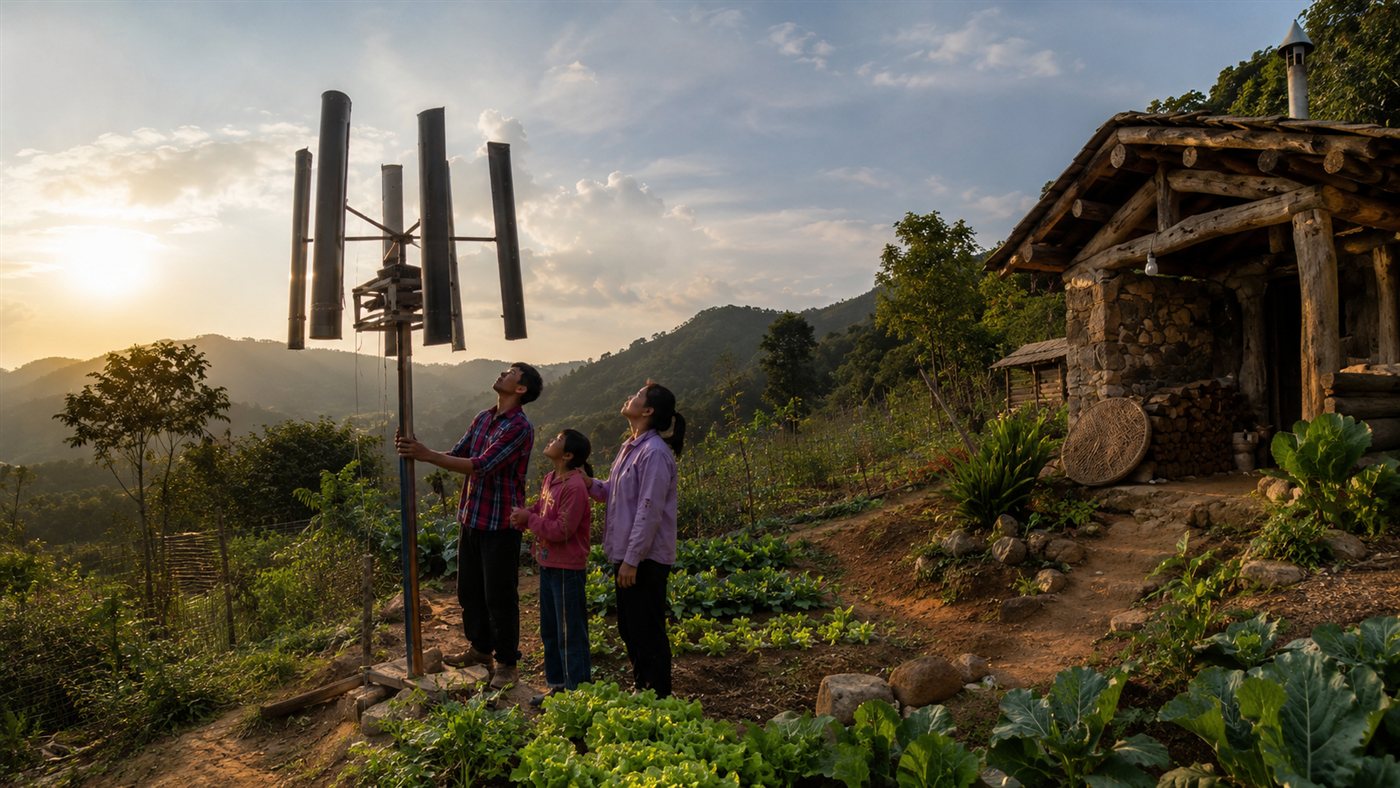
Family Builds Homemade Wind Turbine to Power Off-Grid Home, Video Reaches 555,000 Views on Ngô Thị Huyền’s Channel


Jorge states that the situation has been brought several times to Cemig and the City Hall, but it was not resolved. He says he hears different versions about the responsibility for the service and about the area’s regularity, while the family remains in the same place because they cannot afford rent.
The main difficulty lies in the property’s documentation. According to Jorge, the residents bought, paid, and have a paper, but do not have a deed. For him, the absence of a deed does not mean that the family should continue without basic service indefinitely.
Cemig informed that the property is in an irregular situation and that, to install electricity, it is necessary to provide regularization with the competent public bodies. The City Hall of Itajubá was contacted to explain what would be necessary to regularize the documentation, but there was no response in the consulted material.
Solar panel, motorcycle battery, and LED became a solution against darkness

Without electricity, the family’s routine changes completely according to daylight. During the bright period, the sun illuminates the rooms. At night, the solution found was an improvised system set up by Logan Samuel Leite Delfino, the couple’s son.
He installed a solar panel, a motorcycle battery, and an LED lamp to ensure some lighting inside the house. The setup also allows a small television to stay on, one of the few resources available to bring information and company during the night.
Logan states that the solution offers at least a bit of light and dignity. According to him, using a kerosene lamp is not a safe option for the family, as Jorge has heart failure and Adélia is undergoing cancer treatment.
The improvisation, however, is far from replacing a regular electrical connection. The system is limited, does not allow normal use of appliances, and depends on the battery’s charging conditions.
Without a refrigerator, food needs to be adapted to the routine
The lack of electricity prevents the use of a refrigerator. This directly affects the family’s diet, which needs to avoid or limit products that require constant refrigeration.
Meat, for example, is consumed only on weekends. Foods like milk and butter, which would normally need to be refrigerated, are stored in a box with water as an attempt at preservation.
The absence of a refrigerator turns simple tasks into daily decisions. Buying, storing, and preparing food requires greater planning because any perishable product can spoil more easily.
This reality shows how the lack of electricity is not limited to lighting. It interferes with food, health, comfort, safety, and the autonomy of those living in the house.
Bathing in winter depends on a wood stove and a mug

A bathing routine is also marked by improvisation. In winter, the water needs to be heated on a wood stove and carried to the bathroom with a mug.
For any family, this process would already be tiring. In the case of Jorge and Adélia, the situation is even more burdensome because it involves age, health limitations, and a domestic routine that requires repeated effort.
Taking a bath, something basic in any home, has become a manual operation. It is necessary to light the fire, heat the water, transport the liquid, and manage everything without an electric shower or regular heating system.
This detail helps to gauge the distance between the house and minimum infrastructure conditions. Although the property is near the center of Itajubá, the described routine resembles that of isolated areas without access to essential services.
Water comes from a nearby spring, not from the Copasa network
Besides the lack of electricity, the house also does not receive water supply from Copasa. To wash clothes and perform domestic tasks, the family uses water from a nearby spring.
Adélia states that the situation is complicated and recalls that the routine remained difficult even during health treatment. The dependence on the spring makes the supply more fragile, as it requires travel, physical effort, and constant adaptation.
Copasa informed that there are no registered requests for water and sewage connection for the property. The company advised that the responsible party should visit the service agency in Itajubá with personal documents and proof of the property’s regularity.
In practice, the response returns to the same point: the regularization of the property. While the documentation does not advance, the family remains without formal access to the water and sewage network.
Logan demands action and speaks of neglect
For Logan, the situation of the family represents neglect. He states that it is easy to ask for votes, but the authorities do not go to the location to see how they live.
His demand has a direct tone: he asks for something to be done for the family. The account shows frustration with years of waiting, attempts at solutions, and lack of definitive direction.
The case exposes a contradiction that is hard to ignore. The house is located in an urban area, near the center of Itajubá, but the residents’ routine still depends on an improvised solar panel, motorcycle battery, spring water, and wood stove.
It also shows how land regularization issues can block access to essential services. Even when there is a network, public company, concessionaire, and municipality involved, the solution can remain stalled between documentary requirements and cross-responsibilities.
Property regularization became the central point of the impasse
The situation of the family depends on a clearer institutional response. Cemig conditions the power connection on regularization with public agencies. Copasa advises appearing with proof of regularity. The City Hall, in the consulted material, did not respond.
As a result, Jorge and Adélia continue living in the same property, without conventional electricity and without piped water. The problem is not just technical; it is documentary, social, and human.
Property regularization appears as a necessary path, but the report shows that the family could not advance alone. For those living with low income, without the wife’s retirement, and without housing alternatives, this process can be difficult to face without support.
Meanwhile, the routine continues supported by palliative solutions. The light comes from an improvised solar panel, bathing depends on the wood stove, water comes from a spring, and food needs to be adapted to the absence of a refrigerator.
More than 50 years waiting for basic services
The story of the family from Itajubá draws attention because it does not take place in a distant or inaccessible region. The house is located in the South of Minas, in an urban neighborhood, about 10 minutes from the Center.
Even so, Jorge and Adélia have lived without electricity and piped water for more than five decades. It is a wait too long for services that define the minimum dignity within a home.
The case raises a bigger question about regularization, access to infrastructure, and public responsibility. When a property is in a pending situation, who helps the family out of the impasse before the lack of energy and water becomes a permanent condemnation?
And you, do you believe that cases like this should be resolved first by property regularization or by the emergency provision of basic services while the documentation is analyzed? Share your opinion.