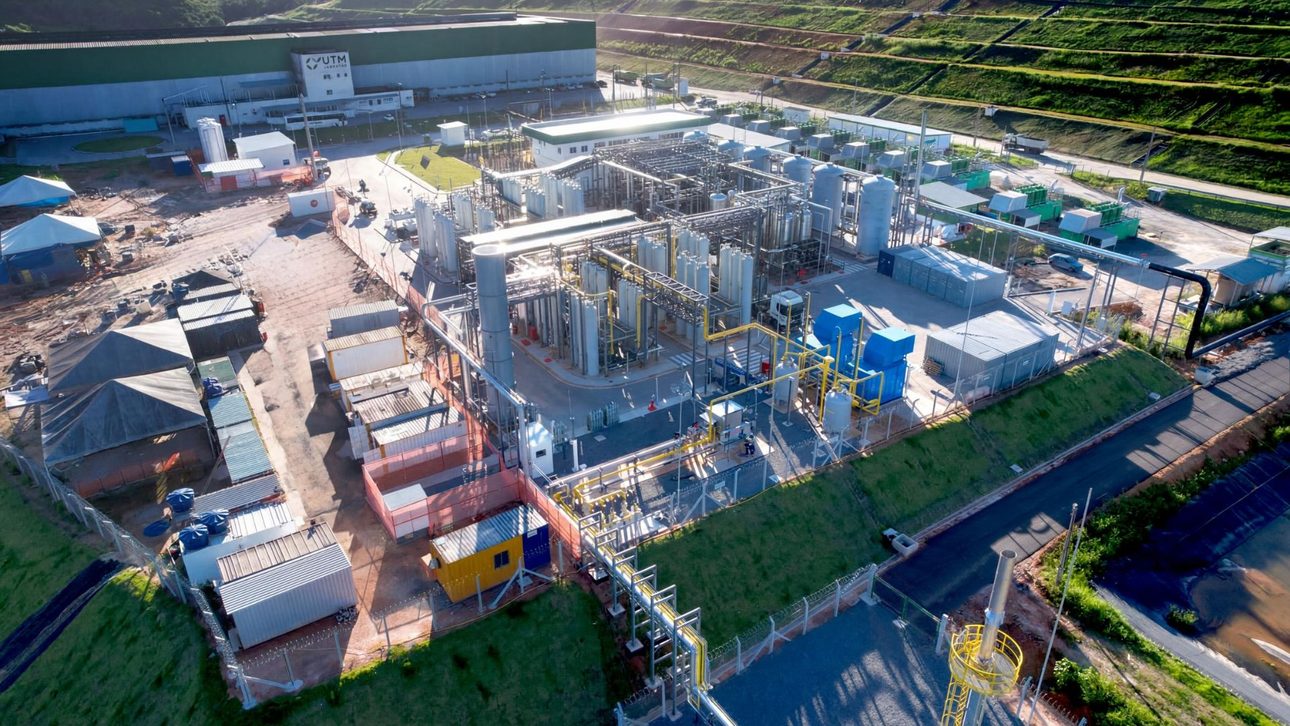
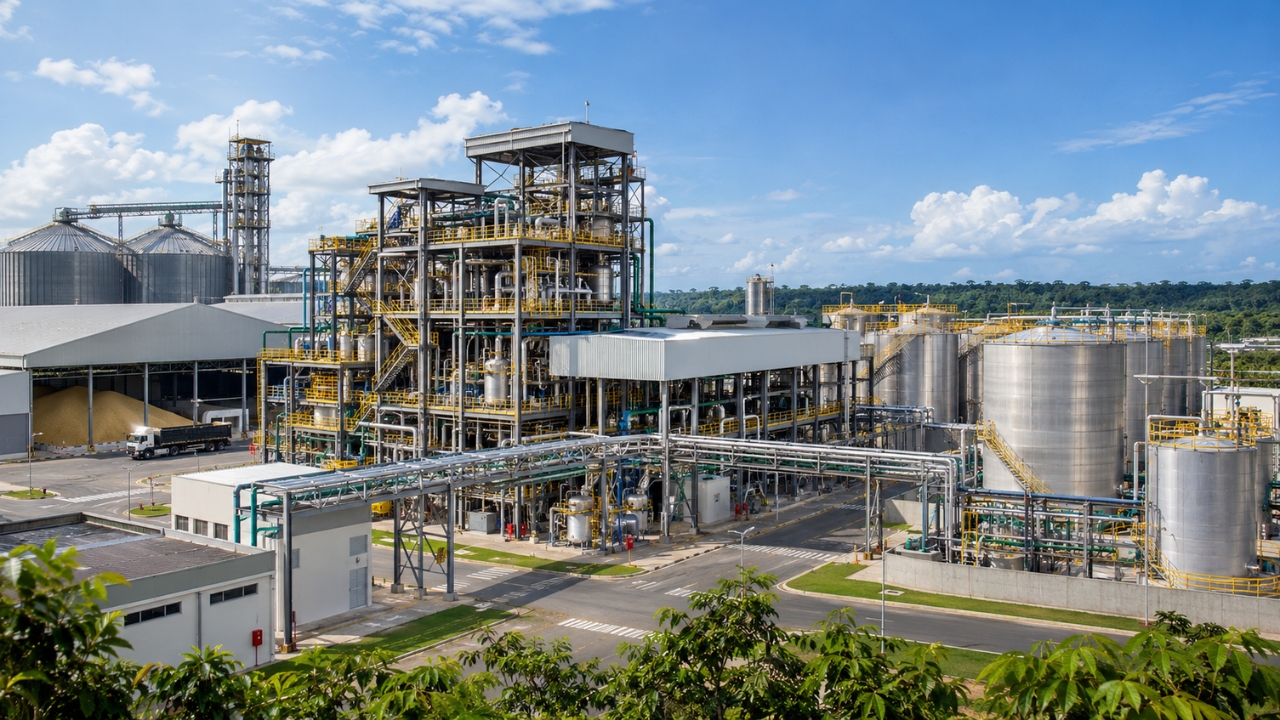
EcoGeo’s project in Guapó is expected to produce about 30,000 cubic meters of renewable fuel per day. The plant will connect to public transportation in the Goiânia metropolitan area and has already received an environmental installation license.
Some of the fuel that will power buses in the Goiânia metropolitan area could come from waste produced by industries in the region.
In Guapó, about 35 kilometers from the state capital, EcoGeo is preparing a biomethane plant with a announced investment of R$140 million, capable of converting organic matter into renewable gas for public transportation.
The facility will have an initial capacity of nearly 30,000 cubic meters of biomethane per day, a volume that the company says could fuel about 100 buses daily.
-
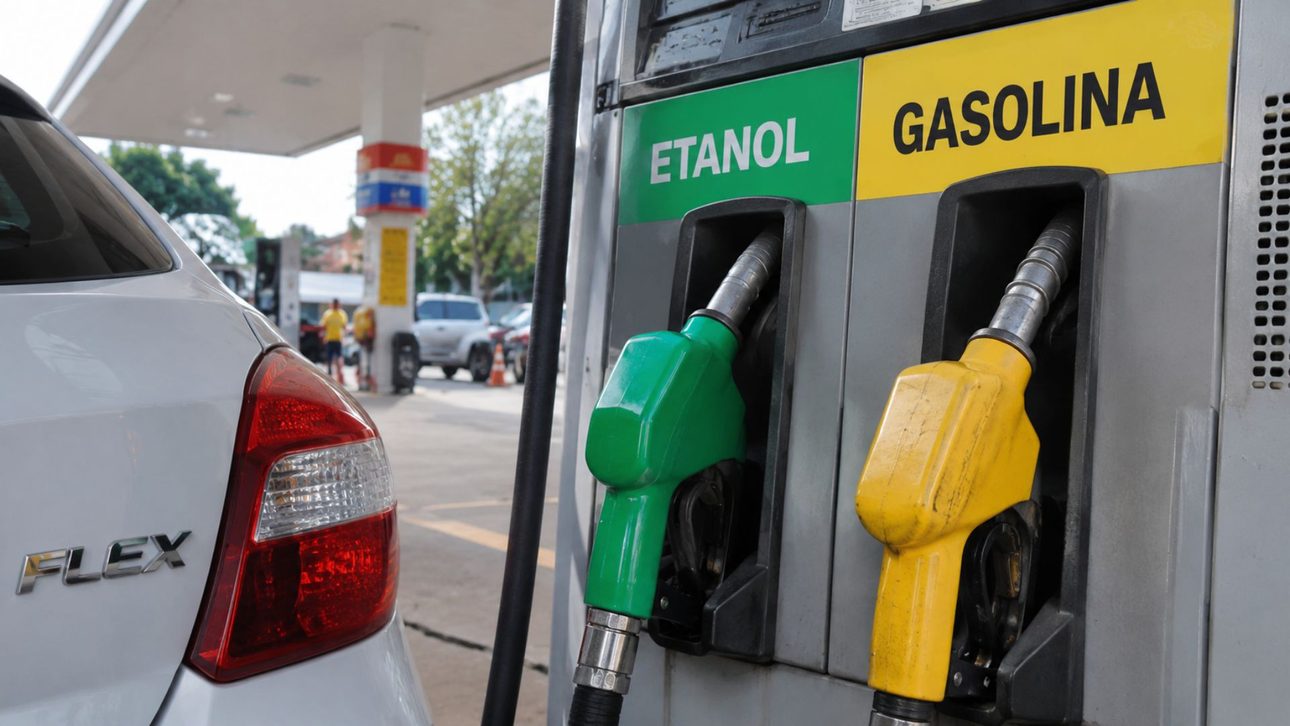
Ethanol rises 2.41% at Brazilian gas stations to R$4.25 per liter as gasoline barely moves, leaving flex-fuel drivers to compare their own car’s fuel economy

-
Brazil logs R$27.5 billion across 24 corn ethanol plant listings in seven states, but 14 show no construction underway

-
ANAC Approves New Rules for Sustainable Aviation Fuel with R$750 Penalty for Unreduced Metric Ton of CO₂ Starting 2027
-
Minas Gerais to get new plant capable of turning 500,000 tons of corn and sorghum into 225 million liters of ethanol a year


The project also includes a 25-kilometer pipeline to carry the fuel to the metropolitan fleet’s fueling infrastructure. GoiásGás will be responsible for the connection, which is part of a broader strategy to reduce public transportation’s reliance on diesel.
Food industry waste will be converted into fuel
EcoGeo, a company formed through a partnership between Goiás-based Ecopar and São Paulo-based GeoGreen BioGás, will build the plant in Guapó.
The feedstock will come from industrial organic waste, especially from the food processing and meatpacking industries, according to monitoring by the Goiás state government. Rather than being discarded without energy recovery, these materials could be used in the biogas production process.
The conversion takes place in biodigesters, where microorganisms break down organic matter in an oxygen-free environment. The process produces a gas composed mainly of methane and carbon dioxide.
The biogas then goes through treatment and purification to remove impurities and increase its methane concentration. The result is biomethane, a fuel with properties similar to natural gas that can be compressed and used in vehicles designed for this technology.
In the project approved by Brazil’s Ministry of Mines and Energy (MME), EcoGeo plans to use vertical and horizontal biodigesters, as well as gas desulfurization and purification systems.
The federal documentation sets production capacity at 29,900 normal cubic meters per day, in line with the approximately 30,000 cubic meters the company announced for the initial phase.
The plan is to use waste already generated by Goiás industries and turn it into a local energy source for urban transportation.
A 25-kilometer pipeline will carry biomethane to the bus fleet
Producing the fuel is only part of the challenge. For biomethane to reach the buses, the Guapó plant will need to be connected to the locations where the vehicles are fueled.
The connection will be made through a planned pipeline measuring about 25 kilometers, under the responsibility of GoiásGás.
The pipeline is expected to carry the fuel to the distribution and fueling infrastructure used by public transportation in the Goiânia metropolitan area. Buses will receive the gas at facilities equipped for that purpose, not directly from the pipeline.
EcoGeo officially announced the industrial investment on March 31, 2026, while presenting initiatives related to the renewal of the metropolitan bus fleet.
The plant’s planned initial capacity would be enough to fuel about 100 buses a day. That figure is an estimate of the number of vehicles it could serve; it does not mean that 100 vehicles are already receiving fuel produced in Guapó.
The pipeline will be important for connecting the local biomethane supply to the transportation system. With production and distribution operating together, the city could reduce the need to move the fuel by truck between production facilities and fueling points.
The project, however, still depends on the completion of its industrial and distribution infrastructure before it can reach the planned operating capacity.
Plant has environmental permit but still needs to clear steps before operating
The project advanced through the environmental licensing process in 2026. In August, EcoGeo announced that it had received the Environmental Installation License, granted by the Guapó Municipal Department of the Environment.
The permit allows construction to move forward under conditions set by the environmental agency, but it is not the license required to begin commercial operations.
In March, Brazil’s Ministry of Mines and Energy (MME) had also approved the plant’s inclusion in the Special Incentive Regime for Infrastructure Development (Reidi), a program that offers tax benefits for eligible investments.
The federal document lists approximately R$117.9 million in goods and services for purposes of the program, while the company’s announcement puts the project investment at R$140 million. The figures refer to different things and should not be added together.
The schedule on file with the MME sets an execution period that began administratively in June 2025 and is expected to run through November 2027. That record alone does not establish when physical construction began.
The Goiás state government’s monitoring page says completion is expected on October 1, 2027 and classifies the project as being at the authorization stage with Brazil’s National Agency for Petroleum, Natural Gas and Biofuels (ANP).
The company’s March announcement also cited a 24-month timeline for the facility to begin operating, which would point to March 2028. These dates remain projections, with no confirmed start date for commercial production.
Biomethane buses are already running in Goiânia as local production is prepared
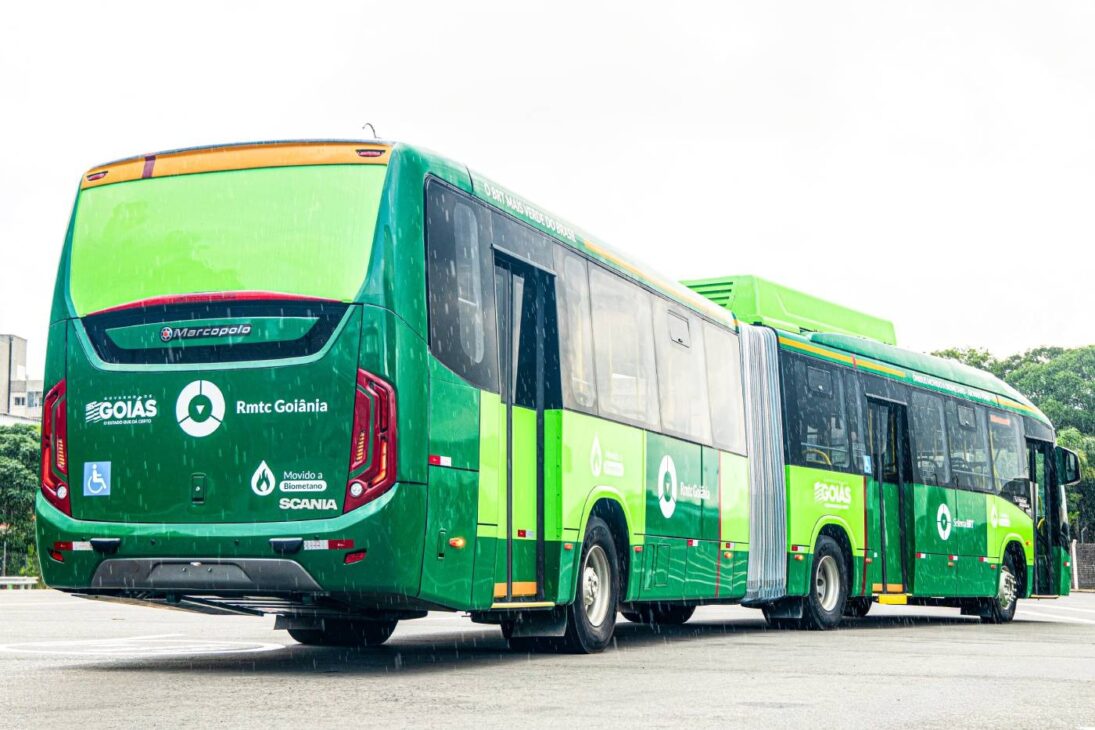
The planned plant is not emerging in isolation. Goiânia has already begun adding gas- and biomethane-powered buses to its transit network, including articulated vehicles developed by Marcopolo and Scania.
The first models were unveiled in March 2026 for service on the East-West BRT, known as Eixo Anhanguera.
Measuring 19.22 meters long, the articulated buses can carry up to 145 passengers and use gas storage cylinders mounted on the roof. The manufacturers say their range can exceed 400 kilometers per fill-up.
The introduction of these vehicles is part of the modernization of the Metropolitan Public Transit Network, which also includes electric buses and upgrades to terminal and bus corridor infrastructure.
Biomethane can replace diesel in vehicles equipped with suitable engines, with the potential to reduce greenhouse gas emissions, depending on the fuel’s source and production conditions.
In Goiás, the fuel strategy has also received a tax incentive. In August 2025, the state government issued a decree exempting biomethane used by public transit companies from ICMS, Brazil’s state tax on the circulation of goods and services, subject to the conditions set out in the regulation.
EcoGeo’s next step will be to turn its planned capacity into actual supply. The Guapó project still needs to complete construction and meet operating requirements, while the 25-kilometer pipeline is expected to enable regular fuel deliveries to supply facilities in Greater Goiânia.