Portuguese
  Spanish


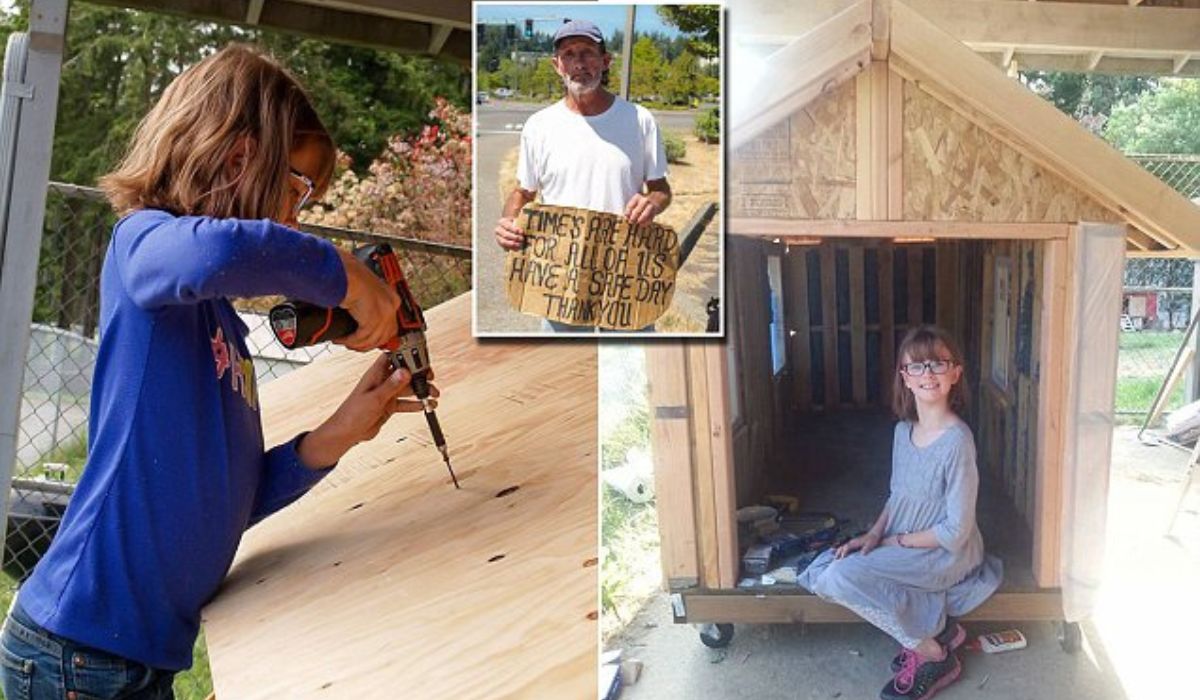

In Washington, the story of Hailey Fort brings together a garden, pallet mini-shelters, and donations for homeless people, amid recent numbers on the housing crisis in the United States.
On a single night in January 2025, 745,652 people were homeless in the United States, according to a report released in 2026 by the country’s Department of Housing and Urban Development.
Of this total, 266,320 were unsheltered, living on streets, in vehicles, camps, or other places not intended for housing.
In this scenario, the story of Hailey Fort, a girl from Bremerton, Washington, has once again drawn attention as a social curiosity.
-
Seven-Year-Old Nicknamed Hulk Wins Gold in Brazilian Jiu-Jitsu After Defeating South American Competitors

-
Once Burdened by $90,000 in Debt and a Divorce, Now Leads a Beauty Group Targeting $150 Million by 2026
-
Ice Cream Shop Grows from 39 Square Meters to $19 Million Revenue with Popsicles Sold at 20 Cents in Brazil
-
Rural Worker Spotted “Flying” on a Drone in Brazil



According to a report published by ABC News, she saw a homeless man in Kitsap County and asked her mother, Miranda Fort, if she could help him.
The answer was yes, and the initial action turned into a routine of food donations, basic items, and later, mini-shelters.
The initiative gained attention in 2015, when Hailey was 9 years old and planned to build 12 mobile shelters for homeless people.
During the same period, she also intended to grow about 250 pounds of fruits and vegetables, collect 1,000 hygiene items, 500 feminine hygiene products, and 100 coats.
No reliable public update has been found confirming the recent continuation of the Hailey’s Harvest project or the completion of all 12 units announced during that period.
Even so, the story remains a record of small-scale community mobilization in the face of an ongoing problem in the United States.
How the idea of mini-shelters came about
Before the shelters, Hailey started with food production.
She grew fruits and vegetables in the family backyard and distributed part of the harvest to homeless people in the area where she lived.
The initiative was named Hailey’s Harvest and began to be documented on a social media page.
According to Miranda Fort, the girl’s mother, the people served were seen by Hailey as friends, which helped explain the continuity of the actions.
The first shelter was planned for Edward, a homeless man the family already knew.
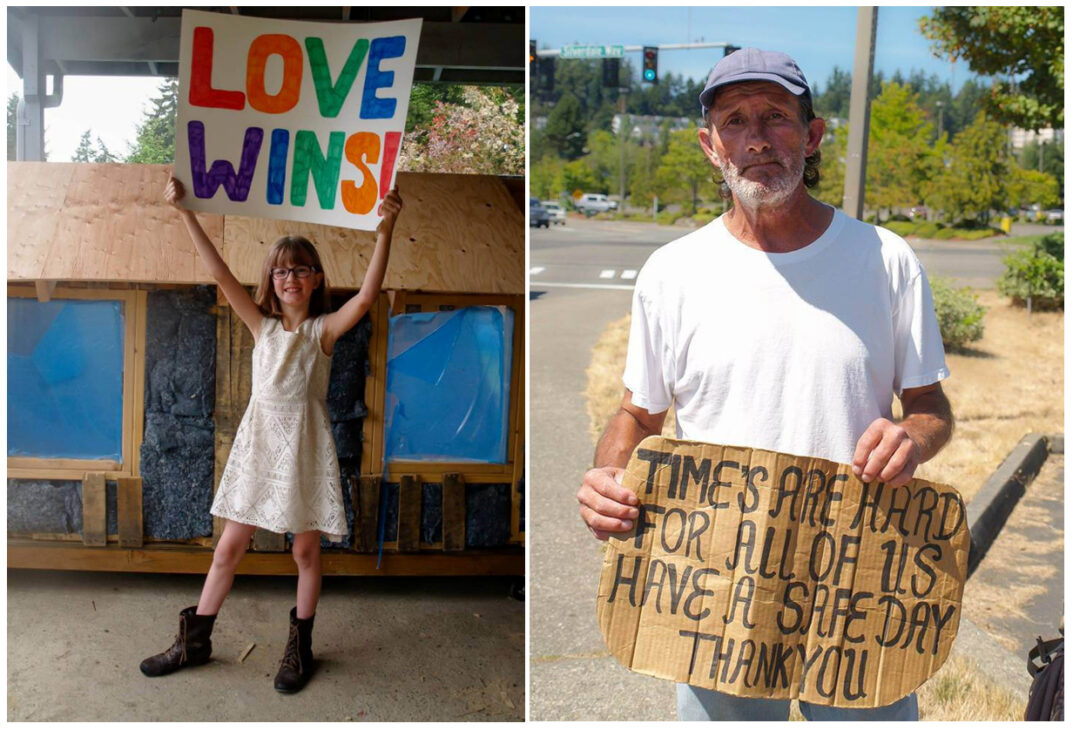
To ABC News, Miranda stated that Hailey evaluated who could receive the first structure and chose Edward because he often showed gratitude when receiving food.
“She went through all her homeless friends and made the decision based on a number of things,” said Miranda Fort. According to the mother, the shelter would not be suitable for a man named Billy Ray, who used a wheelchair, nor for another acquaintance who lived with a dog.
The exact location of the first shelter was not disclosed for safety reasons.
Miranda stated that the family had talked to local authorities to avoid issues with municipal rules and was seeking permission to install the structure on church grounds.
This care showed that the project, although simple in appearance, depended on authorization, a suitable location, and protection for the person who would receive the structure.
The family also avoided disclosing information that could expose Edward or create additional risks.
Pallet Shelters with Recycled Jeans
The estimated cost of each shelter was about US$ 300, according to the family informed ABC News.
The cost was below the total cost of a common construction because part of the materials was donated by the community, reducing direct expenses.
The walls were made with pallets and filled with recycled jeans insulation.
The structure also included a roof with shingles, drywall, wood siding, vinyl flooring, curtains, a solar-powered lamp, and a lock on the front door.


The lock was presented by the family as a relevant item for those sleeping on the streets.
For homeless people, a door that could be locked represented a minimal form of privacy, protection, and control over their own space.
Hailey also participated in the construction, always under parental supervision.
Reports from the time showed the girl using tools in tasks suitable for her age, while adults were responsible for higher-risk equipment, such as larger saws.
The mini-shelters were not described by the family as a definitive solution to homelessness.
The units functioned as temporary structures, designed to reduce exposure to rain, cold, and the insecurity of sleeping outdoors.
Even so, the project needed to deal with practical limitations.
People experiencing homelessness continued to be subject to municipal rules, availability of authorized land, access to bathrooms, surrounding security, and the possibility of being accompanied by social services.
The garden that came before the houses
The garden was one of the first fronts of Hailey’s Harvest.
Hailey grew fruits and vegetables to distribute to people experiencing homelessness and local food banks.
According to information released at the time, the goal for 2015 was to reach 250 pounds of food, equivalent to just over 110 kilograms.
Reports also noted that she had already made food donations in previous years, before expanding the project to build shelters.
The food production gave the project a routine beyond fundraising campaigns.
The work involved planting, harvesting, organizing donations, and maintaining contact with people already known to the family.
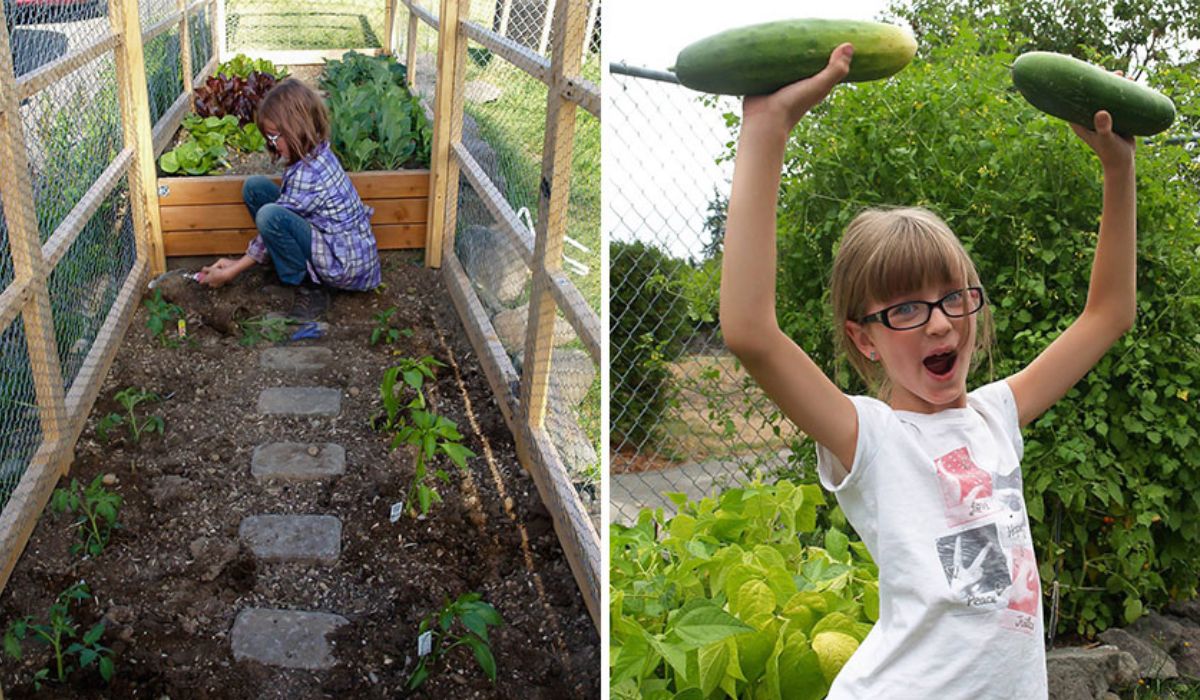
The combination of the garden, basic items, and temporary structures helped increase the visibility of the initiative.
Instead of limiting itself to a one-time donation, the project began to gather different forms of community support.
Miranda Fort told ABC News that Hailey was reminded she could stop whenever she wanted.
According to her mother, the girl continued because she saw the project as something important and felt motivated by meeting goals set by her own family.
The 2015 goal also included products not related to construction.
In addition to food and shelters, Hailey sought to collect hygiene items, feminine hygiene products, and coats, materials frequently requested by people without stable housing.
Family, donations, and community support
Although the story became known for Hailey’s efforts, the project involved direct support from her parents.
Miranda Fort organized contacts, donations, and communication, while Quentin Fort, the girl’s father, helped with the practical part and supervised the use of tools.
Quentin told ABC News that Hailey and Miranda’s behavior came from a place that might seem unusual to many people, but natural to the two of them.
He said he was proud of his daughter’s contributions to the community and hoped that, as parents, they could support her desire to help people in need.
The local community also participated with donations of materials and money.

The family used an online fundraising campaign to finance part of the actions and received support from people who started following the project after its repercussion.
Months after the initial disclosure, Popular Science reported that Hailey’s campaign had exceeded US$ 45,000.
The magazine also reported that the first shelter cost about US$ 400, a different amount from the US$ 300 mentioned in the initial ABC News report.
The difference between the amounts may be related to how each survey considered donated materials, purchased items, and additional costs.
As there is no complete public accounting found, both numbers were maintained with attribution to the respective reports.
Besides the fundraising, the project depended on coordination with the city and potential installation sites.
The family itself acknowledged that the shelter needed to be on authorized land to avoid conflict with municipal regulations.