Research conducted in the Üçağızlı II cave, in Turkey, indicates that Neanderthals and Homo sapiens maintained similar cultural practices for tens of thousands of years, reinforcing a more complex view of the coexistence between the two human species
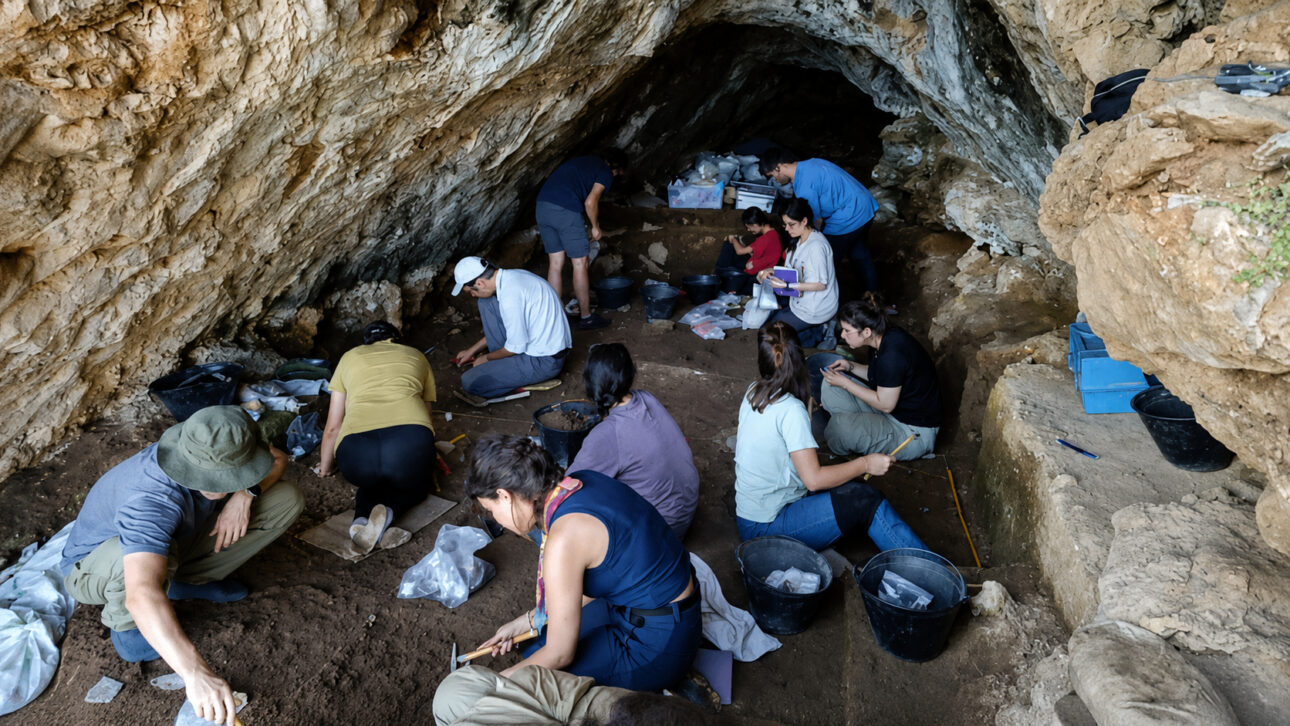
An archaeological discovery made in the Üçağızlı II cave, in southern Turkey, is expanding the understanding of the relationship between Neanderthals and Homo sapiens during the Stone Age.
The study revealed that the two species occupied the same shelter at different times, but left evidence of very similar behaviors, including stone tools, hunting practices, and intentionally transported shells.
The results were published in the scientific journal Proceedings of the National Academy of Sciences (PNAS). The research was conducted by archaeologists from the University of Gaziantep, in Turkey, with collaboration from the University of Kyoto, in Japan.
-
Real Estate Agent Buys Marvel Movie Subway Car for $5,000 and Converts It into Themed Airbnb
-
Real Estate Agent Buys Marvel Movie Subway Car for $5,000 and Converts It into Themed Airbnb
-
Former Roma and Fiorentina Player Filipe Gomes Returns to Brazil to Found Empório do Galeto, Aiming for $10 Million Revenue by 2026
-
Canada Builds 6.2-Hectare Containment Box to Trap 615,000 Cubic Meters of Toxic Sediment in Lake Ontario



Discovery shows successive occupation of Neanderthals and Homo sapiens
The first systematic excavations in the cave began in 2024, although the archaeological site had been known to researchers for years.
During the analyses, scientists found four isolated teeth and a partial jaw containing two teeth, allowing them to identify which human groups occupied the site over time.
The dating of sedimentary layers revealed that Neanderthals lived in the cave between approximately 77,000 and 59,000 years ago.
Subsequently, Homo sapiens occupied the same shelter between about 59,000 and 47,000 years ago, indicating a chronological succession of occupations.
According to İsmail Baykara, professor of the Department of Archaeology at the University of Gaziantep and lead author of the study, the evidence suggests that the two species probably shared more than just the same region.
Stone tools and hunting techniques remained practically the same
One of the main conclusions of the work involves the strong technological continuity recorded at the archaeological site.
During both periods of occupation, Neanderthals and Homo sapiens produced flint tools belonging to the Mousterian tradition, a technology known since discoveries originally made in a rock shelter in France.
Additionally, the researchers found that both species hunted practically the same animals.
Among them were:
- Wild goats;
- Deer;
- Wild boars.
This pattern caught the attention of archaeologists because it demonstrates that the arrival of Homo sapiens at the site did not cause an immediate change in the traditional practices developed in the region.

Shells found reinforce hypothesis of shared cultural tradition
Another element considered surprising was the presence of the shell Columbella rustica in both the layers attributed to Neanderthals and those associated with modern humans.
The species is small in size and was not used as food.
Therefore, the researchers classified these pieces as manuports, objects deliberately transported by their collectors from the Mediterranean coast to the cave.
Some shells showed natural or later produced perforations, raising the possibility that they were used as ornaments.
According to Naoki Morimoto, a researcher at the University of Kyoto and co-author of the study, Neanderthals also seem to have attributed specific value to Columbella rustica, even though many other species were available on the coastal region.
Archaeological site helps understand the expansion of Homo sapiens
The Üçağızlı II cave occupies a strategic position for understanding one of the most important periods in human history.
About 60 thousand years ago, one of the main migrations of Homo sapiens out of Africa occurred, a process that led our species to occupy different regions of Eurasia.
Researchers believe that areas corresponding to the current Middle East and Turkey served as meeting zones between Homo sapiens and Neanderthals.
However, the new study highlights that there is still not enough archaeological evidence to confirm direct contact within the cave itself.
The conclusions are mainly based on the strong continuity observed in technologies, hunting strategies, and shell transport throughout the different occupations.
Comparison with another archaeological site reveals a more complex scenario
Archaeologist Ludovic Slimak, from the French National Center for Scientific Research (CNRS), classified the discovery as extremely important for understanding the different cultural trajectories of prehistory.
According to him, the most relevant aspect is not just the similarity between tools or objects found.
In the researcher’s assessment, the most significant is realizing that the Homo sapiens present in the cave seem to have incorporated an already established Mousterian tradition in that region.
Slimak compared Üçağızlı II with the Mandrin Cave, in southern France, where there were also occupations by Neanderthals and modern humans.
However, at that French site, the tools used by Homo sapiens were very different from those produced by Neanderthals.
This comparison indicates that different human populations developed distinct cultural histories during the same period.
According to Baykara, new research will be necessary to determine whether Üçağızlı II represents an isolated case or if other regions also preserve similar evidence of cultural interaction between Neanderthals and Homo sapiens.
The discovery reinforces that local traditions may have played a role as important as biological evolution itself in shaping human behaviors.
Do you believe that Neanderthals and Homo sapiens came to exchange cultural knowledge directly, or did these similarities arise only from coexisting in the same environment?