Portuguese
  Spanish


The Bluetti AC70 power station has become the silent answer to the old gasoline generator, and now it arrives with an attention-grabbing price: in July 2026, the official Bluetti store in Brazil sells the equipment for R$ 4,499, compared to the R$ 7,499 list price, promising to keep the refrigerator, Wi-Fi, and electronics running during a blackout with 1,000 W of power.
According to Bluetti BR, the AC70 delivers 1,000 W nominal and reaches 2,000 W peak with the Power Lifting function, stores 768 Wh in a lithium iron phosphate battery (LiFePO₄) with over 3,000 life cycles, and accepts up to 500 W of solar energy input. According to Melhores Geradores, portable stations like this cost between R$ 4,000 and R$ 8,000 in Brazil and, compared to combustion generators, they replace the endless expense with gasoline and constant maintenance with silent operation and zero pollutant emissions.
What changes in a blackout: refrigerator and Wi-Fi without the generator
When the power goes out, the routine stops. The refrigerator starts to warm up, the router turns off, and working from home comes to a halt. It is precisely this moment that the Bluetti AC70 power station promises to solve without the drama of a gasoline generator. With 1,000 W of nominal power, it takes over the house’s outlets at the moment of blackout and keeps what really matters running: the refrigerator, the Wi-Fi modem, the notebook, and the cellphone.
The practical difference is huge. A gasoline generator needs to be taken outside, fueled, and started with a pull, with all the noise and smell of fuel. The power station stays indoors, silently, and activates on its own. At the time of a power outage, you press a button, and the current returns to the devices connected to it, without smoke, noise, or waiting in line at the station.
-
Artist’s 15-Meter Lighthouse in the Mojave Desert, 160 km from the Sea, Intrigues Visitors with 19 km Range After Years of Bureaucracy

-
Enormous Black Hole Phoenix A* Challenges Scientific Understanding with Mass of 100 Billion Suns, Surpassing Famous TON 618 in One of the Largest Known Galaxy Clusters
-
Say Goodbye to Storing Wine in a Regular Fridge: Midea’s Climate-Controlled Cellar Holds 34 Bottles, Maintains 5-18°C, and Uses Only Half a kWh Daily

-
Six Helicopters to Drop 550 Tons of Poison on Island Near Antarctica to Eradicate Mice Threatening Albatrosses and 19 Seabird Species.



For a power outage lasting a few hours, which is the most common scenario in Brazil, this type of equipment adequately covers basic needs. The refrigerator cools again, the Wi-Fi resumes distributing the internet, and essential electronics remain charged. All this from a charge that is already ready for the next blackout.
Goodbye gasoline generator: the end of noise and fuel smell
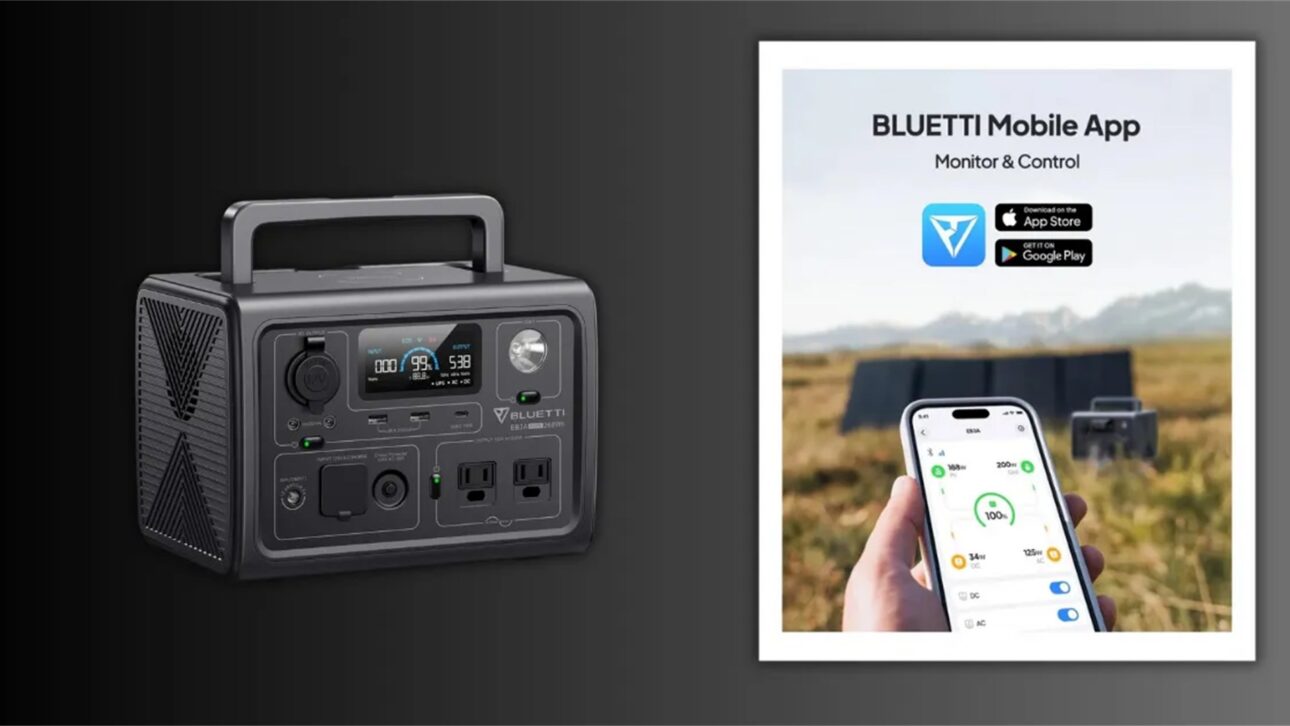
The name says it all. The purpose of the Bluetti AC70 is to make you say goodbye to the gasoline generator for good. Instead of a combustion engine, a lithium iron phosphate battery, and instead of the roar and smoke, silence and zero emissions inside the house. This is the shift the equipment represents compared to the traditional generator.
Financially, the equation also changes. The gasoline generator has a cost that never ends, because each hour of use burns fuel and requires maintenance of the engine, oil, and spark plugs. The power station doesn’t consume gasoline: it charges from the outlet or the sun and returns the stored current in the cell. The extra expense during a power outage drops to near zero.
There is also the issue of safety and comfort. A combustion generator releases carbon monoxide and cannot operate in an enclosed environment. The power station works in any room, without toxic gas and without the risk of sparks. For an apartment, it is the difference between having and not having a plan B during a blackout.
Power of 1,000 W, with 2,000 W peak by Power Lifting
The heart of any power station is the power, and here the AC70 delivers 1,000 W nominal. In practice, this number defines how many devices can operate simultaneously. One thousand watts can handle a refrigerator, Wi-Fi router, LED lights, notebook, cellphone, and TV, all combined within the limit.
The smart detail is in the Power Lifting function, which raises the delivery to up to 2,000 W peak. Many devices with motors, like refrigerators and fans, draw a current peak when starting, and it’s this surge that usually trips smaller equipment. With the 2,000 W peak, the power station absorbs the initial shock and continues steadily.
There are 7 outputs to distribute these 1,000 W. The Bluetti AC70 features 2 alternating current outlets, 2 USB-C ports up to 100 W each, 2 USB-A ports, and a 12 V output, the one for automotive accessories. The 100 W USB-C ports are a special treat because they charge a notebook directly via cable, without a power adapter.
It’s worth understanding what 1,000 W cannot do: electric showers, ovens, and window air conditioners are out, as they require much more power. The power station is designed for the essentials of the house during a blackout, not to replace the entire electrical network. Within this scope, the 1,000 W nominal and 2,000 W peak provide a comfortable margin.
Solar energy: the power station that recharges in the sun

Here lies one of the product’s greatest assets: solar energy. The AC70 accepts up to 500 W of solar input, which means you can plug in portable panels and fill the cell for free, using only the sun. In a long power outage, this is the ace up your sleeve, because solar energy does not depend on the grid that went down.
According to the manufacturer’s specifications, solar energy recharge happens in about 2.8 to 3.3 hours in good sun conditions. You spread the panels in the backyard, on the roof, or on the balcony, connect to the power station, and in a sunny morning, the equipment is already full for the next power outage.
Recharging by the sun also changes the cost logic. While the gasoline generator needs paid fuel to generate each watt, the power station with solar energy produces its own charge without spending anything after purchasing the panels. It’s clean, renewable, and silent energy, exactly the opposite of the combustion engine.
For those who live in areas with frequent power outages or are thinking of a more off-grid life, the combination of a long-life battery with solar energy turns the equipment into a small mobile power plant.
LiFePO₄ Battery with over 3,000 life cycles
The battery is what separates a serious power station from any UPS. The AC70 uses a lithium iron phosphate cell, the famous LiFePO₄, with over 3,000 life cycles until it reaches 80% of its original capacity. In other words: even charging and discharging almost every day, it lasts many years before showing signs of wear.
This type of cell is different from the common lithium-ion. The LiFePO₄ is more stable, withstands heat better, and has a much lower risk of fire, which makes a difference in a device that stays connected indoors waiting for the next power outage. The 768 Wh capacity stores enough energy for the round of refrigerator, Wi-Fi, and electronics that the proposal promises.
Recharging is quick. In the socket, in turbo mode, the power station goes from empty to full in about 1.3 to 1.6 hours, and reaches 80% in around 45 minutes. In other words, if there’s a break in the sun or a pause in the grid, you can recharge the battery in the blink of an eye and be ready again.
The 3,000 cycles, combined with solar energy recharge, make the long-term cost very low. It’s a battery made to last, designed for those who want real equipment, not a toy that dies after two summers. There lies the central promise of the Bluetti AC70.
Complete technical specifications of the Bluetti AC70
Bringing everything together in one place, the technical specifications of the AC70 power station are as follows: nominal power of 1,000 W and 2,000 W peak with the Power Lifting function, capacity of 768 Wh, and LiFePO₄ battery with over 3,000 life cycles. It’s a well-rounded set for home use during a blackout.
For recharging, there are three methods. Through the outlet in turbo mode, the equipment charges in about 1.3 to 1.6 hours. With solar energy, it accepts up to 500 W input and completes the charge in around 2.8 to 3.3 hours of good sunlight. It can also be charged on the go, using the car’s 12 V output, which is helpful for travel or camping.
There are 7 outputs in total: 2 alternating current outlets at 230 V, 2 USB-C ports up to 100 W each, 2 USB-A ports, and 1 12 V output. You can connect a refrigerator and Wi-Fi to the AC outlets while the laptop and phone use the USB ports. The weight is around 10.2 kg, with a built-in handle for carrying between rooms.
Nothing here is just for show. Each number in the technical specifications points to the same goal: to make the power station replace the gasoline generator on the day of a power outage, with silence, solar energy, and a battery that lasts for years. It’s a specification in service of a simple idea.
Price and where to buy: from R$ 7,499 to R$ 4,499
It comes to the point that weighs most in the decision: the price. In July 2026, the Bluetti AC70 power station is priced at R$ 4,499 at Bluetti’s official store in Brazil, compared to the R$ 7,499 list price. That’s a R$ 3,000 discount, a cut that brings the equipment closer to many people who have been postponing the purchase.
In the market range, portable models of this type cost from R$ 4,000 to R$ 8,000 in Brazil, so the R$ 4,499 is at the base of this range, with technical specifications that usually appear in more expensive products. Purchasing from the official store also ensures provenance, receipt, and warranty on a battery-powered device.
It’s worth comparing with the gasoline generator that the power station came to replace. The generator may cost less on the label, but it charges for fuel with each use and motor maintenance. The Bluetti equipment costs more upfront and returns the value in silence, free solar energy, and the absence of gasoline.
To complete the purchase, the path is the official Bluetti store in Brazil, where the price of R$ 4,499 is linked to the current promotion. Those who depend on a refrigerator and Wi-Fi being on, or are just tired of the gasoline generator, will find here a power station ready for the next blackout.
Is the Bluetti AC70 power station worth it?
In the end, the AC70 delivers a clear and achievable promise: keep the refrigerator, Wi-Fi, and electronics running during a blackout, with 1,000 W of power, solar energy recharge, and a LiFePO₄ battery with over 3,000 cycles, for R$ 4,499. For the essentials of the home, the numbers add up.
It’s not for everything. Shower, oven, and air conditioning remain out of reach of the 1,000 W, and those who need to power the entire house will want a larger system. But for the use it promises, keeping the basics running without the gasoline generator, the power station hits the target.
Perhaps the question that remains, the next time the light flickers and the entire street plunges into darkness, is simple: is it better to rush to the gasoline generator, with its noise and line at the station, or press a button and let the power station take care of the silence, the refrigerator, and the Wi-Fi while the sun replenishes the charge in the morning?