Portuguese
  Spanish


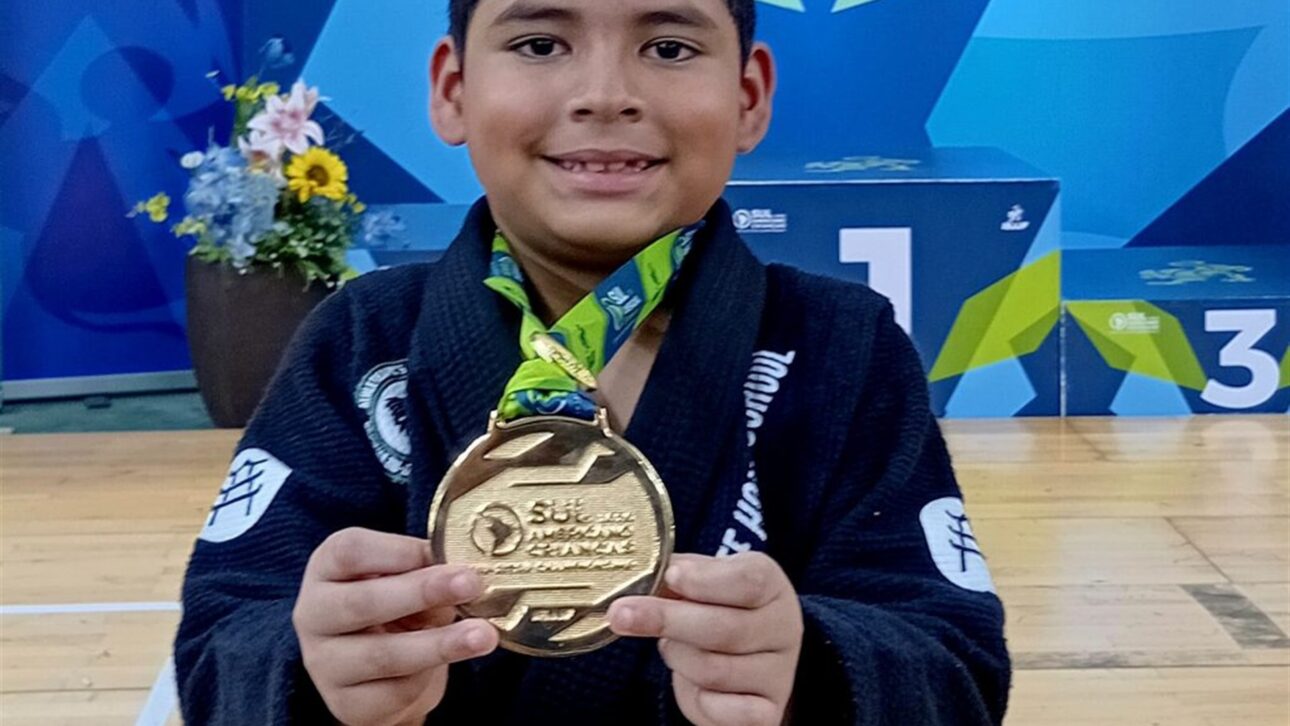
Marco Vinícius, only 7 years old, known on the mat as “Hulk da 14”, left Manaus and won the gold at the South American Children’s Jiu-Jitsu Championship 2026, held in Rio de Janeiro. The young athlete competed in the Mirim 2 category, Gray Belt Heavyweight, and returned to Amazonas with the brightest medal of the competition. The news was released on February 7, 2026, and turned the boy into a symbol of grassroots sports in the capital of Amazonas.
According to the Manaus City Hall, the boy was trained within the Manaus Olympic program, an initiative of the Municipal Secretariat of Youth, Sports, and Leisure (Semjel) that reveals talents and forms citizens through sports. According to the Portal do Caubi, the South American gathered young athletes from various South American countries and is considered one of the most important competitions on the international calendar of grassroots categories, which gives the real dimension of the boy’s achievement.
The nickname that became a brand on the mat
Before any medal, came the nickname. Marco Vinícius became known as “Hulk da 14” because of the strength and demeanor he shows when stepping on the mat. Just like the character that inspires the codename, the boy commands respect through a combination of power and presence, something rare for someone only 7 years old. On the mat, where technique and temperament count as much as physique, such a nickname carries weight.
The “14” that accompanies the nickname is a reference to the community where the young fighter comes from, in the capital of Amazonas. More than just a codename, “Hulk da 14” became a sort of trademark, a way for fans and colleagues to recognize the boy who faces larger opponents without backing down. Those who follow grassroots sports know that confidence on the mat is often the first step towards great achievements.
-
Once Burdened by $90,000 in Debt and a Divorce, Now Leads a Beauty Group Targeting $150 Million by 2026

-
Ice Cream Shop Grows from 39 Square Meters to $19 Million Revenue with Popsicles Sold at 20 Cents in Brazil
-
Rural Worker Spotted “Flying” on a Drone in Brazil

-
Turkish Cave Suggests Neanderthals and Homo Sapiens Shared Cultural Traditions for Millennia; Discovery Unveils Similar Tools, Hunting Techniques, and Shells at a Major Prehistoric Site


In children’s jiu-jitsu, self-esteem is part of the training. A strong nickname helps the child see themselves as a protagonist and believe they can win. It was exactly this giant posture in a child’s body that took Marco Vinícius from daily training to the podium of one of the biggest jiu-jitsu tournaments on the continent.
From Manaus to Rio: the journey towards the South American
The distance between Amazonas and Rio de Janeiro is enormous, both on the map and in the imagination of a 7-year-old child. This was the journey that Marco Vinícius took to compete in the continental jiu-jitsu tournament, leaving the Amazonian capital towards the city that hosted the competition. Leaving the North of the country to face athletes from all over South America would already be quite an adventure for the little fighter.
The South American Children’s Jiu-Jitsu 2026 is not just any tournament. The competition brings together young talents from various countries and serves as a true showcase for the sport’s youth categories. To get there, the boy had to go through the municipal sports training path, training consistently until he was ready to represent his city on an international stage.
Bringing the city’s name to a competition of this magnitude is a source of pride for the entire sports community of Amazonas. The boy did not travel just to compete; he traveled to show that the jiu-jitsu practiced at the city’s base has the quality to shine among the best in South America. And the result, as seen on the mat, could not have been better.
The strength of the Mirim 2 category and the Gray Belt Heavyweight
In jiu-jitsu, every detail of the category counts. Marco Vinícius competed in Mirim 2, a division reserved for children taking their first big steps in the sport, and he did so wearing the Gray Belt, one of the initial rankings in children’s sports. Moreover, he entered the competition as a Heavyweight, which shows that the nickname “Hulk” is no exaggeration, as the boy has a physical advantage within his group.
The Gray Belt is an important milestone in the journey of any child practicing jiu-jitsu. It represents the moment when the fundamentals begin to be truly absorbed, when the child stops just playing and starts to understand the logic of positions, throws, and submissions. Winning gold at this stage, against opponents from various countries, indicates mastery of the basics with above-average maturity.
Competing as a Heavyweight in Mirim 2 means facing the strongest and most robust children of the same age group. This is where the nickname “Hulk of 14” gains even more meaning. In a sport that values leverage, balance, and intelligence to turn strength into technique, the little fighter showed that he knows how to use his own body to his advantage, dominating opponents until securing the highest position on the podium.
The gold that came home
In the end, it was the gold that crowned all the preparation. Marco Vinícius won his matches and clinched first place in the South American Children’s Jiu-Jitsu Championship 2026, bringing home the gold medal that became a reason for celebration in the capital of Amazonas. At 7 years old, the boy put the city’s name at the top of a competition that brings together the best in the youth categories of South America.
The achievement has a significance that goes beyond the shine of the metal. Each victory in the South American represented hours of training, discipline, and dedication from a child who decided to take jiu-jitsu seriously very early. Returning home with the medal hanging around his neck is proof that the effort was worth it and that big dreams do fit in small bodies.
For the Amazonas supporters, the title of the “Hulk of 14” has the flavor of a turning point. It’s not every day that such a young athlete climbs to the highest place on an international jiu-jitsu podium. The achievement serves as inspiration for other children, who now see in Marco Vinícius’s example the real possibility of turning basic training into a standout continental result.
The municipal base behind the champion: the Manaus Olímpica program
No achievement of this size happens alone. Behind the feat of the young athlete is the Manaus Olímpica program, an initiative of the City Hall managed by the Municipal Secretariat of Youth, Sport, and Leisure, Semjel. The declared goal of the program is to reveal talents and form citizens through sport, providing structure so that children and young people can train and compete with support.
It is within this grassroots sports policy that stories like the “Hulk of 14” find ground to happen. Without the support of a municipal program, many talents would be lost due to lack of opportunity. By investing in sports training from childhood, public management transforms the mat into a tool of education, discipline, and citizenship, and the return appears in achievements like this.
The case of Marco Vinícius shows in practice what it means to invest in the base. A 7-year-old child who trains with municipal support and reaches the podium in a South American is the best advertisement that public sports policy works. In this context, jiu-jitsu ceases to be just a fighting modality and becomes a path to the future for boys and girls in the capital of Amazonas.
The words of those who do and those who believe
The feat of the young fighter yielded emotional statements. For Semjel, the achievement of the “Hulk of 14”, at just 7 years old, shows that investing in grassroots sports is believing in the future. The phrase sums up the philosophy that sustains the municipal program and places the boy as living proof that betting early on children yields results.
“I was very happy to represent Manaus, I trained a lot and this medal is for everyone who believes in me,” declared the champion himself about the achievement, with the typical simplicity of his age. The statement shows the boy’s awareness of the value of the support he receives and the maturity of someone who understands that victory in jiu-jitsu is not the achievement of one alone, but of an entire network of people who believe in him.
Between one statement and another, the link between individual effort and collective support becomes evident. Marco Vinícius trained a lot, as he himself said, but he had a structure behind him that took him from basic training to the podium of the South American Championship. This balance between talent, dedication, and support is precisely what makes grassroots jiu-jitsu produce such young champions.
What an international achievement at 7 years old represents
Few 7-year-olds can say they have already been champions of an international tournament. Marco Vinícius can. By winning gold at the South American jiu-jitsu championship, the “Hulk of 14” joined a short list of young athletes with achievements of continental reach, and he did this at the very beginning of his journey, with an entire path ahead.
The magnitude of the achievement is also measured by the competition. In a South American Championship that brings together athletes from various countries, reaching the top of the podium means surpassing the best among children practicing the sport in South America. For a boy who faced this level of competition, the medal tastes like a historic achievement for the city’s sport.
More than a podium, the result of the “Hulk of 14” plants a seed. Every child in the Amazonian capital who hears this story will understand that jiu-jitsu can open doors, that grassroots sports transform lives, and that the city indeed has the potential to reveal champions to the world. Today’s gold is an invitation for tomorrow’s dreams.
If a 7-year-old boy was able to leave the Amazonian capital, face opponents from all over South America, and bring jiu-jitsu gold home, how far can the sports base formed in Manaus still go?