Portuguese
  Spanish


Célio Reis left Morrinhos, in the interior of Goiás, without inheritance and without an entrepreneurial family, opened an ice cream shop of just 39 square meters in Brasília and today leads Gelattos, the network that projects to bill R$ 100 million in 2026 selling popsicles at R$ 1, with 32 own and partner stores and 1,500 points of sale in the Federal District, Goiás, and Minas Gerais.
According to Exame, Célio Reis started with a single store of 39 square meters in the Cruzeiro Velho neighborhood and transformed Gelattos into one of the largest ice cream manufacturers in the Midwest. According to ND Mais, Gelattos is expected to bill R$ 100 million in 2026, producing about 1.3 million popsicles per month outside of summer, a number that doubles in the hotter months. The journey of the small ice cream shop that became a popsicle giant began far from the spotlight, in a Goiás city with few opportunities.
From Morrinhos to the Federal District: the origin of someone who had no one to imitate
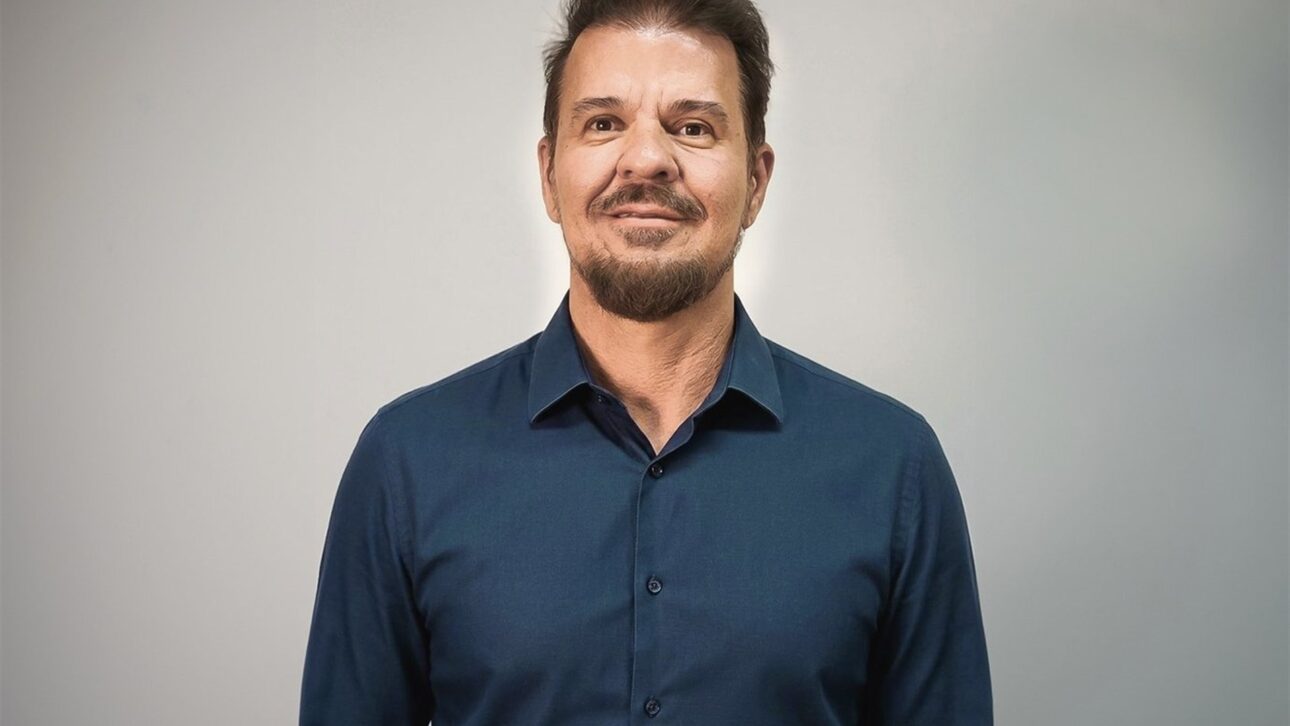
Célio Reis was born in Morrinhos, in the interior of Goiás, a city he describes as limited in opportunities. In his family, there was no entrepreneurial tradition, no business to inherit, nor a close example of someone who had built a company from scratch. The starting point of Gelattos was not family capital or an influential surname, but the desire to leave a small place to try something bigger.
Before thinking about ice cream, the Goiás native built a career in hospitality. He spent eight years at the Rio Quente Resorts group, managing a hotel in Brasília, a period that gave him management skills and the routine of taking care of numbers, team, and clients. It was during this phase, far from Morrinhos and already in the Federal District, that he began to see the chance to have his own business.
-
Rural Worker Spotted “Flying” on a Drone in Brazil

-
Turkish Cave Suggests Neanderthals and Homo Sapiens Shared Cultural Traditions for Millennia; Discovery Unveils Similar Tools, Hunting Techniques, and Shells at a Major Prehistoric Site
-
Burkina Faso Bans NGOs from Photographing Vulnerable People Without Consent and Outlaws Fundraising Campaigns Exploiting Suffering
-
Giant Earthworms up to 2 Meters Long Secretly Sustain Fertility in the Amazon Rainforest



The turnaround came from a partnership. A sales representative from the ice cream segment crossed paths with Célio Reis, and together, they decided to open an ice cream shop. It wasn’t a grand plan, nor a consolidated franchise with a manual and famous brand. It was a small, almost improvised store, but with a name that would withstand time: Gelattos. There was born, without fanfare, the embryo of a popsicle empire.
The first 39-square-meter ice cream shop in Cruzeiro Velho
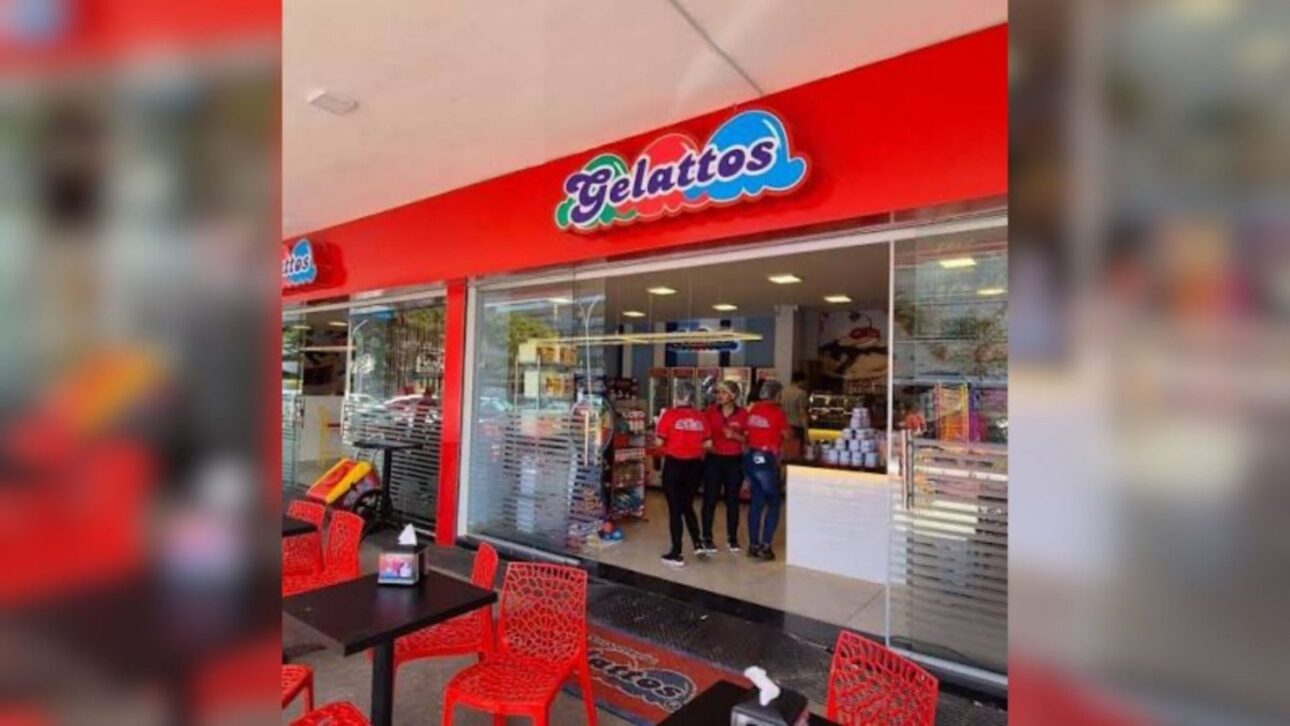
The first Gelattos store was 39 square meters and was located in Cruzeiro Velho, a traditional neighborhood in Brasília. It was in this cramped space that Gelattos opened its doors about 28 years ago, selling retail ice cream to the neighborhood and betting that quality and fair pricing would, over time, build a loyal clientele.
In those early years, the store operated in survival mode. Célio Reis recounts that the conditions were challenging, with tight margins, significant competition, and the need to reinvest every penny. There was no network, no franchise, no modern factory. It was a neighborhood business trying to establish itself in a market where national giants already dominated the shelves and the consumer’s imagination.
Even so, the brand grew slowly. From one store, it expanded to a few. The popsicle, the cheapest and most democratic item in the showcase, stood out as the product capable of attracting a wide audience, from children to workers looking for a cheap treat in Brasília’s heat. The idea of selling ice cream at popular prices, which years later would become Gelattos’ trademark, was already evident there, in the tiny ice cream shop in Cruzeiro Velho.
Seven stores and a basement factory: the years that almost didn’t work out
Before the pandemic, after almost two decades of work, the network had reached seven stores and a 300-square-meter factory in the basement of Asa Norte. It was a medium-sized business, respectable for someone who started in a 39-square-meter store, but still far from the empire that would come later. For nearly 20 years, Célio Reis ran the operation almost alone, juggling functions and decisions.
This period was one of tough learning. Maintaining seven stores and a factory required cash flow, logistics, and financial discipline, with no room for error. The business was no longer the small neighborhood shop, but it didn’t have the scale to compete with national brands. Gelattos lived in a dangerous middle ground: too big to be artisanal, too small to be a giant.
The ice cream continued to be the flagship, the product that sold quickly and was affordable for any customer. But there was a need for a model that could multiply the network’s reach without multiplying costs. The answer would come from the worst possible scenario for commerce: a pandemic that would close stores and push the founder into a truck.
The pandemic and the owner at the wheel: when Gelattos almost went bankrupt
When the pandemic hit in 2020 and commerce shut its doors, Gelattos entered a risk zone. With stores halted and revenue plummeting, Célio Reis made a drastic decision to cut expenses: he laid off part of the staff and personally took the wheel of the delivery truck. The company owner started driving around Brasília, carrying and distributing ice cream to the points that were still buying.
“If I left it, it would die very quickly,” summarized the founder, explaining why he decided to get hands-on instead of waiting for the storm to pass. That tough and solitary choice avoided bankruptcy. While many businesses in the sector closed, the company reduced costs and aimed to sell cheaper to a public with less money in their pockets.
It was in the midst of this tight spot that the turning point was born. Instead of retreating, Gelattos went on the offensive and opened five new stores still in 2020, the same year almost everyone else was closing. The bet was clear: to transform cheap ice cream into a volume product, sold in large quantities and self-service, the embryo of what the company would name the ice cream wholesale.
The R$ 1 product and the “ice cream wholesale”
The network’s masterstroke was turning ice cream into a product with an unbeatable price. The R$ 1 popsicle became the brand’s symbol, the item that draws customers into the store and fits any budget. It’s not a luxury item; it’s the everyday treat, the one a child asks for after school and a worker buys without a second thought in the heat of the Federal District.
Around this R$ 1 product, the company built the concept of ice cream wholesale. The idea is simple and powerful: a huge variety, today about 210 items, from the R$ 1 version to R$ 47.50 tubs, in a self-service format where the customer takes as much as they want. Instead of selling little and expensive, the brand sells a lot and cheap.
The numbers are impressive. Outside of summer, production is around 1.3 million units per month, a quantity that doubles in the hotter months. It’s factory volume, sustained by the logic of low price and quick turnover. The R$ 1 ice cream, which seemed too cheap to be profitable, turned out to be the central gear of a million-dollar business.
The R$ 11 million factory and the 1,500 points of sale
To support this explosion in volume, the network needed a true industrial structure. In December 2024, Gelattos inaugurated a new 3,800-square-meter factory, the result of an investment of R$ 11 million, made mostly with its own resources. It was a massive leap from the old 300-square-meter factory in the basement of Asa Norte.
The new industrial plant gave the company the capacity to supply a much larger network. Today, in addition to the 32 own and partner stores, the brand is present in 1,500 points of sale in three states: Federal District, Goiás, and Minas Gerais. These are markets, bakeries, convenience stores, and partners that resell the brand’s products, expanding the reach far beyond what a single store could do alone.
These 1,500 points of sale are the backbone of the operation. Each point is one more door for the R$ 1 product to reach the consumer, and it is this capillarity that sustains the factory’s million-dollar production. The logic is simple: more points mean more volume, and more volume allows Gelattos to produce and sell even cheaper.
R$ 100 million and Gelattos’ franchise model
All this growth points to a headline-making number: the projected revenue of R$ 100 million in 2026. For a company that started in a 39-square-meter ice cream shop, reaching R$ 100 million is proof that the low-price, high-volume model works. And a good part of this result comes from the franchise model and partnerships that the network has built over the years.
Of the current 32 units, some are own stores and some are partner stores, which operate under the logic of a franchise: the partner brings the brand, the product, and the wholesale ice cream concept to their region. This franchise format was decisive for the network to spread without Célio Reis having to finance each new point alone. In this sense, the franchise became the engine of expansion in the Federal District, Goiás, and Minas Gerais.
After almost 20 years of handling almost everything alone, Célio Reis began to share decisions: the partner’s brother joined the business, forming a trio leading the strategy. With more people thinking about expansion, the franchise model gained traction, and the brand began to attract those interested in opening their own unit. For many, having a Gelattos franchise became synonymous with entering a validated business.
The appeal is understandable. A franchise that sells ice cream for R$ 1 has high turnover and an accessible ticket, which reduces customer fear and increases purchase frequency. While many networks bet on expensive products, the brand went in the opposite direction, and it is precisely this counter-movement that made the business grow.
From tiny ice cream shop to popsicle empire: what Gelattos’ history teaches
The trajectory of Gelattos condenses a lesson that sounds cliché, but here is literal: you can go from a 39-square-meter ice cream shop to a projected revenue of R$ 100 million. The man from Goiás had no entrepreneurial family or a vault full of money to cover mistakes. He had the willingness to work, the sensitivity to understand the customer, and the courage to, at the worst moment, take the wheel of the truck.
The R$ 1 ice cream, which many people would see as a product too cheap to sustain a business, was exactly the missing piece. By betting on affordability, volume, and the reach of 1,500 points of sale, Gelattos turned cents into millions. The store that almost went bankrupt during the pandemic became a network with a 3,800 square meter factory, dozens of units, and a replicable franchise model.
The most interesting part is that none of this depended on a sophisticated product, but rather on method, resilience, and an accurate understanding of what Brazilians want: quality at an affordable price. The brand proved that a R$ 1 popsicle, sold at scale and with intelligence, can be worth a fortune.
If a one-real ice cream built a R$ 100 million business from a 39 square meter ice cream shop, how many other empires are still hidden within the simplest ideas that we insist on thinking are too small?