






 Portuguese
  Spanish
  5 min of reading
  0 comments


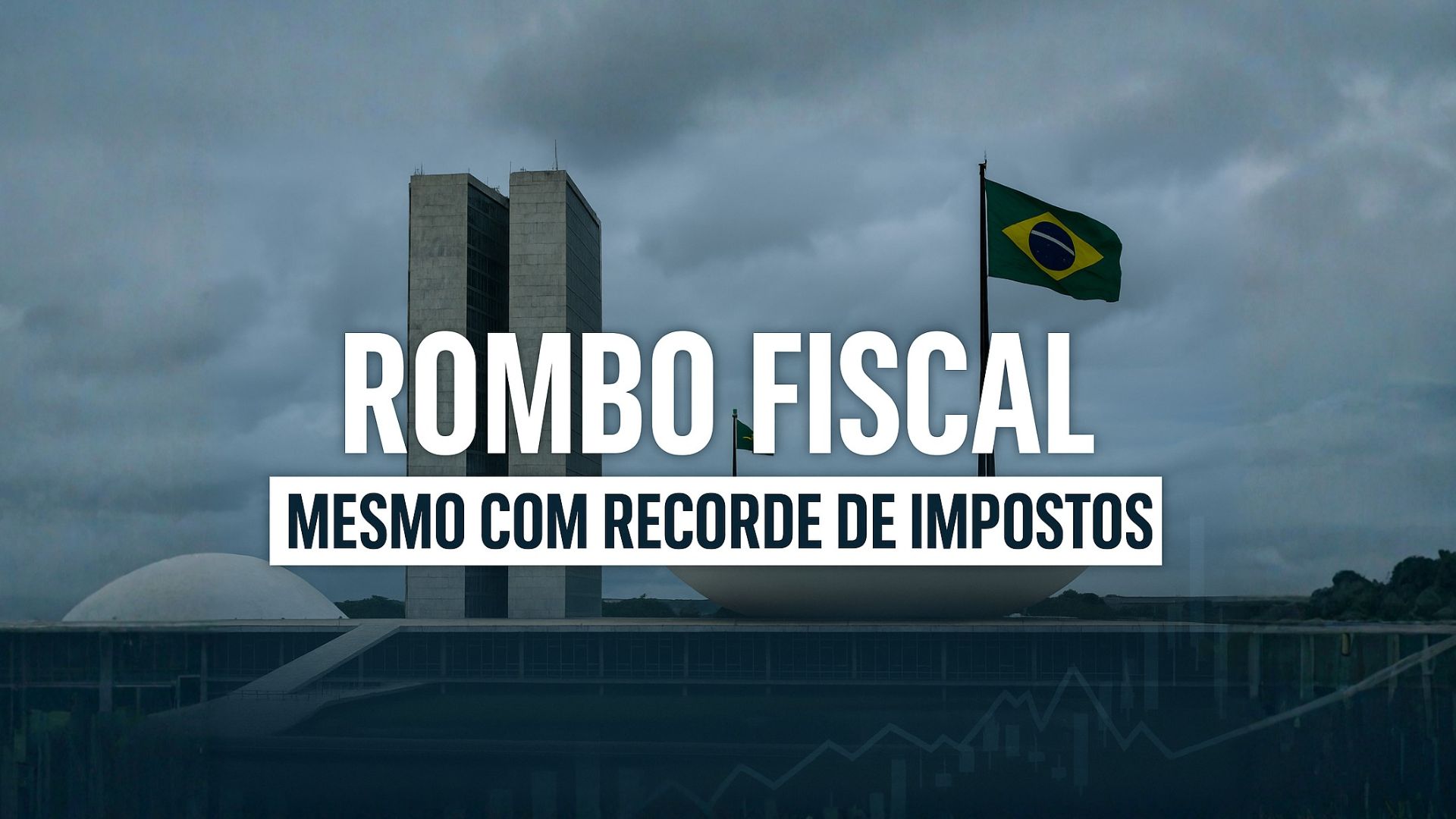
Even With Record Revenue and Historically High Tax Burden, Brazil Should Close 2025 With Deficit in Public Accounts, Amidst Rising Expenses, Increase in Debt and Pressures on the Federal Budget.
Brazil is expected to end 2025 with a deficit in public accounts, despite rising revenue and the tax burden at a historical high.
According to the portal Poder 360, specialized economists state that, even with the increase in revenue from the federal government, states, and municipalities, mandatory expenses and high interest rates continue to pressure the fiscal result and expand public debt.
The economic team set a target of zero primary balance for 2025, but the fiscal framework allows for a tolerance of 0.25 percentage points of GDP up or down.
-
Brazilian Joins Homeownership Consortium, Faces Decade of Dual Payments Totaling $141,000, Surpassing Traditional Mortgage

-
Land Rover to Halt Production in July, Putting 371 Jobs at Risk, as Chinese Automaker Negotiates to Convert Factory to 100,000 Vehicles Annually by 2027

-
Mexican Pest Threatens U.S. Cattle Herds at Historic Lows, Potentially Boosting Brazilian Beef Exports as Burger Prices Soar

-
Brazilian Freight Bill Progresses in Congress with $5,000 Minimum Wage, 70% Advance Payment, and Fines Up to $1 Million, as Agriculture and Industry Warn of Rising Costs and Legal Uncertainty


Fiscal Target and High Revenue
Revenue has been growing continuously since last year, supported by the performance of specific sectors, the recovery of tax bases, and measures for revenue “recomposition”.
Nonetheless, the official projection is a deficit of R$ 30.2 billion in 2025, a figure aligned with the negative limit allowed by the target.
Technicians from the Ministry of Finance argue that achieving zero primary balance depends on maintaining the pace of revenue and controlling mandatory expenses, which includes limits on expenditures subject to the cap and reviewing tax benefits.
In public debate, there is resistance.
Economist Ecio Costa, a professor at UFPE, criticized the current rule, stating that the fiscal framework “is a mere illusory piece, full of loopholes that are used to generate an additional deficit of R$ 300 billion in this government”.
According to him, the current structure has not been sufficient to anchor expectations or prevent the deterioration of the fiscal situation as expenses outpace revenue growth.
Public Debt on the Rise and Worrying Trajectory
The gross public debt is around 77.5% of GDP, which corresponds to approximately R$ 9.6 trillion.
Throughout the current presidential term, this indicator has advanced several percentage points, reflecting both the dynamics of interest rates and the need for financing of current expenses and social programs.
For Felippe Serigati, a researcher at FGV Agro, the debt/GDP ratio depicts a worrying trajectory and could lead the country to a “very uncomfortable fiscal crisis” if there is no consistent reversal of the primary result.
The most recent data shows that the nominal result — which includes interest payments — remains in the deficit field.
The cost of interest remains high, preventing a quicker improvement of the indicator and making stabilizing the debt more difficult in the short term.
In comparison to 2023, when the nominal result worsened as a percentage of GDP due to the level of interest and extraordinary expenses, there was some fluctuation throughout 2024, but insufficient to change the underlying scenario.
International Comparison of Tax Burden
Even without being part of the OECD, Brazil is often compared to the countries in the bloc.
In 2023, the average tax burden among members was 33.9% of GDP.
France led the ranking that year, with 43.8%.
In the Brazilian case, widely cited estimates indicate that the total tax burden surpassed the mark of 34% of GDP in 2024, a record level in the series tracked by research centers and specialized media.
However, there are methodological differences between calculations from the Treasury, Revenue, IBGE, and independent institutes, resulting in slightly different numbers for the same period.
Expenses on the Rise and Impact of the Minimum Wage
The evolution of public expenses explains why record revenue does not balance the accounts.
Analysts point to the increase in mandatory spending, especially on Social Security, BPC, and income transfers, all influenced by indexation to the minimum wage.
Economist José Ronaldo de Souza from Leme Consultants, assesses that the real gains policy of the minimum wage has pressured the budget: programs like salary bonus and unemployment insurance are also tied to the minimum, which multiplies the effect of each adjustment.
Moreover, the rigidity of personnel expenses and social security benefits in states and municipalities is greater than in the central government, which tightens the margin for investment and maintenance policies.
Economists believe that, without structural changes to spending dynamics, the trend will be towards compression of discretionary spending, impacting the daily functioning of the public administration and investment.
Pressure for New Revenues and Role of Congress
With expenses growing beyond the capacity for spontaneous revenue collection, the most immediate solution has been pressure for new revenues.
The government sends to the Congress measures to recomposition tax bases, reviews incentives, and seeks to close gaps that reduce revenue.
On the other hand, part of the productive sector and conservative lawmakers on fiscal matters advocate for reducing expenditures and implementing reforms to contain the trajectory of debt, arguing that the increase in the tax burden has already reached the acceptable limit.
Meanwhile, extraordinary revenues — such as gains from favorable court decisions or temporary regularization programs — help to carry the year, but do not replace the structural consolidation needed to stabilize the debt.
Economists remind us that improving the primary balance needs to be recurring to reverse the debt/GDP trend in a high-interest environment.
Federal, States, and Municipalities: Shared Responsibilities
Although the federal government concentrates the largest share of revenue and is the main responsible for conducting fiscal policy, states and municipalities are also recording deficits, albeit smaller.
At the subnational levels, budget rigidity is exacerbated by the weight of payrolls and local social security, which reduces the space for investments and increases dependence on constitutional transfers.
Experts emphasize that the expansion of spending exerting pressure on the tax burden is not exclusive to Brasília, although the federal government has greater financing capacity and adjustment instruments.
The Fiscal Challenge of 2025
To meet the zero primary balance target, the Finance Ministry is counting on strict budget execution and the implementation of already approved revenue measures, in addition to additional projects still in progress.
Nonetheless, the combination of indexation of mandatory expenses, high interest rates, and moderate economic growth keeps the task complex.
If revenue slows down or measures do not advance, the tolerance range of the framework should be activated, formally preserving the target but delaying a firmer reversal of the debt trajectory.
In summary, the country collects more, but spends even more — and carries a debt that increases the cost of adjustment itself.
Without persistent changes on the spending side and without a less volatile revenue base, the effort to balance the accounts will continue to depend on ad hoc measures and growth above what has been recently observed.
In light of this scenario, what should be the priority of adjustment: unlocking reforms that address spending rigidity or forgoing revenues and accepting more gradual targets?





Be the first to react!