






 Portuguese
  Spanish
  3 min of reading
  10 comments


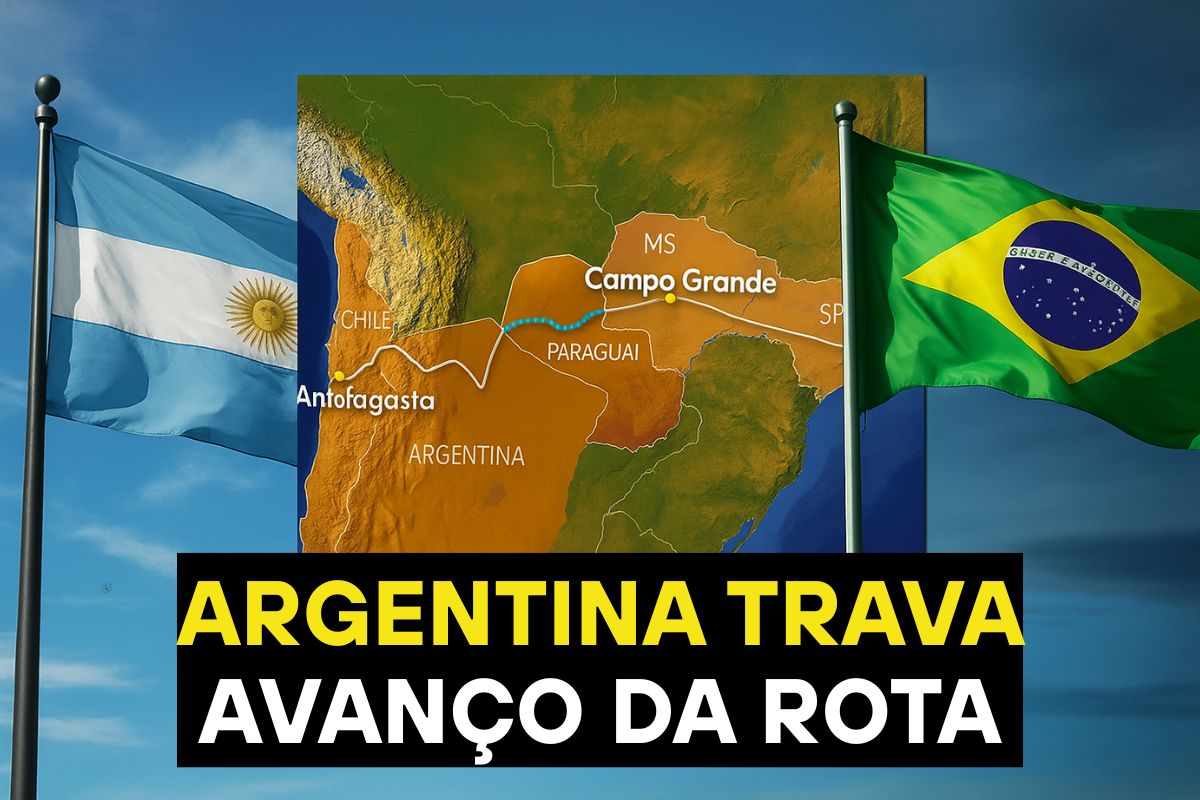


With More Than 3,000 Km Already Covered, the Bioceanic Route Faces Decisive Obstacles in the 700 Km Argentinian Stretch, Which Still Suffers From Poor Customs, Dirt Roads, and Lack of Political Support From Buenos Aires
The Bioceanic Route, seen as one of the main logistical bets in South America, is making significant progress through Brazilian and Paraguayan territories but faces serious obstacles in Argentina. The crossing of about 700 km in the neighboring country has become the most sensitive point of integration, affecting commercial fluidity and the competitiveness of the corridor.
With the potential to connect the Atlantic to the Pacific and strengthen trade with Asia, the route is hindered by unpaved roads, inefficient customs, and disinterest from the Argentine central government, as highlighted by the special report from CNN Prime Time.
Brazil and Paraguay Consolidate Corridor, but the Logistical Bottleneck is in the Argentine Andes
The CNN team traveled more than 3,000 km of the Bioceanic Route, starting from the Brazilian Pantanal to the Andes Mountains.
-
Brazilian Joins Homeownership Consortium, Faces Decade of Dual Payments Totaling $141,000, Surpassing Traditional Mortgage

-
Land Rover to Halt Production in July, Putting 371 Jobs at Risk, as Chinese Automaker Negotiates to Convert Factory to 100,000 Vehicles Annually by 2027

-
Mexican Pest Threatens U.S. Cattle Herds at Historic Lows, Potentially Boosting Brazilian Beef Exports as Burger Prices Soar

-
Brazilian Freight Bill Progresses in Congress with $5,000 Minimum Wage, 70% Advance Payment, and Fines Up to $1 Million, as Agriculture and Industry Warn of Rising Costs and Legal Uncertainty


While Brazil and Paraguay speed up construction and customs integration, the Argentine part still presents the biggest obstacles.
In the northern region of the country, there is a lack of minimum infrastructure, political support, and even sufficient customs officials to ensure a continuous flow of goods.
The consequence is clear: logistical delays, insecurity in transport, and high costs, which compromise the efficiency of the entire export chain.
The Geoeconomic Role of Lithium and the Dispute Between China and the USA
The route crosses the so-called Lithium Triangle — an area that concentrates nearly half of the world’s lithium reserves, essential for electric car batteries and mobile devices.
Argentina, along with Bolivia and Chile, holds 57 million tons of lithium in proven reserves, while China dominates globally in refining and battery manufacturing.
The Bioceanic Route could allow the mineral to be processed locally, generating South American production chains — something of interest to both China and the United States, in the competition for strategic control of stored energy.
Dirt Roads and Slow Customs Compromise the Project
One of the biggest bottlenecks is at the customs between Paraguay and Argentina, which operates with few staff and limited hours.
After crossing, trucks face 26 km of unpaved road with no ongoing works.
The most recent study by the Inter-American Development Bank (IDB) points out 11 critical failures in the Argentine stretch, including lack of equipment, deficiencies in access roads, and absence of secure infrastructure for cargo transport.
Milei’s Government Promises Bridge and Gas, but Ignores Paving
Although the government of Javier Milei has promised a new bridge at the border with Paraguay and created a group to export gas from Vaca Muerta via the route, the paving of the Argentine stretch still has no defined schedule.
According to Casa Rosada, the works are not the federal government’s responsibility — revealing another layer of disinterest from Buenos Aires, which historically concentrates investments in the capital’s port and marginalizes the northern part of the country.
Northern Argentina Wants to Grow, but Faces Abandonment by the Capital
Businesspeople and academics from the northern region argue that the Bioceanic Route can transform the local economy, but point out that the political elite in Buenos Aires ignores the project.
With 40% of the population and 80% of exports concentrated in three provinces in the center of the country, the Argentine economic logic centers around the capital’s port, making institutional support for integration with neighbors difficult.
Despite this, local leaders continue to seek solutions, such as Professor Alejandro Safarov, who leads a network of studies on the corridor, and businesspeople like Federico Valejo, who invest in the industrial development of northern Argentina focusing on connectivity, internationalization, and generating foreign currency.
Do you believe the Bioceanic Route can transform South American logistics despite the obstacles in Argentina? Do you think Brazil should push harder for progress? Leave your opinion in the comments — we want to hear from those closely following this integration.





Seria o caso de desviar pela Bolívia, evitando a Argentina……
O Milei não só um problema pra a Argentina é um problema regional.
Eu tenho a impressão que os maiores interessados nessa obra, sejam os EUA e principalmente os Chineses !
Vamos aguardar os Yuans chegarem…