






 Portuguese
  Spanish
  5 min of reading
  5 comments


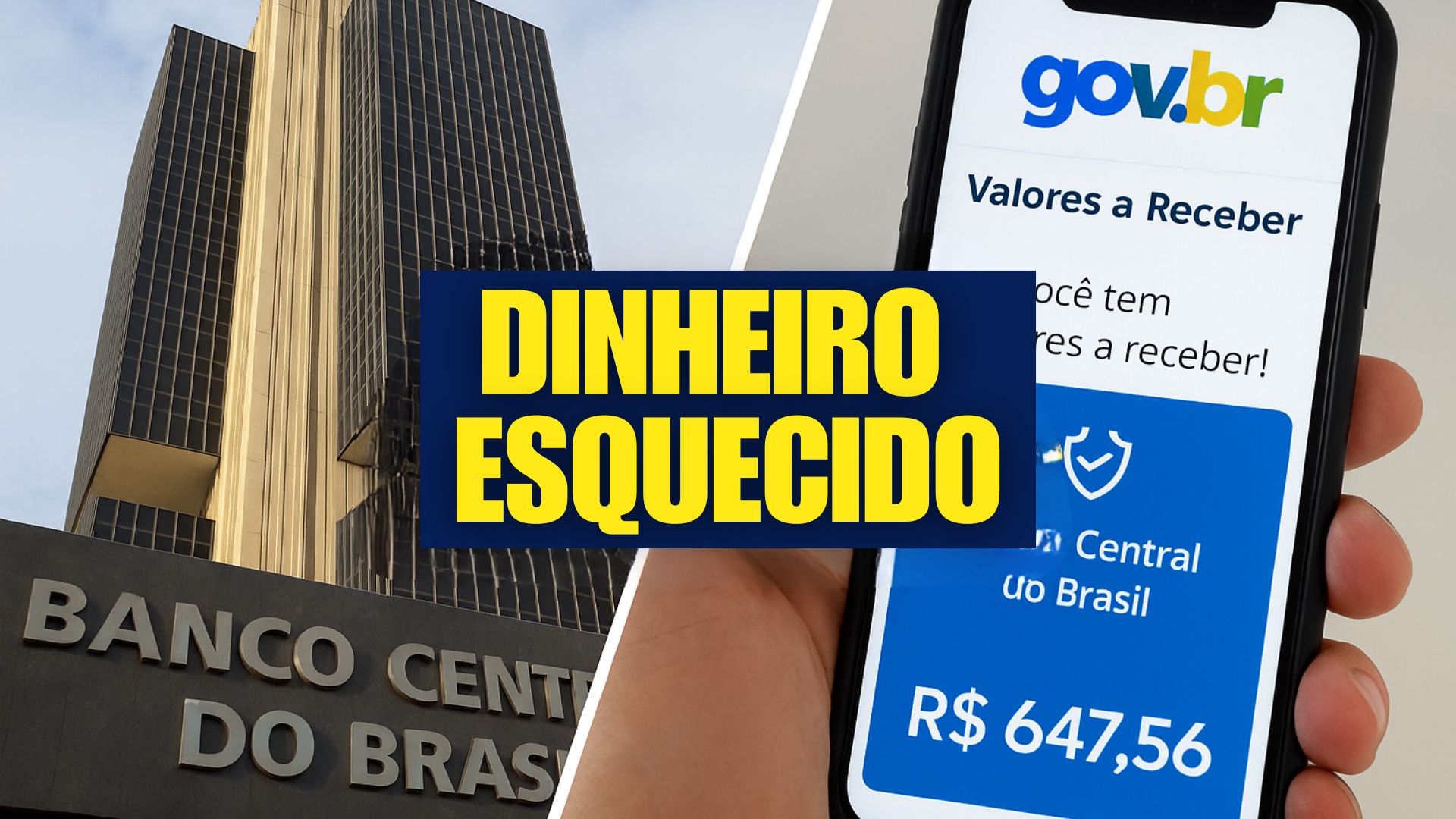


New Balance of the Central Bank Shows Billions Still Parked in the System, Stirs Online Searches and Rekindles the Interest of Citizens and Companies in Checking Possible Forgotten Values.
The Central Bank reported that there are still R$ 9.7 billion in forgotten values in financial institutions, available for withdrawal through the Receivables System, the SVR.
The resources belong to individual and corporate clients across the country and can be redeemed through authentication on the gov.br portal at higher security levels.
Of this amount, R$ 7.6 billion is linked to about 48.6 million CPFs, while R$ 2.1 billion corresponds to values of approximately 4.7 million CNPJs.
-
Brazilian Joins Homeownership Consortium, Faces Decade of Dual Payments Totaling $141,000, Surpassing Traditional Mortgage

-
Land Rover to Halt Production in July, Putting 371 Jobs at Risk, as Chinese Automaker Negotiates to Convert Factory to 100,000 Vehicles Annually by 2027

-
Mexican Pest Threatens U.S. Cattle Herds at Historic Lows, Potentially Boosting Brazilian Beef Exports as Burger Prices Soar

-
Brazilian Freight Bill Progresses in Congress with $5,000 Minimum Wage, 70% Advance Payment, and Fines Up to $1 Million, as Agriculture and Industry Warn of Rising Costs and Legal Uncertainty


The figures, referring to the latest survey released by the BC, reinforce that the service remains in constant use since its creation.
Receivables System Moves Billions Returned
Since the SVR became operational, the Central Bank has authorized the return of more than R$ 12 billion in resources that were parked in banks, cooperatives, consortium administrators, and other regulated institutions.
The updated data indicate about R$ 12.2 billion released for individuals and legal entities.
Of the total returned, approximately R$ 9 billion was allocated to individuals and around R$ 3.2 billion to companies.
The BC states that these amounts originate from closed accounts with remaining balances, fees that were refunded, or resources from operations such as consortia and credit cooperatives.
Statistics released by the Central Bank show that about 64% of account holders have up to R$ 10 to receive, while approximately 1.8% have amounts above R$ 1,000.
According to the institution’s technicians, this distribution demonstrates the predominant profile of small credits in the system.
How to Check for Forgotten Money in the SVR

Any citizen or company can check for receivables on the official website of the Receivables System, maintained by the Central Bank.
The initial consultation is free and uses basic identification data.
In the case of individuals, it is necessary to provide the CPF and the date of birth.
For legal entities, the verification is done with the CNPJ and the date of company establishment.
After this step, the system informs if there are linked values and guides the user on how to proceed.
When there are available values, the user is directed to the gov.br portal, where they must use an account at silver or gold levels, with two-factor verification.
The Central Bank explains that this requirement seeks to increase the protection of financial data.
After authentication, the citizen returns to the SVR area and can view the exact amount to receive, the institution responsible for the refund, and the source of the credit, such as closed accounts, cooperative resources, consortia, or refunded fees.
Then, they can request the redemption according to the options presented in the system.
Redemption Process Through gov.br
After confirming the existence of the balance, the user needs to authorize the Central Bank to share their data with the institution responsible for the payment.
In cases where the institution has fully adhered to the system, it is possible to request a refund directly through the SVR using a registered Pix key.
The financial institution must make the payment within the timeframe stipulated by the BC, usually via Pix.
If the client does not have a valid key or if the institution does not operate with this modality within the SVR, the system provides guidance and contact channels to complete the process.
The Central Bank emphasizes that the refund depends on the request of the account holder.
If the redemption is not requested, the amount remains registered in the name of the client, available for withdrawal.
The institution also informs that there is no defined deadline for the withdrawal.
Consultation for Heirs and Closed Companies
The SVR allows checking for values left by deceased individuals.
The search is done with CPF and date of birth.
To redeem, heirs or legal representatives must present documentation required by financial institutions, as provided in succession legislation.
Companies that have ceased operations may also have registered values.
The system displays any credits linked to the CNPJ, and the legal representative must prove authorization to conclude the refund process according to the rules of the responsible financial institution.


Official Guidelines to Avoid Scams
The Central Bank warns that it does not send links for consultation or redemption via email, SMS, or messaging apps.
According to the agency, any communication requesting personal data, passwords, or codes should be treated with caution.
The official guidance is to access the service only through the BC website or the gov.br portal.
The agency also informs that the process is free and that there are no fees for the release of the amounts.
Searches About “Receivables” Skyrocket on the Internet
The release of the latest balance increased searches on the topic.
Data from Google Trends indicate that the term “receivables” registered an increase of about 500%, exceeding 200 queries in just a few minutes.
The increase, according to specialists in digital trend analysis, typically occurs when the Central Bank updates its database or when the subject returns to the news cycle.
With millions of CPFs and CNPJs still having available balances, specialists point out that maintaining the SVR in continuous operation continues to stimulate new access, as many users check values only when there is public impact.
In this context, the question becomes: how many people have not consulted the system yet, even with the possibility of recovering resources in a few minutes?





Tem que pagar alguma taxa
Maravilhoso
Olha eu jar fis pagamento pelo Pix 2 vezes mais não deu certo aí eu perdeu uo pouquinho tinha então eu tenho medo der fazer uo pagamento por quer não dar certo será quer pelo Banco Du Brasil não dar certo estou ar espera da resposta sim ou então pele caixa sim sem mais uma boa noite ar todos .