






 Portuguese
  Spanish


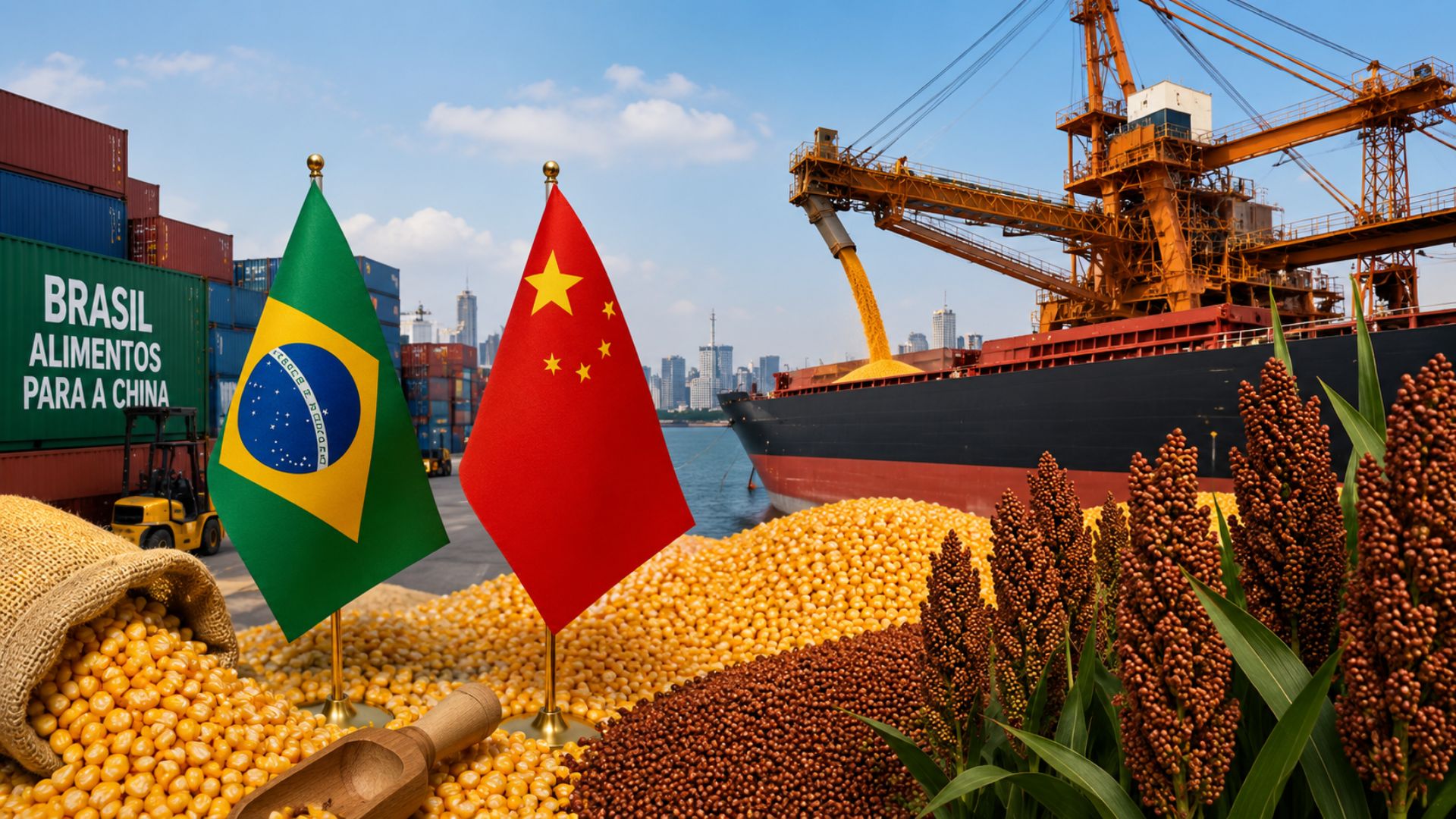
Brazil is the largest supplier of agricultural products to China since 2018, exporting US$ 51.6 billion in food to the Chinese market in 2025, and is now advancing in the trade of corn and sorghum with Beijing. According to information from CNN Brasil, the Chinese ambassador to Brazil, Zhu Qingqiao, stated that the two countries have strong agricultural complementarity and ample space to grow together in technology and food security.
Brazil occupies a position that no other country in the world has achieved: being the main supplier of food to the most populous nation on the planet. Since 2018, Brazil has been the largest exporter of agricultural products to China, and in 2025 the bilateral agricultural trade reached US$ 51.6 billion, equivalent to about a quarter of all Chinese agricultural imports. The statement was made by the Chinese ambassador to Brazil, Zhu Qingqiao, during the Abramilho congress in Brasília, where he detailed the advancement of cooperation between the two countries.
What makes the relationship between Brazil and China especially relevant at this moment is that it is not stagnant in soy and meat. The ambassador highlighted that there is a high potential for growth in the trade of corn and sorghum, two products that have recently started entering the Chinese market and can significantly expand the trade agenda in the coming years. In January 2026, Brazilian sorghum exports to China already reached 25.8 thousand tons, with expectations for gradual growth in the following months. China has also established itself as the fifth-largest market for Brazilian corn.
US$ 51.6 billion: the size of agricultural trade between Brazil and China
The financial dimension of the agricultural relationship between Brazil and China is impressive by any metric. The US$ 51.6 billion exported in Brazilian agricultural products to the Chinese market in 2025 represents approximately 25% of all food that China imported in the same period. No other country comes close to this volume of supply to the Chinese market, which places Brazil in a uniquely influential position in the food security of the world’s second-largest economy.
-
Low-Demand Brazilian Beef Offal Gains Popularity Abroad: Indonesia Purchases $19.5 Million, Boosting Revenue and Reducing Waste

-
Soy Expansion in Former Brazilian Savanna Sparks Water and Land Conflicts in Major Agricultural Frontier
-
Mexican Pest Threatens U.S. Cattle Herds at Historic Lows, Potentially Boosting Brazilian Beef Exports as Burger Prices Soar

-
Avocado Boom for European and U.S. Markets Fuels Water Crisis in Drought-Stricken Chilean Region


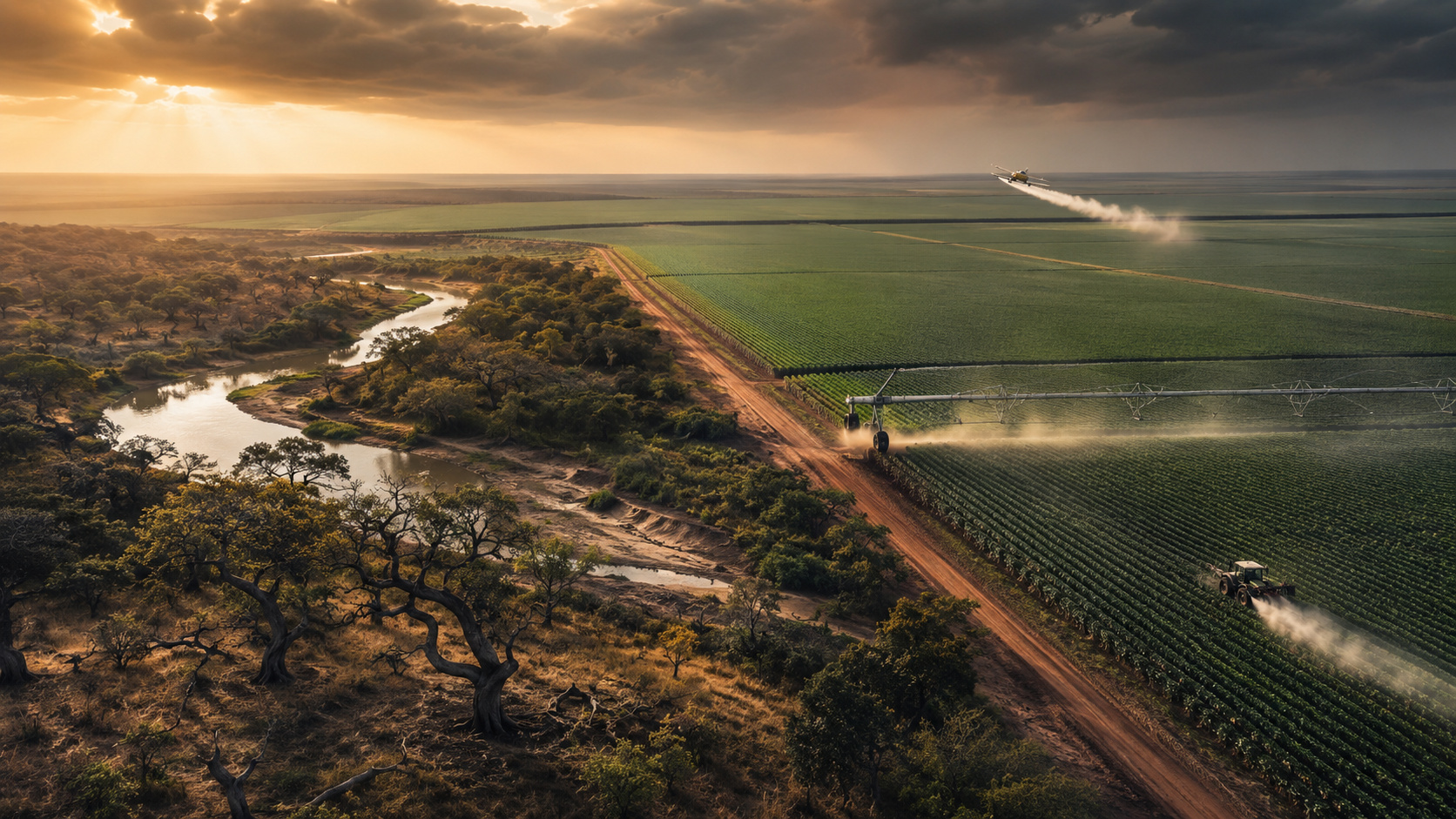


The commercial relationship between the two countries in the agricultural sector intensified from 2008, when China became the main destination for Brazilian agricultural exports. Ten years later, the position was consolidated with Brazil assuming the status of the largest supplier. Since then, the flow has expanded both in volume and in product diversity, with the progressive opening of new markets for items that previously were not part of the bilateral agenda.
Corn and Sorghum: the new chapters of the partnership

Soybeans and beef have dominated Brazil’s agricultural export agenda to China for years, but two new products are gaining ground with the potential to transform the relationship. Brazilian sorghum began to be exported to China after the signing of sanitary protocols last year, and by January 2026, shipments had already totaled 25.8 thousand tons. The volume is still modest compared to soybeans, but it represents the start of a flow that is expected to grow gradually and consistently.
Brazilian corn has also found a market in China, which is already the fifth largest buyer of the cereal produced in Brazil. For a product that was not part of bilateral trade a few years ago, reaching the fifth position in the ranking of destinations is a significant advance. Ambassador Zhu Qingqiao indicated that more Brazilian agricultural products should reach the Chinese market in the coming years, as regulatory and phytosanitary understandings between the two countries continue to advance.
“We have to hold our people’s bowl”: China’s food priority
The Chinese ambassador used an expression from President Xi Jinping to explain why China treats food security as a strategic issue. “We have to hold our people’s bowl” is the phrase that conveys Beijing’s concern with the need to ensure the food supply for more than 1.4 billion people, in a country where the available arable land is approximately 120 million hectares, a fraction of Brazil’s agricultural potential.
China has been investing in expanding its agricultural infrastructure, especially in irrigation and grain storage, but recognizes that domestic production alone is not enough to feed its population. It is this gap that makes Brazil an indispensable partner: the country has abundant arable land, favorable climate, advanced agricultural technology, and logistical capacity to export millions of tons of grains, meats, and other products. For Zhu Qingqiao, the complementarity between the two countries is not only commercial but structural.
Agricultural technology: the centers that Brazil and China build together
The cooperation between Brazil and China is not limited to the buying and selling of commodities. The two countries are jointly developing agricultural technology projects that include a demonstration center for family farming machinery in Brazil, a research and innovation center in Brasília, and a smart technology center under construction in Londrina, Paraná. These projects are mainly aimed at the mechanization of family farming, a segment that in Brazil still relies on manual methods in many regions.
The Chinese ambassador highlighted that “the future of agriculture lies in science and technology” and that China has been investing in the development of smart agriculture and the efficient use of natural resources. These initiatives are part of China’s 15th Five-Year Plan for agricultural innovation and modernization. In addition to technology centers, projects related to biotechnology are also part of the bilateral agenda. For Brazil, the partnership represents access to technologies that China has developed for its specific conditions and that can be adapted to the Brazilian reality.
From soy to sorghum: how the agenda diversifies

The diversification of agricultural products that Brazil exports to China is a trend gaining strength with each new sanitary protocol signed. Soy continues to be the flagship of bilateral trade, representing the largest share of the $51.6 billion exported in 2025, but the entry of corn, sorghum, and other plant and animal proteins is reducing the concentration of the agenda on a single product. For Brazil, this diversification is strategic because it decreases vulnerability to price or demand fluctuations of a single commodity.
For China, buying more types of products from Brazil expands supply options and reduces dependence on alternative suppliers. With each new product entering the bilateral agenda, a new commercial link is created that strengthens the relationship and makes it difficult for temporary interruptions in one segment to compromise the entire partnership. The Brazilian sorghum that arrived in China in January may seem small compared to the millions of tons of soy shipped annually, but it represents the opening of a door that tends to become increasingly wider.
Two countries that complement each other in the field
Brazil is the largest food supplier to China, exporting $51.6 billion in agricultural products in 2025 and expanding the bilateral agenda with corn and sorghum while building agricultural technology centers in partnership with Beijing. The complementarity between the two countries is structural: Brazil has land and production, China has demand and technology, and together they represent the largest agricultural trade relationship on the planet. According to Ambassador Zhu Qingqiao, both sides are willing to expand cooperation to strengthen global food security.
Do you follow the commercial relationship between Brazil and China in agribusiness? Tell us in the comments what you think about the advancement of corn and sorghum exports, if you believe that diversifying the agenda is positive for Brazilian producers, and how you evaluate the agricultural technology centers that the two countries are building together. We want to hear your opinion about this partnership.


-

1 person reacted to this.