Portuguese
  Spanish


Operation with the container ship used about 640 thousand liters of ethanol and opened space for low-carbon marine fuels
On July 12, 2026, Brazil carried out the first national refueling of a transoceanic ship with ethanol. The operation took place at the Port of Santos, in São Paulo, and involved Copersucar, CMA CGM, and Bunker One.
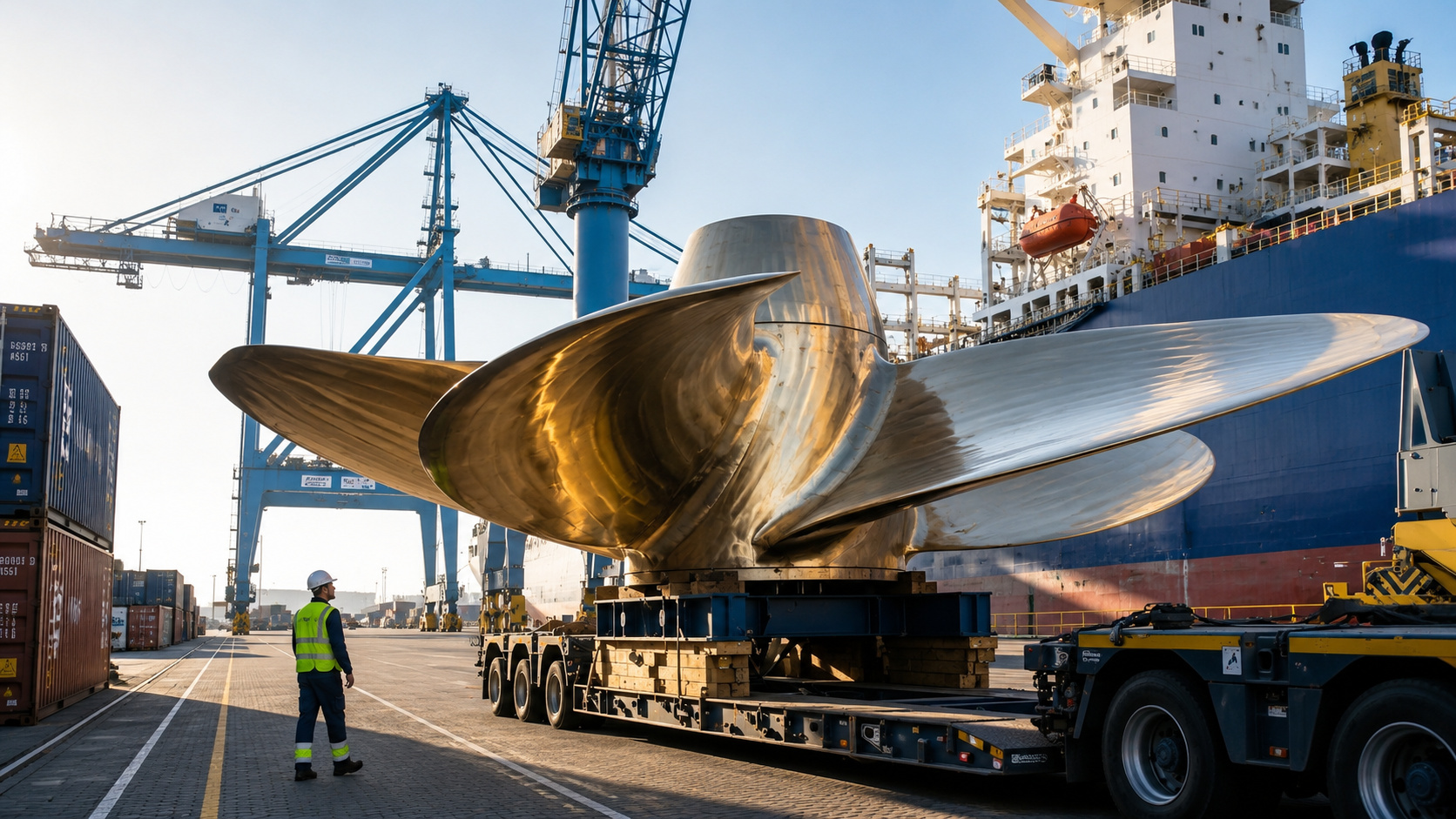
The renewable fuel was supplied to the CMA CGM IRON, a container ship capable of transporting 13 thousand TEUs. The vessel has a tri-fuel engine certified to operate with fossil bunker, methanol, and ethanol.
According to Tomás Manzano, president of Copersucar, the ship received 500 tons of ethanol, equivalent to approximately 640 thousand liters. After refueling, the vessel began a journey to Sri Lanka.
-
131-Ton Naval Propeller, Costing Up to $4 Million and Taking 4 Months to Manufacture, Powers the World’s Largest Cargo Ships Almost Invisibly

-
Brazil’s Maceió Port Joins Decarbonization Efforts with Study to Supply Clean Energy to Cruise Ships

-
Brazilian Port Expands Ship Capacity to 9.5 Meters, Boosting Cargo Transport and Reducing Logistics Costs
-
Three Chinese companies manufacture more than 96% of the world’s dry cargo containers and 100% of refrigerated ones, in a dominance built over 40 years that has made it almost impossible for the West to compete in this market.



First refueling with ethanol placed Brazil on the route of renewable marine fuels
The operation marked Brazil’s entry into the group of countries prepared to supply renewable fuels for long-haul navigation.
During part of the route to Sri Lanka, the CMA CGM IRON will use ethanol combined with other fuels compatible with its engine.
The initiative also reinforced the potential of Brazilian fuel in the decarbonization of maritime transport. The sector seeks alternatives capable of reducing emissions without compromising the autonomy and operational capacity of ships.
CMA CGM IRON received about 640 thousand liters of ethanol at the Port of Santos
The refueled volume corresponded to approximately 640 thousand liters of hydrated ethanol. The fuel meets the specifications of the National Agency of Petroleum, Natural Gas, and Biofuels.
The production took place at a plant linked to Copersucar and holding international certification.
The refueled ship was delivered in 2025. Additionally, it represents the first unit of a series of 12 vessels with a capacity of 13 thousand TEUs.
All these vessels will be equipped with tri-fuel engines certified to operate with ethanol.
Operation with ethanol was not treated as an experimental test
Tomás Manzano stated to Estadão/Broadcast that the refueling was not merely experimental.
“This is not a test, it is already a real-life operation”, declared the president of Copersucar.
The trip, however, will allow for the analysis of the fuel’s efficiency, the ship’s autonomy, and other operational indicators.
The results may also guide a future expansion of the commercial use of ethanol in transoceanic vessels.
Refueling required two years of preparation and logistical integration
The project was prepared over approximately two years and mobilized different stages of the ethanol chain.
First, the fuel was produced at a Copersucar plant. Then, the product was transported to Santos and stored in a dedicated terminal.
In the next stage, the ethanol was transferred to a barge. Finally, the fuel reached the tanks of the CMA CGM IRON.
The operation required the coordinated participation of Copersucar, CMA CGM, Bunker One, AGEO Terminais, Terminal Santos Brasil, and Everllence.
Ethanol has favorable characteristics for long-distance navigation
The companies involved highlighted that ethanol can contribute to reducing greenhouse gas emissions in maritime transport.
The fuel also has large-scale commercial availability and a consolidated production infrastructure in Brazil.
Economic competitiveness represents another favorable factor. Thus, ethanol emerges as an alternative for vessels equipped with compatible engines.

Port of Santos could become a regional hub for low-carbon fuels
The expectation of the companies is that the Port of Santos will consolidate as a regional center for low-carbon maritime refueling.
The port infrastructure, proximity to production areas, and installed logistics chain favor future similar operations.
The first refueling also demonstrated that the country has the capacity to produce, transport, store, and supply ethanol to international ships.
CMA CGM intends to operate 200 low-carbon ships by 2031
CMA CGM reported that it plans to operate approximately 200 container ships capable of using low-carbon energies by 2031.
The expansion is part of the company’s strategy to achieve carbon neutrality by 2050.
The CMA CGM IRON plays a central role in this planning. The vessel combines large transport capacity with an engine prepared for different fuels.
The operation carried out in Santos, therefore, connected Brazilian ethanol production to the new environmental demands of international navigation.
Do you believe that Brazilian ethanol could become one of the main renewable fuels used by large transoceanic ships?