Portuguese
  Spanish




Portugal’s gold reserves are the 14th largest in the world and the 7th in Western Europe, and Brazil appears in the same report among the countries that bought the most gold in the most recent period
In a world of digital payments, why does a country keep tons of precious metal in armored vaults? Euronews’ answer is straightforward: when everything becomes uncertain, gold is the only guarantee, and that is why Portugal’s gold reserves remain untouched, according to Euronews, in a report published on January 21, 2026.
Portugal holds 382.66 tons of gold, with the reserves of the Bank of Portugal valued at 47 billion euros, according to Euronews, which cites the latest data from the World Gold Council, the entity that records countries’ reserves. About half of this treasure is stored in a high-security building in Carregado, owned by the Bank of Portugal, a few kilometers north of Lisbon, and the other half is deposited in London, the source notes. It is the Bank of Portugal, therefore, that watches over the country’s most valuable vault day and night.
Gold on the rise: record after record
The moment could not be more valuable for those with a full vault. In December 2025, the price of the precious metal reached a historic high of 4,400 dollars per ounce, equivalent to 3,756 euros, driven by geopolitical tensions, and the value was already surpassed in the first days of January 2026, with the ounce priced at 4,151 euros in the week of the report, according to Euronews.
-
Truck drivers avoid deliveries to supermarkets due to waits that can hinder trips, increase costs, and leave vehicles idle, while the law limits loading and unloading to five hours and provides for payment for the excess time.

-
Oil feels the weight of the war between the United States and Iran on the same day that Tehran buries its assassinated supreme leader and the world watches to see who will control the Strait of Hormuz, a strategic route for global oil.
-
The perks at Nubank are over: the bank announces a monthly fee for HBO Max, which was “free,” with a 12-month term on Ultravioleta, 6 months on Nubank+, and the fee starting from January 2027.

-
The Chamber releases R$ 10 billion to hold the price of diesel until December and proves that Brazilian fuel remains tied to Congress.




The demand for safe assets, expectations of interest rate cuts, and systematic purchases by central banks also helped raise the price, with the value of global gold reserves rising to about 4 trillion euros, the source notes. For Portugal, which continues to rely on this asset, it was good news.
Why gold reserves are not sold
Euronews explains the logic in three layers. The first is credibility: when investors assess a country’s risk, whether to grant credit, judge the solidity of the currency, or anticipate political risks, the volume of gold held by the state is a relevant factor, according to Euronews. With the 14th largest reserve in the world and the 7th in Western Europe, behind only Germany, Italy, France, Switzerland, the Netherlands, and Poland, Portugal carries a strategic asset of weight.
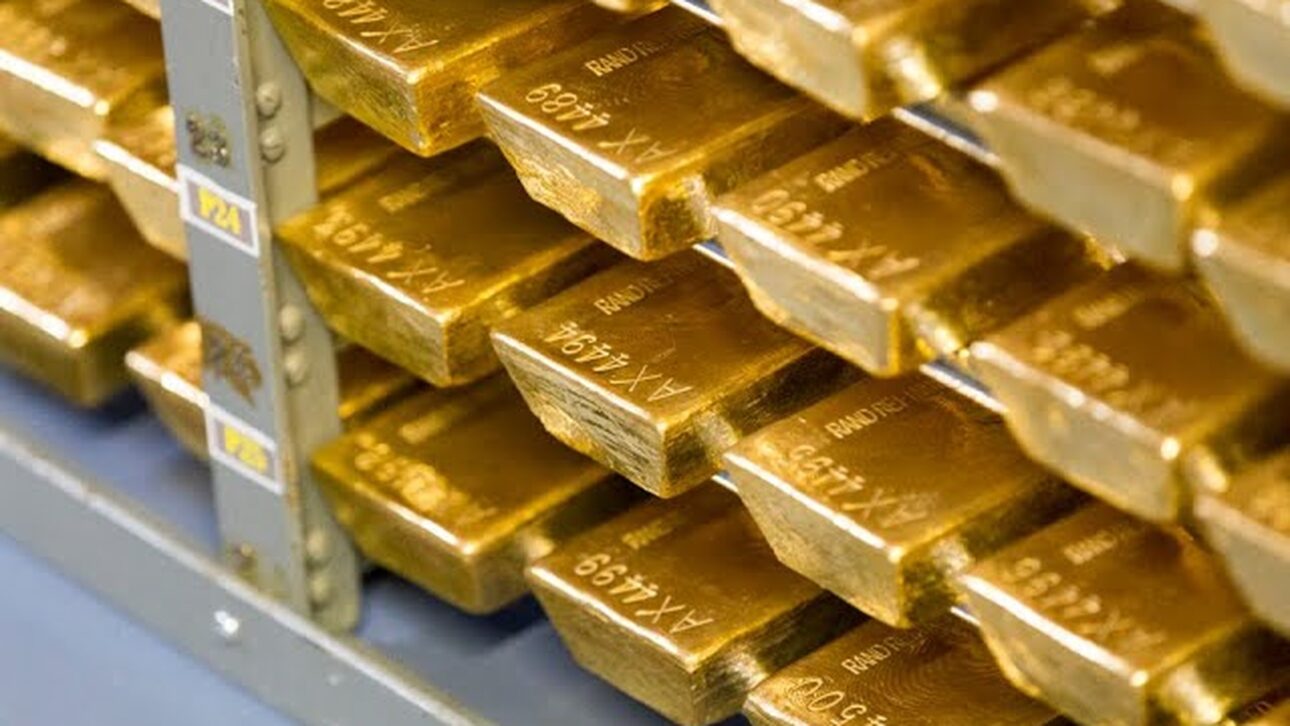
The second layer is crisis protection: if the euro were to collapse or access to international liquidity were interrupted, central banks could convert gold into hard currency or use it as collateral for financing, and Portugal itself resorted to such solutions in the three IMF interventions, in 1977, 1983, and 2011, according to Euronews. The third is accounting: the value of gold is part of the central bank’s balance sheet and contributes to its solvency, reinforcing confidence in the financial system.
Brazil on the list of those who bought the most gold
And the Brazilian reader has a seat at this table. Among the countries that accumulated the most gold in the most recent period of the survey cited by Euronews, Poland led with an additional 82.67 tons, reaching 530.9 tons in December 2025, followed by Kazakhstan, with 40.97 tons, and Brazil, which added 31.48 tons to its own gold reserves.
Turkey added 26.68 tons and China, whose reserves are already worth about 283.2 billion euros, added another 24.88 tons, in a move that the source associates with the reduction of central banks’ exposure to the US dollar. On the opposite end, the largest sellers were Singapore, with 15.24 tons, Uzbekistan, with 11.82 tons, Russia, with 6.22 tons, and Germany, with 1.28 tons, according to Euronews.
From colonial Brazil’s gold to wartime tungsten
The origin of the Portuguese treasure is a historical romance. The large amount of gold accumulated by Portugal is largely due to the history of Portuguese colonization in Brazil and the trade exchanges of the modern period, especially during the Estado Novo, between 1926 and 1974, according to Euronews. However, the source notes that the gold from 18th-century Brazil, then the colony’s main export product, probably did not survive until the Estado Novo period.
The heaviest chapter came later. A large part of the gold accumulated by António de Oliveira Salazar originated from Nazi Germany: during World War II, neutral Portugal became one of the world’s main suppliers of tungsten, a crucial metal for hardening the steel of cannons and ammunition, and a large part of the German payments was made in gold, at Salazar’s insistence, according to Euronews. The result is in the numbers from the Ministry of Finance cited by the source: reserves jumped from 65 tons in 1939 to 306 tons in 1945.
From 866 tons to current gold reserves: the shrinking of the treasure
The peak came with the revolution. Portugal reached its maximum reserves in 1974, with 866 tons of gold, and since then the Republic has been disposing of part of the metal, mainly after gold lost its role as a reference for currency issuance in 1971, according to Euronews.
At the beginning of this century, the country still had almost 600 tons, and the then governor of the Bank of Portugal, Vítor Constâncio, decided to sell part of the reserve, at a time when no one anticipated the financial crisis of 2008, the sovereign debt crisis, the pandemic, and the current geopolitical upheavals, notes the source. The Bank of Portugal has since remained the guardian of what is left of the treasure. Here is the observation from this editorial, duly noted: with the ounce of gold hitting record after record, each ton sold in the past is worth a small fortune today that was left behind, and that is exactly why gold reserves have become a topic again.
What the history of Portuguese gold teaches
In the final reading of this editorial, duly noted: the Euronews report shows that gold reserves are less about idle wealth and more about country insurance, credibility for taking credit, a cushion for crisis, and a foundation of trust for the central bank. It also shows that Brazil, part of the historical origin of this treasure, is now on the other side of the counter, buying tons for its own gold reserves. Tell us in the comments: do you think keeping billions in bars in a vault is wisdom or too much idle money?
Watch: the Portuguese State’s gold “piggy bank”


The theme of the guarded treasure yields rare images. In a 2022 video, Jornal Económico, a Portuguese outlet, showed the Portuguese State’s gold “piggy bank”, a dive into the same vault of curiosities that the Euronews report now updates with the record numbers of gold reserves.