






 Portuguese
  Spanish


With US Debt Exceeding US$ 36 Trillion, Countries Like China and Japan Are Already Reducing Their Exposure to American Bonds. But What Happens If the Whole World Stops Financing It?
The US debt is today one of the pillars of the global financial system. More than a hundred countries hold part of their international reserves in US Treasury bonds, relying on the safety of the currency and the predictability of its economy. However, this confidence has been shaken by unilateral actions, trade disputes, and rising debt levels.
Since the collapse of the Bretton Woods system in 1971 to the most recent tensions with China, Mexico, and the European Union, US debt has become a geopolitical issue. The question that arises now is: what if creditors decide to stop financing this trillion-dollar machine?
The Collapse of Confidence and the Start of Systemic Risk
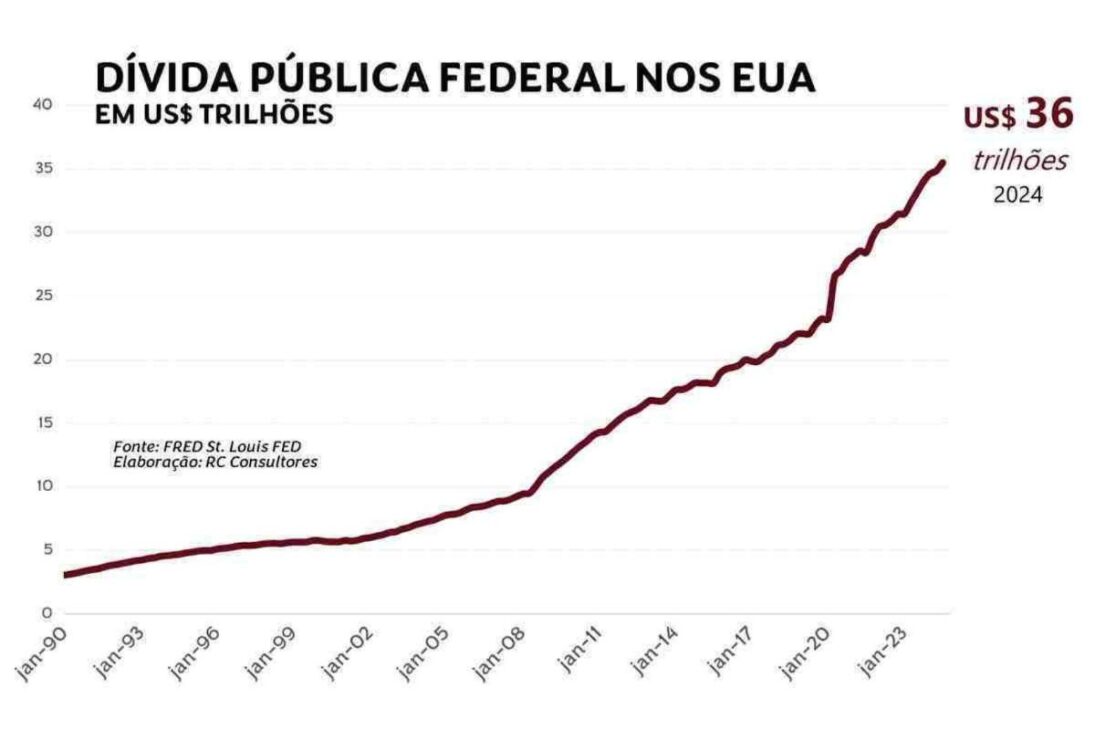
US public debt reached US$ 36 trillion in 2024, equivalent to about 120% of the country’s GDP, according to the US Treasury. This escalation began to gain momentum in the 1970s, after the end of the dollar’s convertibility into gold. Since then, the US government has financed recurring deficits through the issuance of securities such as T-Bonds and T-Bills, sold to investors and central banks around the world.
-
He Left Construction, Partnered with His Wife, and Turned a Homemade Gelato Hobby into Brazil’s Largest Chain with 240 Stores and $100 Million Annually

-
Brazil Faces Caregiver Shortage Despite Having 34.1 Million Elderly, Highlighting a Major Challenge for Families
-
Brazil’s Assaí Generates $4 Billion in Quarterly Revenue, Profits $16.7 Million, Highlighting High Tax Burden

-
Former Marketing Agency Owner Thrives on Foraging for 250 Days, Sampling Over 170 Plants, and Says He No Longer Remembers Supermarkets


For decades, this worked well. The dollar was the main currency of international trade, and the US was a safe haven for investments. However, with the rise of political and fiscal unpredictability—such as Donald Trump’s aggressive tariff packages or the “One Big Beautiful Bill Act” —perceptions of risk increased. Investors began to demand higher interest rates, and countries like China, Japan, and Russia started to reduce their exposure to US debt.
If the World Stops Buying US Debt: The Direct Impacts
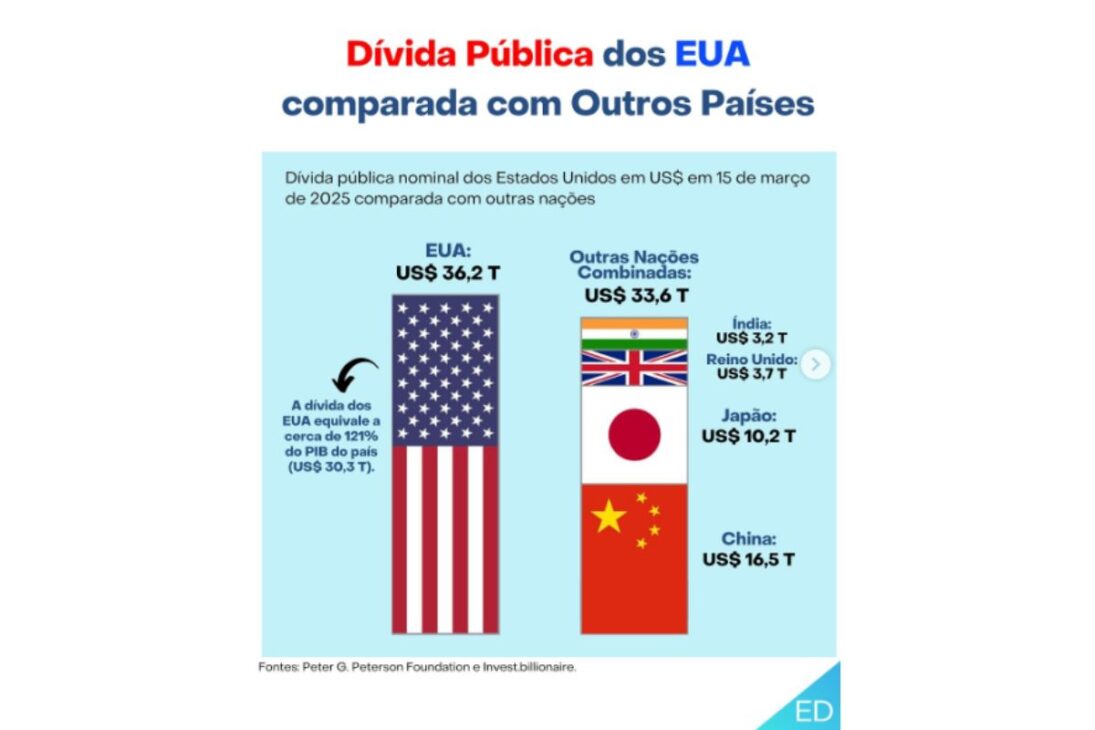
If global demand for American bonds continues to fall, the effects would be immediate. The US Treasury would have to raise interest rates to attract buyers, making it more expensive to finance its own debt. This would increase borrowing costs, affecting consumers, businesses, and even the military budget—which alone accounts for about 40% of the world’s military spending.
Moreover, inflation could spike if the dollar weakens against other currencies, reducing its purchasing power. This would force the Federal Reserve to further increase interest rates, exacerbating the problem. In an extreme scenario, if the US cannot roll over its debt, the country would face the risk of default, an unprecedented shock to global markets.
The Growing De-dollarization and the Risks of a Multipolar World
The decline in confidence is already reflected in international reserves. China, the second-largest creditor of US debt, reduced its holdings from 79% in 2005 to 58% in 2015. In 2024, the country held about US$ 759 billion in American bonds, the lowest level since 2009, according to US Treasury data. At the same time, Beijing has been increasing its reserves in gold and alternative currencies, signaling a movement towards de-dollarization.
The BRICS group and Asian countries like Vietnam and South Korea are also increasing agreements in local currencies, reducing their dependence on the dollar. This puts even more pressure on the US, which historically relied on the fact that its deficit could be financed by countries interested in maintaining reserves in dollars.
Global Effects of a Possible Collapse of American Debt

If the US reaches a point where it can no longer secure sufficient external financing, the country would have to cut public spending or print more money, which would lead to dollar depreciation and capital flight. This would undermine the dollar’s position as the global reserve currency, opening the door for the euro, yuan, or currencies of regional economic blocs.
In an extreme scenario, the world would shift to a multipolar financial system, with new currencies gaining relevance in global trade. This would also bring instability: a large part of international contracts, currency reserves, and commodity transactions are still dollar-denominated. A debt crisis in the US would create a domino effect on banks, pension funds, and governments worldwide.
Do you think US debt has exceeded its limit? Will the dollar continue to be the dominant currency in the coming years? Comment below and share your thoughts!


