Portuguese
  Spanish


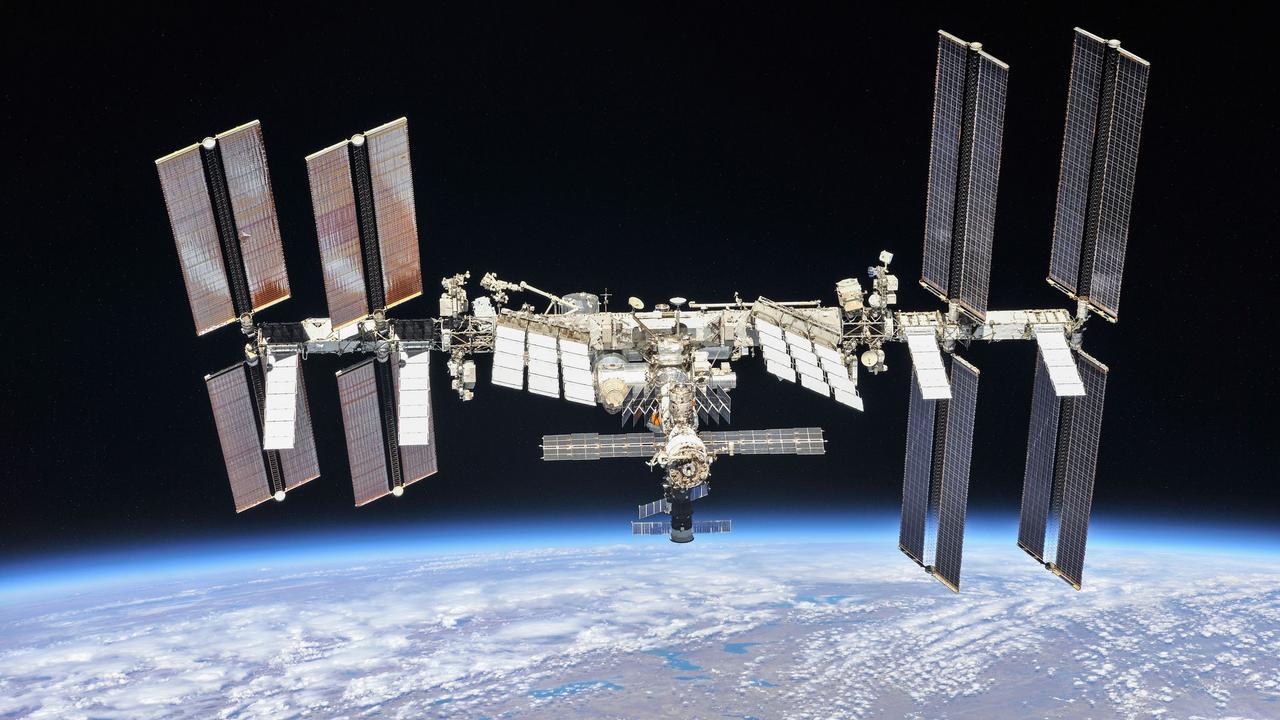
NASA activated the safety procedure and took four astronauts to the Crew Dragon capsule after leaks in the Russian segment of the ISS worsened. The scare was brief, but it increases the pressure on the station’s future.
The scare happened on Friday, June 5, 2026, while Roscosmos was attempting to repair failures in the Russian module Zvezda. Although the order was later lifted and the astronauts returned to normal activities, the episode reignited an old concern: the ISS continues to deal with leaks that have persisted for years.
According to Reuters, the safety measure was taken after sensors and Russian teams identified the need for further interventions in the affected section. As a precaution, NASA instructed part of the crew to proceed to the Crew Dragon and remain in a “safe haven” condition until the immediate risk was reassessed.
Emergency procedure took crew to the Crew Dragon
The order involved the four members of the NASA SpaceX Crew-12 mission: NASA astronauts Jessica Meir and Jack Hathaway, ESA astronaut Sophie Adenot, and Roscosmos cosmonaut Andrey Fedyaev.
-
Welder Discovers 16th-Century Diamond Ring in England After 7 Hours with Metal Detector; Gold Jewel Linked to Edward I Pattern Auctioned for £17,000

-
Former Merchant Marine Captain Invents Fuel-Free Barrier, Removes 20,000 Tons of Trash from Chennai Rivers
-
14-Year-Old Maxim Harris Turns School Project into Anti-Rage Gaming Accessory, Sells 1,000 Units Across 46 U.S. States, Donates 20% of Profits to Charity
-
Brazilian Health Agency Approves First Oral Medication for Cancer Patients




In addition, American astronaut Christopher Williams, who was already aboard the ISS after arriving on a Soyuz mission with Russian cosmonauts, also entered the preventive procedure. The guidance was for these crew members to remain ready for a possible evacuation if the situation worsened.
The decision was treated by NASA as a measure of excessive caution. This means that there was no loss of control of the station at that moment, but rather a sufficiently delicate scenario to justify the crew’s preparation.
Leak occurred in a critical area of the Russian module Zvezda
The problem is related to the transition compartment of the Zvezda module, in the Russian segment of the ISS. This area is often associated with the PrK tunnel, a passage that connects the Russian service module to a port used by Progress spacecraft, responsible for transporting cargo to the station.
This section has been considered sensitive for years. Microfissures and air losses have been monitored by NASA and Roscosmos since 2019, and the compartment usually remains isolated when there are no specific operations involving cargo vehicles.
On Friday, Roscosmos reported that two leaks had been detected. One was fixed using a hermetic compound, while the other continued to be evaluated in the conical region of the compartment. The Russian agency stated that the internal pressure of the station remained stable and that there was no immediate risk to the crew.
Repair contained part of the problem, but alert did not disappear
After the initial repair actions, NASA removed the stay-in-place guidance for the Crew Dragon. As a result, the crew members were authorized to leave the safe haven and resume planned activities aboard the International Space Station.
Even so, the end of the alert does not mean that the problem has been completely resolved. Roscosmos temporarily suspended new structural operations while analyzing measurements and data collected during the repair attempt.
In practice, the ISS remains operational, but the affected area continues to be under surveillance. This is precisely the point that concerns experts: even when leaks seem controlled, they require attention again at critical moments.
Old problem increases pressure on the future of the ISS
The episode also reignites the debate about the future of the International Space Station. The orbital platform has been in continuous operation for decades and is officially set to be retired by the end of 2030, when it will be directed for a controlled reentry into the atmosphere and parts will be launched into the Pacific Ocean.
In the United States, however, there are discussions about keeping the ISS operational for longer, possibly until 2032, to avoid a gap between the end of the current station and the start of operations of new private commercial stations.
The problem is that incidents like this reinforce the wear and tear of the structure. Even with constant maintenance, the station relies on old modules, complex international agreements, and cooperation between NASA and Roscosmos at a time of geopolitical tension.
Scare was controlled, but exposes station’s fragility
For now, the crew is safe and operations have resumed. NASA and Roscosmos continue to monitor the situation in the Russian segment, especially in the Zvezda region, where the leaks have once again drawn attention.
The scare, however, leaves a clear message: the International Space Station is still one of the greatest achievements of human engineering, but it is also an aging structure, operating in an extreme environment, where a small fissure can become an orbital emergency.
While the future of the ISS remains under debate, each new leak increases the pressure on space agencies. After all, the station continues to be inhabited, continues to produce science — but it also continues to show signs that its retirement may be more urgent than many would like.