Portuguese
  Spanish


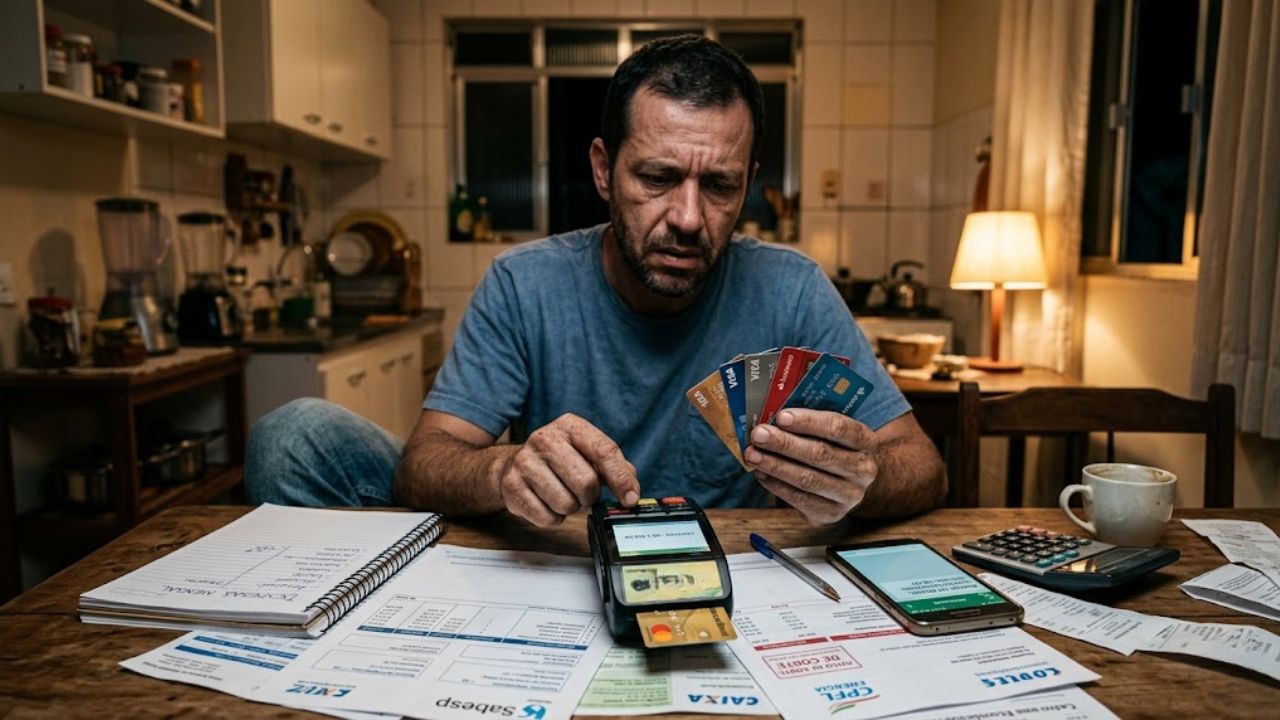

Paying the credit card bill with another card can avoid delay, but requires attention to fees, limits, and bank rules.
Using another credit card to settle a bill that is due has become an alternative used by consumers facing temporary financial difficulties. Although the practice is allowed in certain financial institutions, experts warn that the solution can increase debt if there is no planning. Moreover, banks and administrators have specific rules to authorize this type of operation.
The possibility exists because some institutions allow transferring the debt amount using the available limit of another card. However, the operation does not work in all banks and usually involves additional fees, interest, and limitations imposed by the administrators themselves.
When paying the credit card bill with another card is allowed
The operation directly depends on the rules set by the financial institution responsible for the card used in the payment. Not all issuers authorize this procedure.
-
To erect the “Baleia” building on the richest avenue in Brazil, he bought 35 houses, paying with trips to Disney, a truck, and even an apartment, waited over 20 years, and today the complex is valued at R$ 2.5 billion.

-
The land belonged to her great-great-grandfather and was worth R$ 25 per square meter during the pandemic; the couple sold 250,000 m² for the nearly R$ 30 billion project that is transforming the “neighbor of Jericoacoara,” and today a house in the region goes for R$ 4.2 million.

-
Labor shortage reaches the truck drivers’ area: Brazil is already facing a deficit of 120,000 drivers, 65.1% of transport companies feel the impacts, and Mercedes-Benz strengthens training in the face of the new generation of technological trucks.
-
An important sector in Brazil is suffering from a labor shortage, requiring the qualification of 14 million workers by 2027, leading companies to invest R$ 5 million to train professionals and address the technical deficit.




Another important point involves the available limit. The card chosen to take over the payment needs to have enough balance to fully cover the bill amount. Otherwise, the system automatically blocks the transaction.
There are also specific restrictions related to the debt’s due date and the issuing bank. In some cases, it is not allowed to use cards from the same financial institution.
Among the conditions usually required are:
- availability of limit on the card used;
- administrative fee charge;
- different due dates between the cards;
- bill still within the deadline;
- valid barcode;
- restrictions for cards issued by the same bank.
Is paying the credit card bill with another card a crime?
Despite the concern of many consumers, using one card to pay off another is not considered a crime when the operation follows the rules defined by financial institutions.
Problems arise in situations involving fraud, misuse of data, or irregular transaction simulations. In these cases, the practice can lead to legal consequences and violate banking rules.
Therefore, before resorting to this type of solution, the consumer should confirm whether the administrator truly authorizes the operation and what costs will be applied.
According to the rules presented by the institutions, legality depends precisely on the compliance with the internal policies of each bank or financial platform.
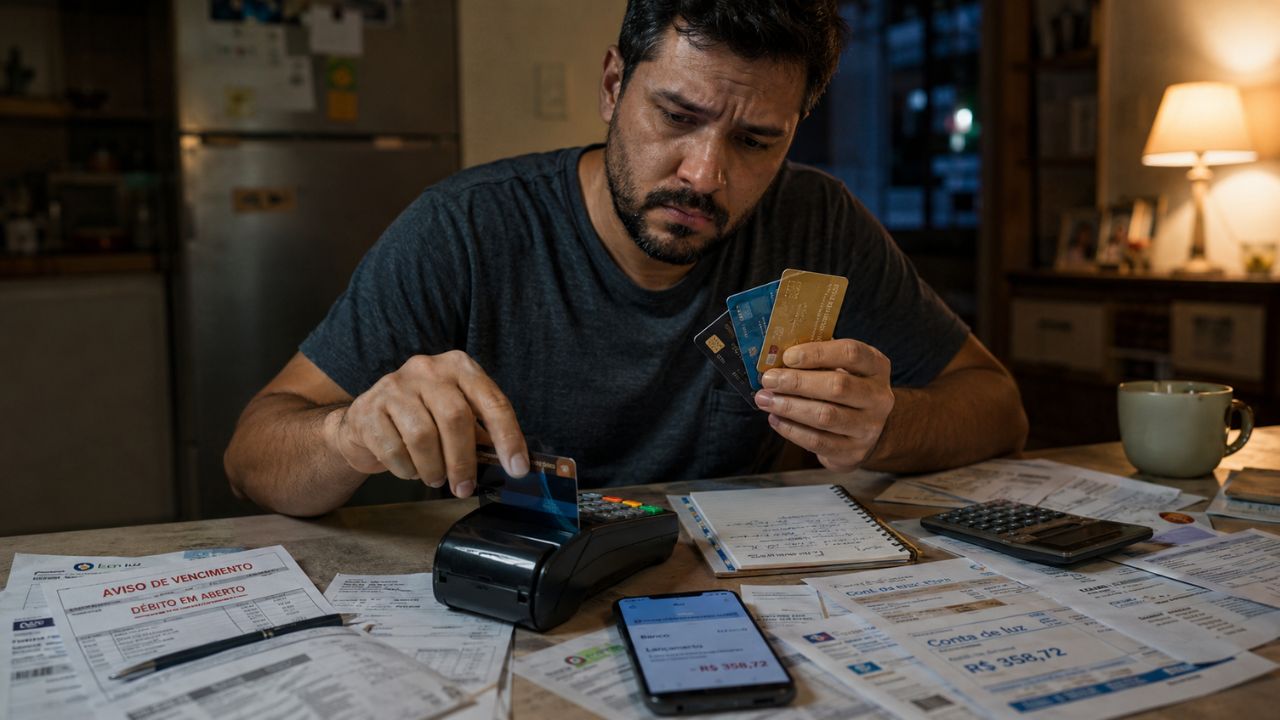
Fees can make the debt even larger
Although the practice seems like a quick way to avoid delay, the cost of this operation can weigh on the budget. Some institutions treat the payment as a type of withdrawal or financing, applying charges higher than those of regular purchases.
Additionally, administrative fees may also be included in the final transaction amount. This means that the original debt can quickly grow depending on the conditions offered.
The amount allowed for this type of payment varies according to:
- the available credit limit;
- the administrator’s rules;
- the applied interest rates;
- the fees charged for the service.
Meanwhile, consumers who use this strategy repeatedly may end up accumulating successive installments without being able to reduce the principal debt.
Emergency situations may justify the practice
In specific scenarios, using another card to pay the bill can prevent bigger problems, such as late fees or being listed in default registers.
Even so, experts warn that the measure works only as a temporary solution. This is because the debt does not disappear — it is merely transferred to another card.
An article published by the Meu Tudo website highlights that the alternative can be considered in emergencies, especially when there are no other immediate forms of payment. Even so, the consumer should carefully evaluate the future impacts of the decision.
“It does not solve the problem definitively, it only postpones the debt,” the published content informs.
Consequences of delaying the card bill
Many people resort to this mechanism precisely to avoid the effects of not paying the bill. When the debt remains unpaid, different financial consequences can arise quickly.
Among the main impacts are:
- charging of interest and late fees;
- progressive increase of the debt;
- reduction or blocking of the card limit;
- registration of the name in credit protection agencies;
- possibility of judicial collection in extreme situations.
In addition, defaulting can hinder future credit approvals and compromise the budget for a long period.
Evaluating alternatives can avoid bigger problems
Before deciding to pay the card bill with another card, the consumer needs to analyze if there are more financially sustainable options. In many cases, installments negotiated directly with the bank can generate lower costs.
It is also important to consider that the continuous use of this practice can create a “snowball” effect, where new debts arise to cover old amounts.
Financial institutions allow the operation in some situations, but the rules vary greatly between banks and platforms. Therefore, checking fees, limits, and conditions remains essential before contracting the service.
Meanwhile, experts emphasize that financial planning and spending control remain the most effective measures to avoid accumulating credit card debt.


With information from Meu Tudo