Portuguese
  Spanish


The lawyer Cleide Lousada and the merchant Ivo Ferreira de Azevedo negotiated for 9 months with the Carnaúba Group, refused buildings and projects of 6,000 units, and still maintain 276 hectares 800 meters from Jericoacoara airport
The municipality of Cruz, in Ceará, is at the center of one of the most ambitious real estate bets in the country: the Carnaúba Group is investing R$ 5 billion until 2034 to transform 12 million square meters of Praia do Preá, neighboring Jericoacoara, into a fully planned tourist destination, with estimated sales potential of almost R$ 30 billion, according to Exame. And part of this land belonged for generations to the family of lawyer Cleide Lousada, married to merchant Ivo Ferreira de Azevedo.
The family’s negotiation with the group extended for 9 months and ended with the sale of about 25 hectares, equivalent to 250,000 square meters, where Vila Carnaúba is now being built, while the couple remains owners of approximately 276 additional hectares and Fazenda Santa Rita, near Jericoacoara airport, according to Exame. “This land, including where Vila Carnaúba is today, belonged to my father, belonged to my grandfather, belonged to my great-grandfather, my great-great-grandfather,” Cleide recounts in the report.
The family that said no to buildings
The sale only went through with conditions. The family had already received other large-scale proposals and refused them all, and the decision to sell a fraction of the land came after guarantees that the development would respect the characteristics of the region, according to Exame. “We’ve had several proposals to develop projects with 3,000, 6,000 units, God forbid… it has to be something simple and that respects the place we love so much,” Ivo says.
-
To erect the “Baleia” building on the richest avenue in Brazil, he bought 35 houses, paying with trips to Disney, a truck, and even an apartment, waited over 20 years, and today the complex is valued at R$ 2.5 billion.

-
Labor shortage reaches the truck drivers’ area: Brazil is already facing a deficit of 120,000 drivers, 65.1% of transport companies feel the impacts, and Mercedes-Benz strengthens training in the face of the new generation of technological trucks.

-
An important sector in Brazil is suffering from a labor shortage, requiring the qualification of 14 million workers by 2027, leading companies to invest R$ 5 million to train professionals and address the technical deficit.
-
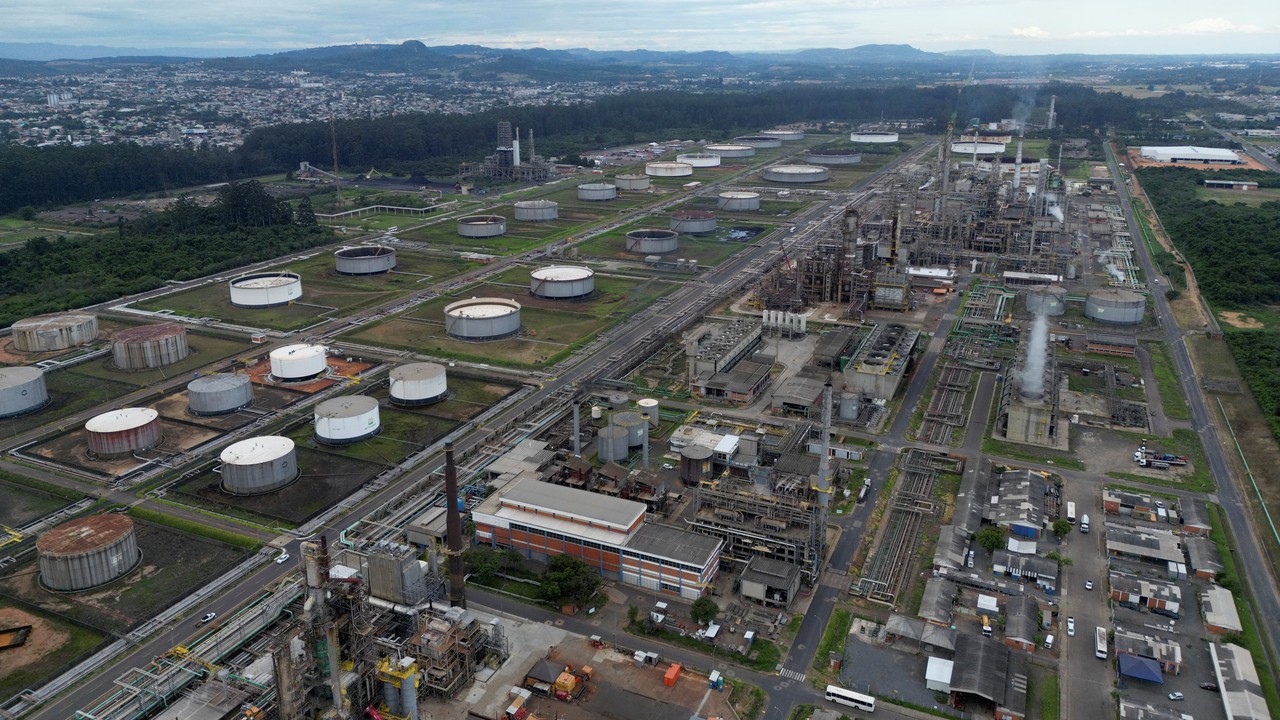
With a record production of nearly 3 million barrels per day, Petrobras resumes importing diesel in July, highlighting the bottleneck in Brazilian refining.



Cleide summarizes the tone of the conversations: “There were months of talks and negotiations for us to establish a moment of trust and responsibility… what was agreed was known.” And her father, in the end, was right: “My father always said that we would still see the land appreciating a lot. At the time, we loved the place, but we didn’t realize the size of the potential it had.”
The purchase during the pandemic: R$ 25 per square meter
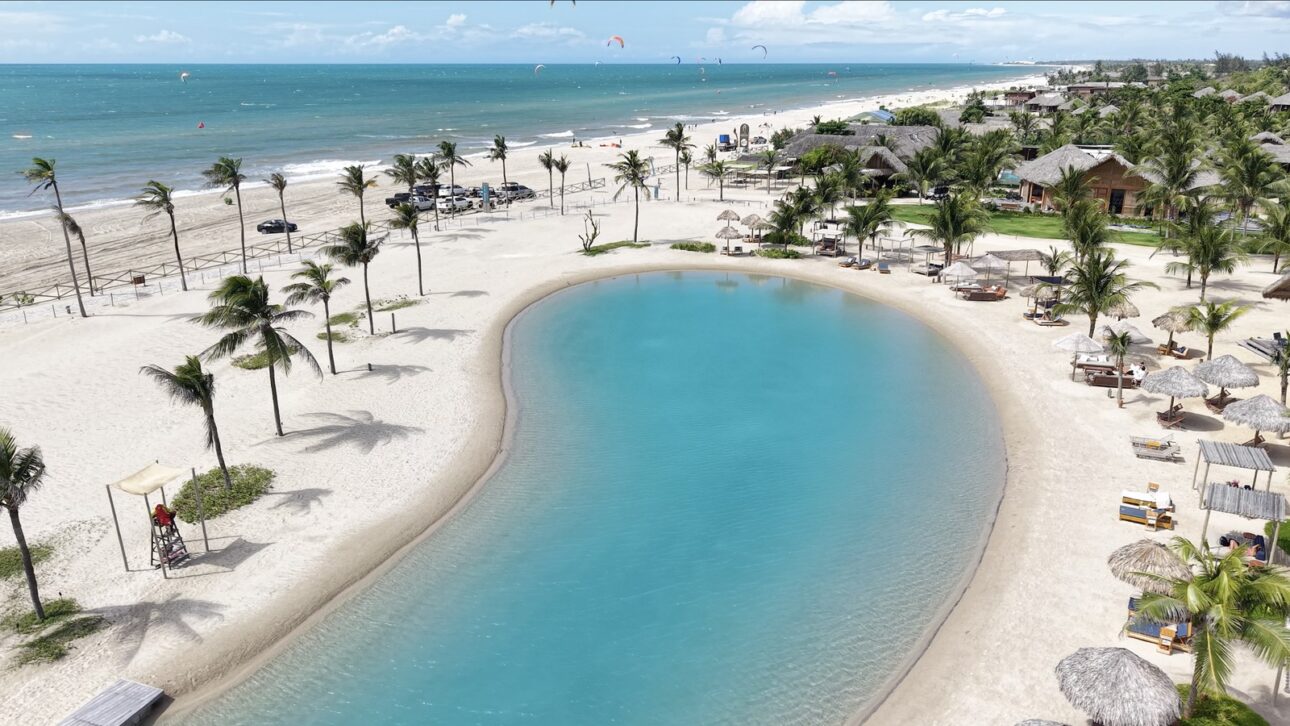
The timing of Grupo Carnaúba was surgical. The acquisition of the 12 million square meters occurred during the pandemic, between 2020 and 2021, in a context of depressed prices, with values ranging from R$ 10 to R$ 15 per square meter near the airport to R$ 70 to R$ 75 in the best sections, closing at an average entry price of R$ 25 per square meter, according to Exame. Most of the land was in the hands of seven traditional families, including that of Cleide and Ivo.
“It was a time when everyone was trying to survive. Nobody was looking at new investments. In this context, the sellers thought we might give up and agreed to negotiate,” says Eduardo Juaçaba, partner of the group, to Exame. Today, the bar has been raised: a house of 560 square meters near the mega land, without registration, is found for R$ 4.2 million, equivalent to R$ 7.5 thousand per square meter of built area, reports the article.
What is already standing at Preá Beach: Vila Carnaúba and the kitesurf club
The first pieces of the dream are already functioning. R$ 170 million were invested in Vila Carnaúba, a condominium of about 500 thousand square meters with 192 residential lots and an estimated VGV of R$ 850 million, in operation since 2024, and R$ 95 million in Wind House, a kitesurf club of 100 thousand square meters where the client buys a title to use stays and infrastructure, with a VGV of R$ 1.2 billion and 137 suites planned at maturity, according to Exame.
The starting point of everything is the wind of Preá Beach, which attracts kitesurfers from all over the world because of the seven-month wind season, the warm and shallow sea, and the constant winds in the same direction, ideal for long crossings called downwinds, describes Exame. The region was first discovered for the sport by foreigners, French, Dutch, Portuguese, and Italians, before becoming a craze among Brazilians.
The Thai luxury hotel debuting in Brazil through Ceará
The next chapter has an international brand. Within Vila Carnaúba, 50,000 square meters will be allocated to the first Anantara hotel in Brazil, in addition to 24 branded houses under the hotel’s banner, according to Exame. Revista LIDE, which also covered the project, details that the Anantara Preá Ceará Resort, the luxury brand of the Thai group Minor Hotels, will cost R$ 150 million, will have 70 suites, a presidential bungalow, and a spa, with an opening scheduled for the 2nd half of 2028.
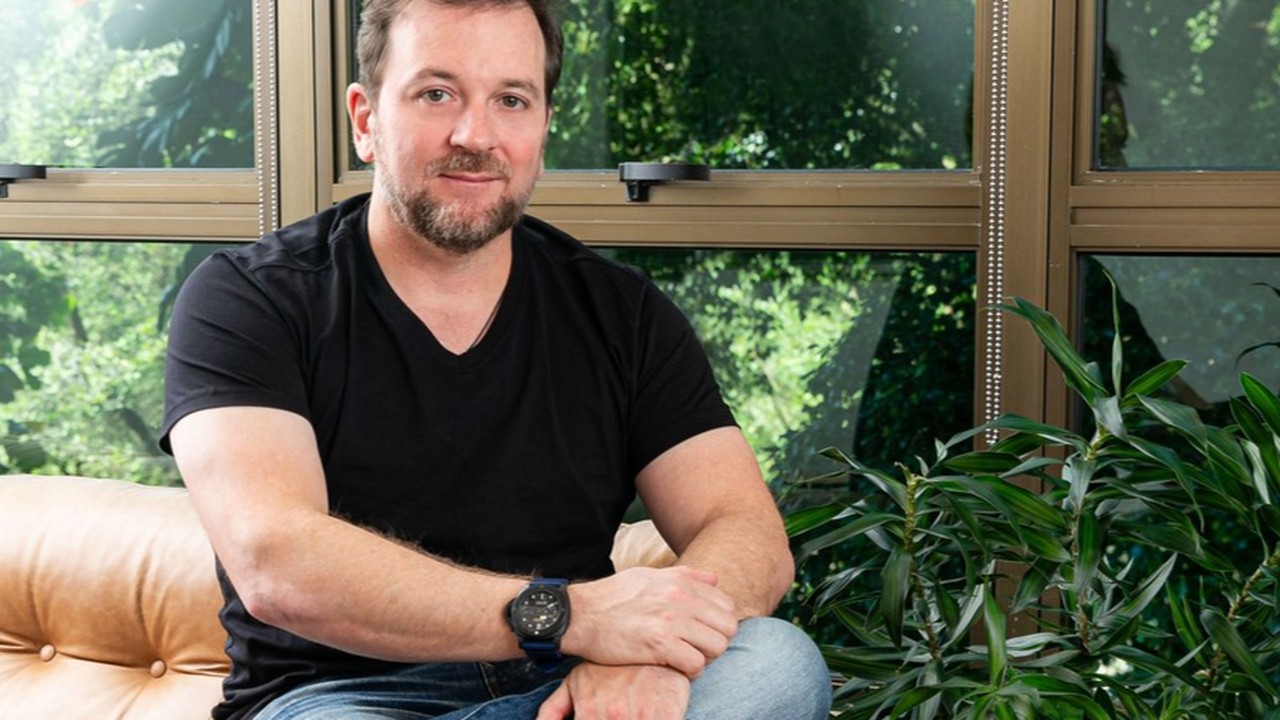
LIDE also records who is leading the venture: Julio Capua, founder of Grupo Carnaúba and former partner of XP Investimentos. The hotel financing includes R$ 150 million from Banco do Nordeste via the FNE line, with a 20-year term, covering 70% to 90% of the construction, according to Exame.
The money behind: 30 investors, XP, and 1,100 shareholders
The financial engineering is a separate chapter. The first purchases were structured in a club deal with about 30 investors, including friends and executives from XP, which raised US$ 32 million, and in 2023 the group created a real estate fund in partnership with XP Asset that raised R$ 217 million from more than 1,100 shareholders, owners of 30% of the group’s holding, according to Exame. Each enterprise operates in a separate company, limiting the investors’ risk.
The potential over a 15 to 20-year horizon, estimated by the company itself and published by Exame, is nearly R$ 30 billion in sales, with projected real estate profit of R$ 5 billion. The group still holds about 8 square kilometers of neighboring areas with a right of first refusal, a measure to prevent neighbors from erecting projects misaligned with the low-density model.
From Fraport airport to Minha Casa, Minha Vida
The plan goes far beyond luxury. The Jericoacoara airport, about 800 meters from the family’s land, was granted to Fraport, the same German company that operates the airports in Fortaleza and Porto Alegre, with a mandatory investment of R$ 100 million over the next 18 months to attract international flights, according to Exame. And the masterplan until 2034 includes neighborhoods, industrial and logistics hubs, a 20-hectare solar farm, and even affordable housing.
Minha Casa, Minha Vida is treated as a central piece: studies indicate potential for up to 2,000 units, with the first phase of about 300 houses in bands 1 and 2, priced between R$ 170,000 and R$ 350,000, in negotiation with Caixa, according to Exame. “If we only launch high-income products, what ends up happening is an effect of urban disorder in the surroundings,” explains Juaçaba in the report, arguing that worker housing should be included in the design before the occupation gets out of control.
The dream of the logistics hub 4 hours from three capitals
The CEO of the group, Julio Capua, sees yet another frontier. “I talked a lot with the Fraport team about this. I said, well, to me it would make a lot of sense to create some logistics hub near the airport, because we are more or less equidistant, right? About 4 hours from Fortaleza, 4 hours from São Luís, and 4 hours from Teresina,” he states to Exame, even mentioning names that would make sense in the structure: “I think it would make sense here, I don’t know, for Mercado Livre to have a hub, something like that.” He notes that the implementation is not expected to occur in the short term.
Here is the observation from this editorial team, duly noted: the family that said no to buildings with 6,000 units ended up writing the rarest script of the Brazilian coast, that of development that arrived asking for permission, and still kept a piece of land 300 times more valued at the airport’s doorstep.
From the great-grandfather’s land to the first luxury Thai resort in Brazil, the history of Praia do Preá shows that the patience of those who love a place can be worth more than any market rush.
Tell us in the comments: would you sell the land that has been in your family for generations, or is no amount of money worth this heritage?