Portuguese
  Spanish




Round Houses Gain Space in Brazil. Ecological Domes Offer Sustainable Construction, Low Cost, and Innovative Design!
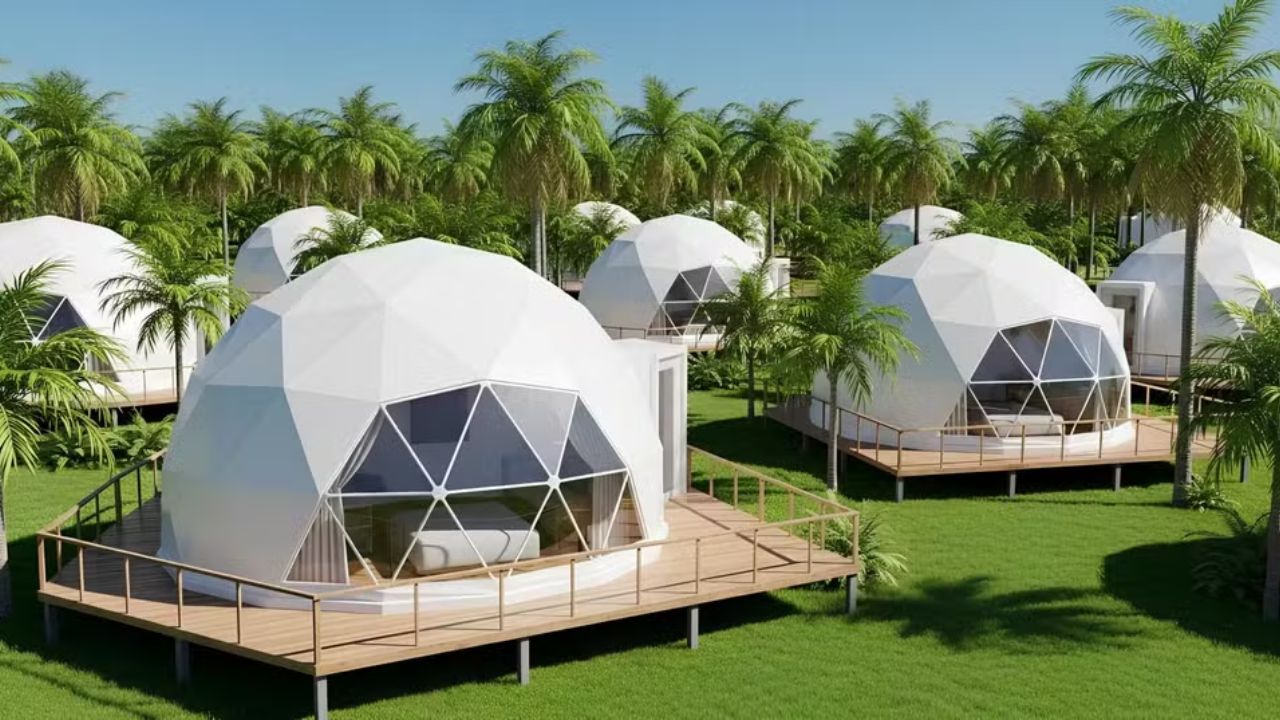
A new model of ecological house is attracting attention in Brazil: domes, also known as round houses.
The idea was put into practice by architect Tuane Costa and administrator Thales Barca, in Belém (PA), who turned the concept into a sustainable construction business.
Since Tuesday (August 19, 2025), with the approach of COP 30, the demand for this type of housing has skyrocketed, driven by the growing interest in projects that combine innovative design and respect for the environment.
-
Engineering Feat in Brazil: 6.4 km Tunnel and Powerful Pumps Overcome 200-Meter Elevation to Save São Paulo’s Cantareira Water System

-
Engineering Students Build Off-Grid Tiny Home with Sustainable Features and Offer Free DIY Guide
-
Historic Brazilian Championship Stadium Demolished for New Supermarket and Shopping Center Development

-
Workers excavate one of the world’s longest railway tunnels beneath the Alps between France and Italy, stretching nearly 60 km, 600 meters deep, with an investment of 11 billion euros.


The structures, which cost from R$ 60 thousand, are made with recycled and repurposed materials, ensuring thermal and acoustic comfort, in addition to rapid assembly.
The initiative reflects a global trend of seeking solutions that reconcile sustainability and quality of life.
What Are Domes and Why They Enchant in Sustainable Construction
Geodesic domes are dome-shaped constructions made up of triangles that fit precisely together.
Visually, they resemble an igloo, but with high-tech features and an architectural project designed to generate energy efficiency and reduce environmental impacts.
Made with sustainably sourced wood, recycled plastics, and even pressed açaí waste, these spaces combine innovation and tradition.
Each round house is finished with elements that value local culture, such as regional tiles and handcrafted furniture.
Round Houses and the Concept of Ecological House
More than just a distinctive shape, domes have become a symbol of an ecological house adapted to modern lifestyle.
They are delivered with electrical and plumbing systems already integrated, a digital lock, and, in some models, even voice command automation.
This construction standard reduces waste, takes advantage of local resources, and ensures energy efficiency. For many specialists, domes represent a practical and sustainable solution in the face of urbanization and climate crisis demands.
Sustainability at the Center of Dome Construction
The use of recycled materials is one of the highlights. In their walls, it is possible to find repurposed plastics that imitate lunar textures, pressed açaí waste, and sustainably sourced wood.
This choice not only reduces environmental impacts but also offers direct benefits to residents, as domes have thermal insulation, allowing for energy savings.
Thus, sustainability stops being an abstract concept and transforms into a concrete benefit within the home.
The Impact of COP 30 and the Expansion of Domes in Brazil
With COP 30 scheduled for November 2025 in Belém, interest in alternative accommodations has grown significantly.
Many visitors seek experiences that reflect a commitment to nature, and domes emerge as an innovative and authentic option.
The couple behind the project is already planning to expand to other regions of the country, taking the idea of round houses beyond Pará.
“When you are determined within a project, the sky is the limit. Putting energy into what we believe. It’s not for nothing. It didn’t happen in two years. It’s a process that has been going on for a while, and we are just starting to reap the benefits, but we will go far,” said Tuane Costa.