Portuguese
  Spanish


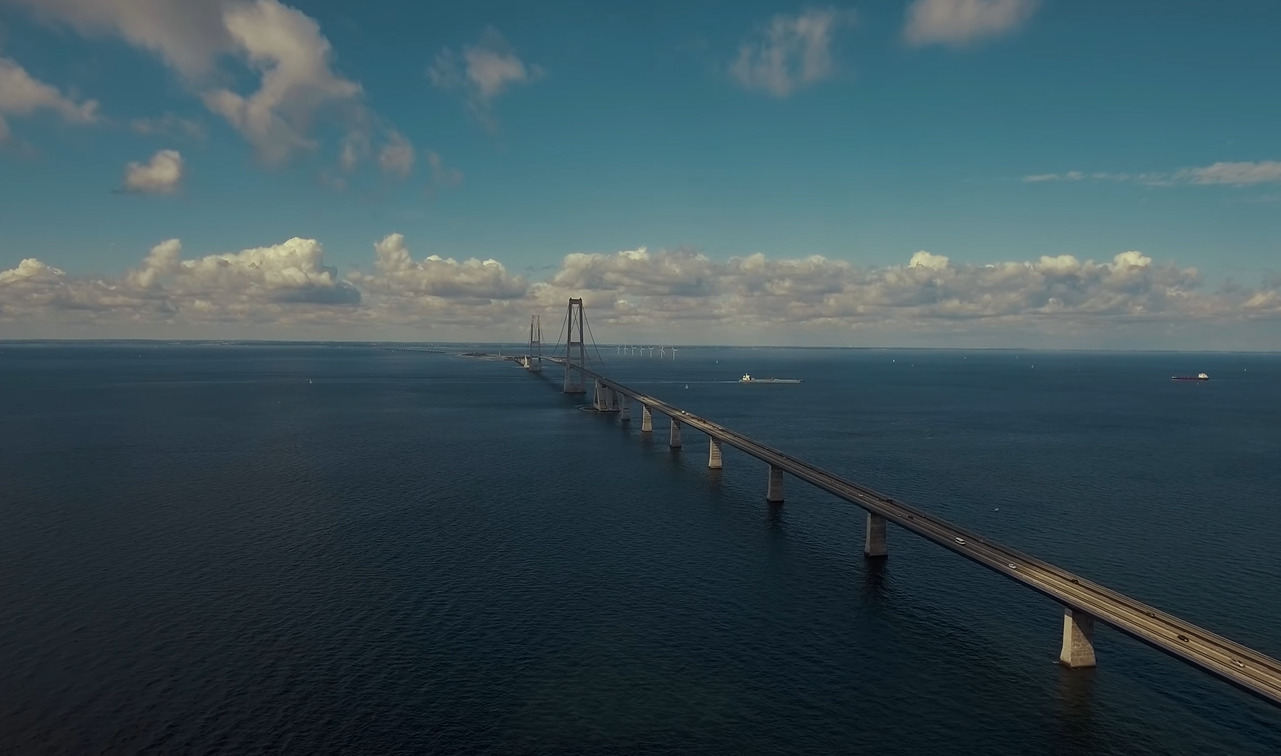

With a central span of 1,410 meters, 210-meter towers, and cables formed by thousands of kilometers of steel wires, the Great Belt Bridge shows the gigantic scale of the work that changed island crossings in Denmark
The Great Belt Bridge changed the connection between eastern and western Denmark in 1997, by replacing slow ferries with a fast sea crossing, connecting Zealand and Funen with a direct impact on daily life and trade.

Crossing that shortened distances in Denmark
Before its inauguration, anyone needing to cross the strait was entirely dependent on boats. This routine delayed travel, affected goods transport, and made the connection between the islands more time-consuming.
With the opening of the Great Belt Bridge, the journey could be made in just a few minutes. The work transformed a slow sea crossing into a practical, constant, and much more efficient connection.
-
Researchers Discover Ancient Indigenous Earthworks Under U.S. Forest, 10 Times Larger Than Previously Thought

-
Designer Transforms Discarded Eggshells into Shape-Shifting Modular Lamp

-
Lucy, the 3.2-million-year-old fossil that reshaped our understanding of human origins, makes a rare journey from Ethiopia to Abu Dhabi.

-
Plow Uncovers 50 kg Iron Meteorite in Wisconsin Farm, First of Its Kind in Dane County After 15 Years Hidden


The structure finally united the east and west of the country via a fixed route. This made circulation between cities simpler for residents, businesses, visitors, and cargo.


Numbers show the size of the Great Belt Bridge
The Great Belt Bridge impresses with its dimensions. The central span is 1,410 meters, a free distance between the two main towers, with no pillars in the middle of the maritime passage.
The suspension towers reach 210 meters in height. This measurement places the structure among the tallest points in the country and allows large ships to pass through the Storebælt.
The opening occurred in 1997, after a complete project that took about ten years to be ready. The work brought together steel, concrete, and heavy engineering to overcome the natural barrier of the strait.
Central span required large-scale engineering
The 1,410-meter central span is one of the most striking features of the work. Maintaining a suspended roadway over this distance requires extremely strong steel cables and precise weight distribution.
The structure uses thousands of kilometers of steel wires in its main cables. These components support the roadway and help maintain the structure’s stability even in sea conditions.
The pillar-free space in the middle also ensures navigation through the Storebælt. Large vessels can pass underneath without risk of blockage, maintaining the strait’s maritime function.
210-meter towers aid ship passage on the bridge
The 210-meter towers do not only serve as a visual symbol of the work. They are essential for raising the suspension cables and maintaining the necessary height above the water.
This altitude was designed to allow large ships to cross the region. Without this elevation, the bridge could limit maritime traffic or create a risk for larger vessels.
The Great Belt Bridge combines height, strength, and free space in a solution created to connect islands without interrupting navigation. For this reason, the work remains a reference in heavy engineering.

Safety depends on sensors and wind control
The bridge’s operation takes safety seriously. Sensors spread across its length monitor the weather in real time, especially the strong winds that blow in the North Sea region.
When the wind exceeds a safe limit, the administration immediately closes the barriers. This measure prevents trucks or light cars from experiencing lateral instability during the crossing.
Even robust, the bridge relies on this monitoring to maintain safe operation. Constant climate control helps preserve smooth operation over the decades.
Billion-dollar investment and economic role
The total investment to bring the project to fruition reached billions of Danish kroner. Although maintenance costs vary, the toll continues to help pay for the construction financing.
Today, passenger cars pay around R$ 200 to cross the bridge. The charge is linked to the cost of the structure, which is still considered vital for the region’s economy.
The return appeared with the increased flow of goods and tourists between cities. The Great Belt Bridge made common a crossing that previously depended on boats, waiting, and much more time.
With information from Monitor do Mercado.