






 Portuguese
  Spanish
  4 min of reading
  4 comments


Canadian Aircraft Mixes Vertical And Horizontal Flight, Can Land On Roofs And Promises Superior Range To Conventional eVTOLs.
A new aircraft promises to change the way we fly. The Cavorite X7, created by Horizon Aircraft in Canada, is a different kind of machine.
It can take off like a helicopter, fly like an airplane, and land in small spaces, such as hospital rooftops and helipads. Its innovative design mixes features that expand its usage possibilities.
Unlike many eVTOLs — electric vertical takeoff and landing vehicles — the Cavorite X7 does not look like a drone full of propellers.
-
In the cold desert of Ladakh, where it hardly rains, engineer Sonam Wangchuk created the ice stupa, a tower that freezes winter water and stores it for irrigating crops in the spring, a simple engineering feat that mimics nature.

-
For the first time in history, solar and wind energy generated more electricity than natural gas worldwide in a single month, April 2026, a milestone in the energy transition that shows renewable sources taking the lead in the global electric system.
-
The Amaterasu particle, a cosmic ray with energy millions of times greater than that of the world’s largest accelerator, hit the Earth coming from the Local Void, a region of space that is practically empty where, in theory, there should be nothing capable of creating it.
-
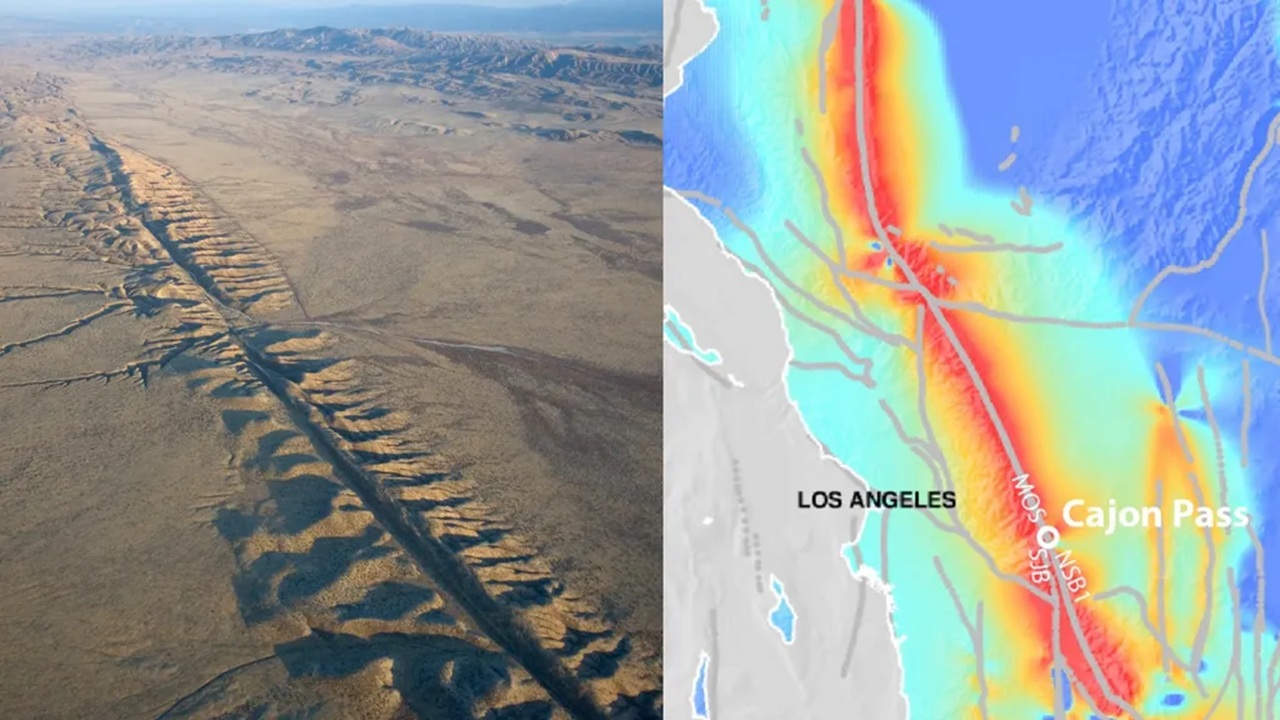
Giant earthquake returns to haunt California after study points out San Andreas and San Jacinto faults at highest stress level in 1,000 years, with risk involving Los Angeles and other populated areas.




It has the shape of a conventional airplane, but with a secret: hidden fans in the wings. These fans allow it to take off and land vertically, even in tight spaces, eliminating the need for traditional runways.
How The Cavorite X7 Works
The Cavorite X7 brings a unique combination of technologies. While many eVTOLs use exposed rotors or tilt-rotor systems to switch from vertical to horizontal flight, the X7 employs a system of 14 electric fans.
They are hidden within the wings and in the forward canards, which are small fins near the nose of the aircraft.
During takeoff and landing, these fans generate the thrust needed to lift the aircraft vertically, similar to a drone. Once in the air, special panels slide and cover the fans, transforming the flight into horizontal movement like that of a conventional airplane.
With this technology, the Cavorite X7 can reach a maximum speed of 462 km/h and a range of 800 km. This performance is far superior to other electric air taxis, covering up to five times the distance of those competitors.
Hybrid System Ensures Greater Range
One of the biggest challenges for eVTOLs is range limitation and the long charging time of batteries. The Cavorite X7 addresses this with an intelligent hybrid system.
The 14 electric fans are responsible for vertical and hover flight, but during horizontal flight, a gas turbine engine takes control.
This engine not only powers the rear propeller but also recharges the batteries during flight. Thus, upon completing the journey, the aircraft lands with charged batteries, ready to take off again without needing to plug in.
This hybrid model allows for greater range and reduces the waiting time between flights, increasing operational efficiency. Additionally, the hybrid design also offers safety advantages, which is one of the main focuses of the project.
Safety: An Important Differential
Safety was a priority in developing the Cavorite X7. Since each fan operates independently, the system can compensate for any failures during flight. In tests conducted, the aircraft was able to hover even with 30% of the fans turned off.
Another important feature is the automatic stall protection system — which prevents the aircraft from losing lift. If the plane decelerates too much during flight, the wings automatically open, activating the fans and stabilizing the flight.
According to Brandon Robinson, co-founder and CEO of Horizon Aircraft, this functionality facilitates dialogue with regulatory bodies, such as the FAA (Federal Aviation Administration of the United States). “Look, this is a normal airplane. It never needs to be a VTOL. The VTOL aspect of this airplane is just an additional layer of safety. It’s all ready to fly,” Robinson stated in an interview with New Atlas.
Compact And Versatile For Various Types Of Operation
The Cavorite X7 was designed to operate in different scenarios. Its wingspan is 15 meters, and the fuselage length reaches 11.5 meters. With these dimensions, it can operate in limited spaces, such as urban helipads, remote areas, or building rooftops.
The payload capacity is also noteworthy. It can carry up to six passengers and a pilot. In vertical takeoff mode, it supports up to 680 kg of cargo. In conventional takeoff mode, the capacity increases to 815 kg. The maximum takeoff weight of the aircraft is 2,500 kg.
These characteristics make the X7 a viable option for both passenger transport and the delivery of supplies to hard-to-reach areas, such as disaster zones.
Awaiting Certification
Although the project is advanced, the Cavorite X7 still depends on official certification to fly commercially. According to Horizon Aircraft, the goal is to obtain approval to fly in both visual and instrument conditions, allowing operations in any type of weather.
Another point highlighted by the company is the safety of the model in adverse weather conditions. The X7 was “designed for maximum safety in all weather conditions, aiming for certification in known icing conditions,” the Horizon team informed.
The Cavorite X7 represents a new stage in aviation, combining the flexibility of helicopters with the performance of airplanes. If approved, it could inaugurate a new category of aircraft for urban and emergency transportation.





Tecnologia de ponta ,mas base de preço?
Daqui cem anos chega no Brasil
É tom bom, que parece mentira! Qual será o preço ?