






 5 min of reading
  3 comments


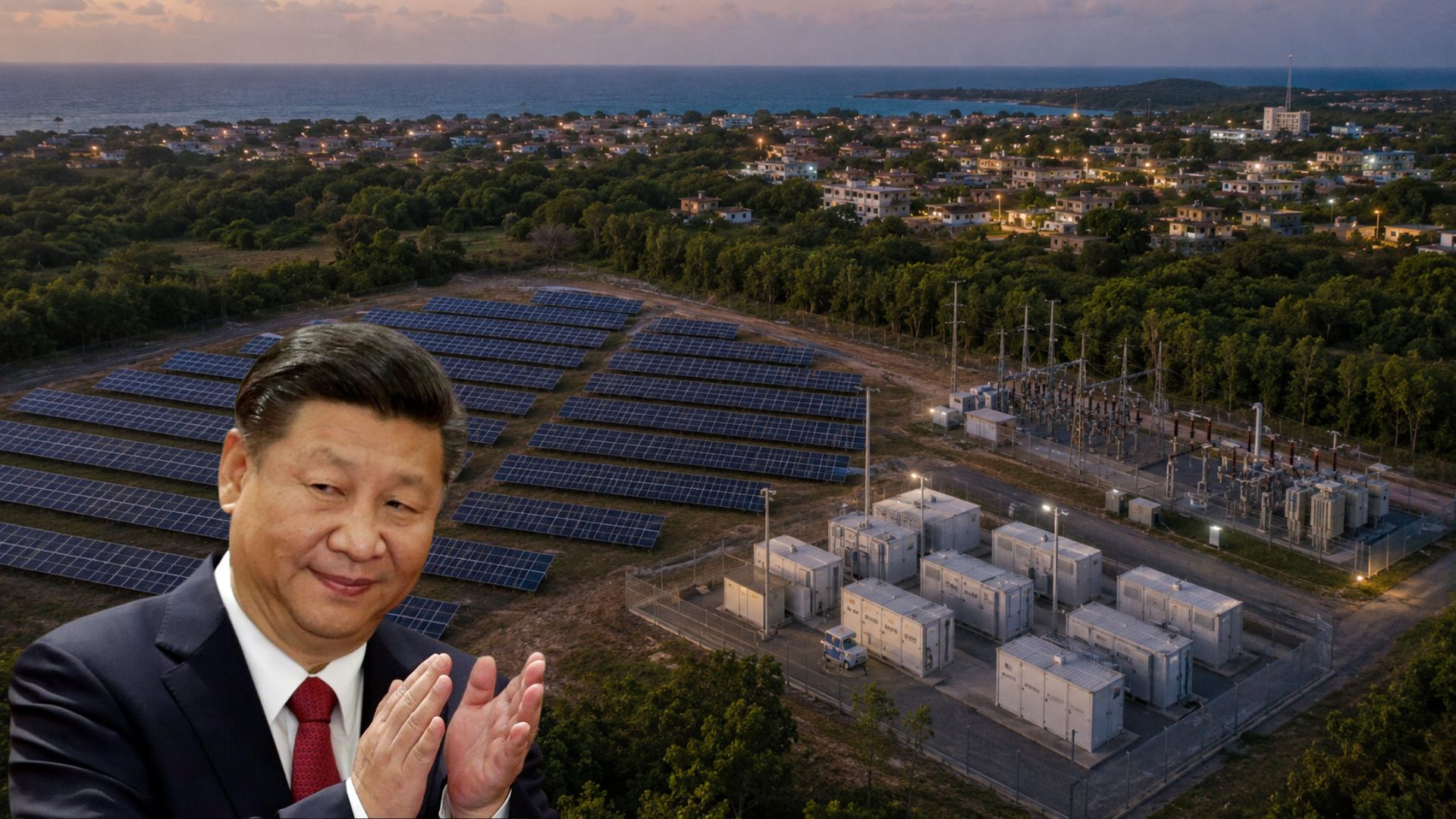


According to the Prensa Latina portal, Cuba’s new solar park, located in Majagua with 5 MW capacity and a 1 MW battery for storage, marks the beginning of the second phase of energy cooperation with China, which foresees 120 MW in solar generation for an island where chronic blackouts compromise the daily energy supply.
Cuba has just put into operation the country’s first solar park equipped with a battery storage system, an installation that represents much more than five megawatts added to the national electricity grid. Located in the municipality of Majagua, in the province of Ciego de Ávila, the project inaugurates a new phase of energy cooperation between the Caribbean island and China, which has committed to enabling 120 MW in solar generation as part of the second stage of assistance to the Cuban energy sector. For a country suffocated by chronic blackouts and dependence on imported fossil fuels, every installed solar megawatt changes the energy survival equation.
What makes this solar park unique is not only its generation capacity, but also the integrated 1 MW battery system designed to maintain voltage quality, regulate grid frequency, and ensure local autonomy when conventional supply fails. Cuba now has, for the first time, a photovoltaic installation capable of operating independently during outages, something no other solar park in the country offered until now. China provided technology, equipment, and about 20 specialists who participated in the construction alongside Cuban technicians.
The Majagua solar park and what changes in Cuba’s grid

The new solar park is located in Majagua, a municipality in the province of Ciego de Ávila, central Cuba. The installation operates at full capacity and has added 5 MW to the national electricity system, a volume that may seem modest in absolute terms but gains relevance when considering the fragility of Cuba’s energy infrastructure. In a grid that suffers frequent collapses due to overload and lack of maintenance, each additional generation source helps reduce pressure on aging thermoelectric plants that operate far beyond their designed lifespan.
-
Scientists have mapped for the first time the largest biological network on the planet, formed by underground fungi with an extension of 110 quadrillion km that transport 4 billion tons of CO₂ to the soil per year.

-
Where does the light go when you turn off the lamp? The answer involves invisible particles called photons, which disappear in fractions of a second inside the room but can travel billions of years through space to reach our eyes.

-
Light particle that shouldn’t be split surprises physicists
-
New oral medication for hair loss surprises in tests with more than 500 participants, uses extended-release minoxidil, shows hair growth four times greater than the placebo, and now raises expectations about when it might reach the market.



The choice of Ciego de Ávila as the site for the first solar park with a battery is not accidental. The region faces severe instability in energy supply, and the presence of an installation with storage capacity allows electricity generated during the day to remain available after sunset, precisely during peak hours when blackouts most severely affect the population. For Cuba, the Majagua park functions as both a laboratory and a showcase: it demonstrates the technical viability of the model and paves the way for replication in other provinces as cooperation with China progresses.
1 MW Battery: autonomy, voltage, and frequency under control
The technical differential that separates the Majagua solar park from all other photovoltaic installations in Cuba is the 1 MW battery storage system. This component was designed with three specific functions: to maintain the quality of electrical voltage delivered to consumers, to regulate grid frequency during oscillations, and to ensure local autonomy when the national system suffers interruptions. In practice, the battery transforms the solar park from a simple daytime generator into a reliable 24-hour energy source, at least within the limit of the stored charge.
To understand the impact, one must consider the context. Cuba’s electricity grid operates with voltage and frequency variations that damage domestic and industrial equipment, and blackouts do not follow a predictable schedule. When conventional supply fails, entire communities are left without electricity for hours. With the solar park’s battery system, the locality of Majagua gains a safety cushion that absorbs these failures and keeps the energy supply at least partially active while the national grid recovers. This is the first time Cuba has had this response capability in a solar installation, and the model is already being pointed to as a reference for future cooperation projects with China.
The second stage of energy cooperation between China and Cuba
The inauguration of the Majagua solar park is not an isolated project. It officially marks the beginning of the second stage of China’s energy assistance to Cuba, a program that foresees the installation of 120 MW of solar generation capacity in Cuban territory. The Chinese commitment represents the largest injection of renewable infrastructure Cuba has ever received from an international partner, surpassing in scale any previous initiative in the island’s photovoltaic sector.
The cooperation involves technology transfer, equipment supply, and technical training. Around 20 Chinese specialists worked alongside Cuban technicians in the construction and commissioning of the Majagua solar park, a model that is expected to be replicated in future projects. For China, energy assistance to Cuba combines diplomacy, geopolitical projection, and a practical demonstration of competitiveness in the solar energy sector, a segment in which the Asian country dominates the global production chain of photovoltaic panels and battery systems. During the inauguration ceremony, Cuban representatives formally thanked China for its support in developing the country’s energy infrastructure.
What 120 MW mean for an island in an energy crisis
The 120 MW solar generation plan must be read in the context of a country where energy is the most scarce and contested resource in daily life. Cuba faces chronic blackouts that can last from four to twelve hours a day, a result of a combination of external embargo, obsolete power plants, and fossil fuel shortages. If the 120 MW foreseen in the cooperation with China are fully installed, the island’s solar capacity will make a leap that can significantly reduce the frequency and duration of blackouts in strategic provinces.
However, challenges remain. Cuba’s distribution grid is as aged as the power plants that feed it, and installing generation capacity without modernizing transmission can create bottlenecks that limit the actual utilization of the solar energy produced. The storage battery tested in Majagua points to a partial solution to this problem, by allowing energy to be consumed locally without relying on long-distance transmission lines. If the solar park with battery is replicated in other provinces, Cuba can build a decentralized microgeneration network that bypasses the limitations of central infrastructure and delivers energy directly where it is needed.
And you, do you believe that cooperation between China and Cuba can truly solve the island’s energy crisis? Should the Majagua solar park with battery model be replicated in other countries with chronic blackouts? Leave your comment and say whether 120 MW of solar generation is enough to transform Cuba’s energy reality.


And what is china getting…
Is it too much to ask for journalists to check the numbers before publishing? 1 MW battery what does it even mean? 1 MWh maybe? And if the plant delivers to consumers 5MW of power, that battery is going to be good at night for exactly 12 minutes
nice for cuba. America can go to hell
America is Satan child