






 Portuguese
  Spanish
  6 min of reading
  2 comments


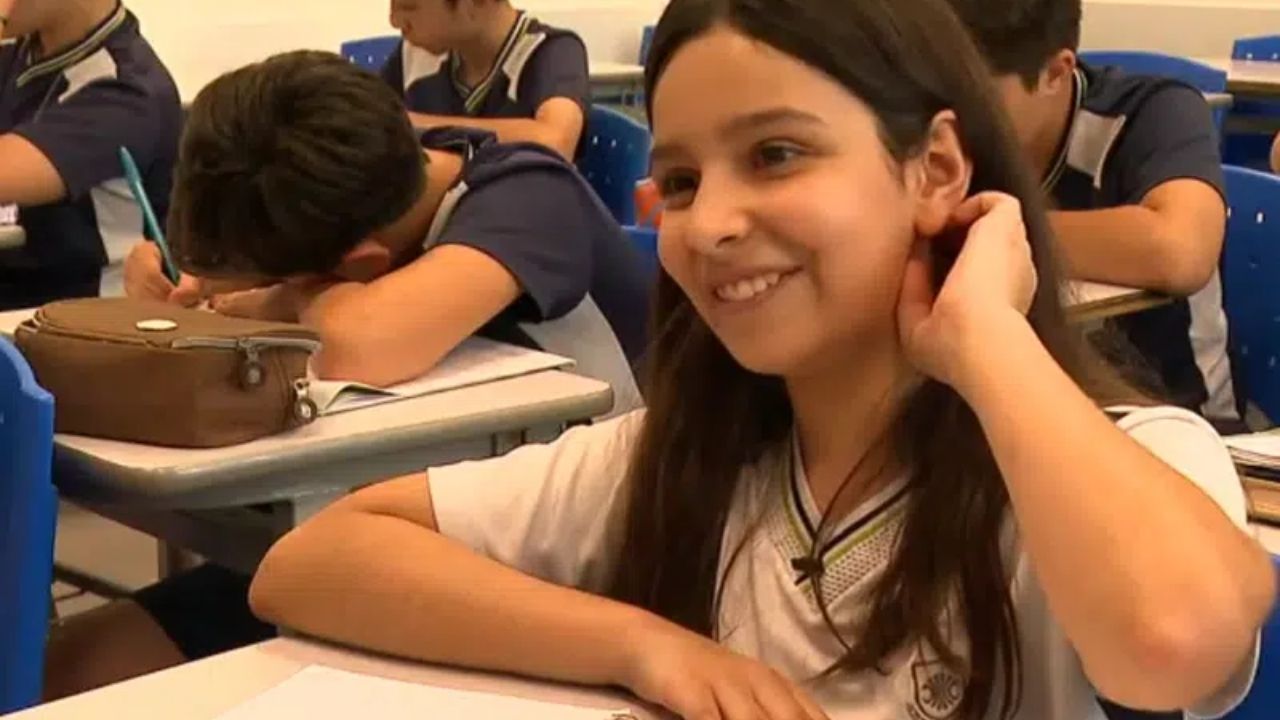


Square root returned to the debate after a girl from Minas Gerais presented a simple method with addition and multiplication, rekindling interest in mathematics at school and becoming an example of mathematical creativity by showing that patterns can make difficult calculations more intuitive for students, teachers, and families in Brazil, including on social media.
The square root, a calculation that often frightens many students at school, gained an alternative path created by Júlia Pimentel Ferreira, an 11-year-old student from Minas Gerais. The story resurfaced in 2026 on social media, but previous records show that the case had already been publicized in 2023, when the student’s idea caught the attention of the educational community.
The method attributed to the student uses basic operations, such as addition and multiplication, to arrive at the result of exact square roots. The power of the story lies not just in the calculation, but in the fact that a child perceived a mathematical pattern and transformed a common difficulty into a more intuitive way of reasoning.
Girl from Minas Gerais found a pattern in a calculation feared by many students
Júlia Pimentel Ferreira began to be cited in reports for developing her own way of calculating square root using a sequence of simple operations. According to publications about the case, the idea emerged in the school environment, during the student’s contact with mathematics content.
-
Helicopter Drops 180 Tons of Sand and Gravel on Swedish River to Revive Ecosystem Damaged by Decades of Exploitation

-
Brazilian Company Launches Retro Smartphone with 48 MP Camera, T9 Keyboard, and Privacy Features for Social Media-Free Use

-
Self-Taught Chinese Farmer Builds 5-Ton Submarine from Scrap, Launches It in Anhui River
-
Invisible Induction Technology Enables Wireless Power for Blenders, Coffee Makers, and Air Fryers, Reducing Countertop Cables




The most striking point was the simplicity of the reasoning. Instead of relying solely on the traditional method presented in classes, the student observed a relationship between perfect squares, progressive addition, and multiplication.
In practice, the discovery shows how learning can go beyond the repetition of formulas. When the student understands the logic behind the calculation, mathematics no longer seems like just a rigid sequence of rules.
This is the detail that made the story so powerful on social media. The creativity came from an 11-year-old girl, but it reached a much broader debate: how to teach mathematics in a way that encourages investigation, curiosity, and confidence.
How the method with addition and multiplication works

The most cited example involves the square root of 144. First, the student starts with a multiplication close to the desired result: 10 × 10 = 100. Then, she uses progressive additions with the following numbers until reaching the final value.
The sequence presented in reports shows that, starting from 100, she adds 10 + 11 and reaches 121. Then, she adds 11 + 12 to the previous result and reaches 144. Thus, the last number used in the sequence, 12, indicates the result of the square root of 144.
The logic aligns with a known property of perfect squares: the difference between consecutive squares follows a sequence of odd numbers. The pedagogical merit lies in transforming this relationship into a visual and more accessible path for students.
It’s not magic or an unfounded shortcut. The idea works because there’s a mathematical pattern behind the progression, and this pattern can help students see the calculation with less fear.
Professor formalized the idea and took the case forward
After Júlia presented her reasoning, Professor Frederico Ferreira followed up on the proposal and structured the idea in mathematical language. According to reports that covered the case, the method was submitted for publication in a scientific journal in the field.
This point is important because it separates school curiosity from a more organized formulation. The initial perception came from the student, but the formalization helped transform the reasoning into something that could be analyzed, explained, and discussed by others.
The repercussion also showed the teacher’s role in the discovery. Listening to an unusual idea in the classroom can be decisive in ensuring that a student does not abandon an original line of reasoning before developing it.
In many cases, students find their own ways to solve problems but end up being ignored because the answer doesn’t exactly follow the taught route. Júlia’s story shows the value of paying attention to the process, not just the final result.
Square root became an example of mathematical creativity in school
The square root often appears to many students as mechanical content, especially when taught only through memorization of results or repeated procedures. The case of the student from Minas Gerais shows another possibility: bringing calculation closer to intuition.
This approach does not eliminate the importance of traditional methods. On the contrary, it can serve as a gateway for students to better understand why certain procedures work.
Mathematical creativity does not mean abandoning rigor. It means finding ways to see patterns, test hypotheses, and explain results clearly. It is precisely this movement that transforms a common calculation into a classroom discovery.
For teachers, the episode can also serve as a starting point to discuss perfect squares, number sequences, sums of odd numbers, and formula construction. A simple case can pave the way for more investigative lessons.
Repercussion on social media reignited debate about math education
Júlia’s story regained momentum on social media in 2026, with publications highlighting the student as an example of creativity and an encouragement for scientific education. Some recent reports also recalled that the original discovery had already been circulating since 2023.
This return to the agenda shows how education stories can go viral when they combine surprise, identification, and national pride. A Brazilian girl, still in elementary school, found her own way to deal with a calculation that many adults also find difficult.
At the same time, the repercussion requires caution. Not every alternative method replaces formal education, and not every viralization means a scientific revolution. The value of the case lies in showing that students can create valid paths when encouraged to think.
Mathematics, in this context, ceases to be just a feared subject and comes to be seen as a space for discovery. This is the kind of message that tends to generate engagement because it resonates with parents, teachers, students, and people who struggled with numbers in school.
What the story teaches beyond calculation
The case of the square root created by Júlia doesn’t just draw attention for the calculation’s result. It also shows that school can be an environment for discovery when there is room for questions, trial, and error.
The method with addition and multiplication is simple to follow, but the strongest point lies in the student’s mental process. She observed, tested, and found a regularity. This path is one of the foundations of scientific thinking.
The great lesson is that creativity also exists in mathematics. Often, students believe there is only one correct way to solve a problem, when in reality different routes can lead to the same conclusion.
This type of story helps combat the idea that mathematics is only for a few. When a child can explain a pattern in an accessible way, she brings the subject closer to those who normally feel distant from it.
Girl from Minas Gerais became a symbol of curiosity and learning
The journey of Júlia Pimentel Ferreira shows how an idea born within the school can reach teachers, researchers, news reports, and social media. The square root, once seen by many as a difficult calculation, became an example of childhood curiosity and creativity.
The case also reinforces an important question for Brazilian education: how many student ideas fail to emerge because the classroom still values the ready answer more than the path used to reach it?
Whether as a pedagogical method, mathematical curiosity, or inspiration for other students, the story of the girl from Minas Gerais leaves a clear message. Learning is not just memorizing formulas; it is also perceiving patterns and creating ways to explain the world.
Do you think schools should encourage more methods created by the students themselves, even when they deviate from the traditional path, or does mathematics always need to follow the form taught in textbooks? Share your opinion.




It’s the meaning of research for a solution. Of course we should encourage students to do research and rethink of what the textbook tells them because the standard solutions will be used by AI. Creativity and originality are what humans can outperform robots with AI in future…
This is something I’ve actually known since