






 Portuguese
  Spanish
  4 min of reading
  0 comments


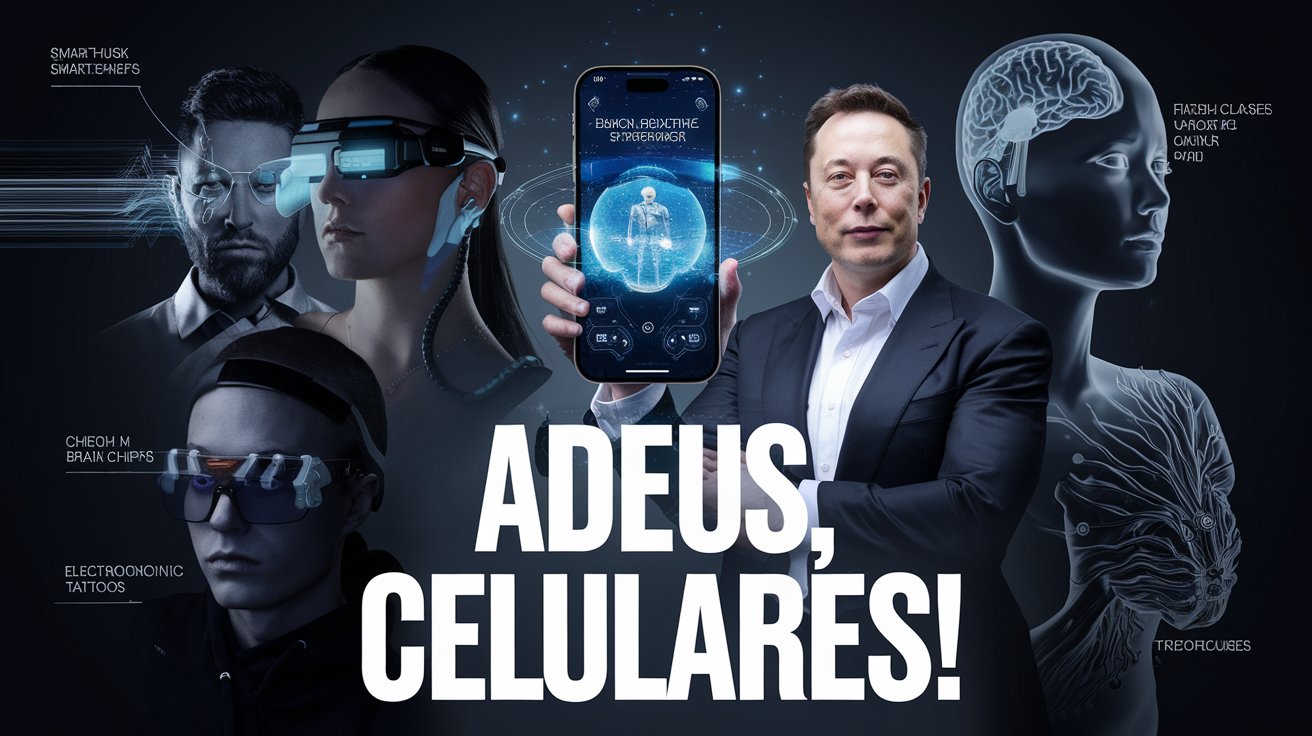
The Days of Cell Phones May Be Numbered! Elon Musk, Bill Gates, and Zuckerberg Bet on the End of Smartphones, Investing in Smart Glasses, Brain Chips, and Electronic Tattoos. Meanwhile, Tim Cook and Google Disagree and Defend the Longevity of Cell Phones.
Smartphones have dominated technology in recent years, but that reality may soon change.
Influential figures like Elon Musk, Bill Gates, and Mark Zuckerberg claim that the cell phone, as we know it, is on borrowed time.
While some bet on brain implants, others see wearables as the new trend. But not everyone agrees with this future.
-
Survivor of 1966 SS Daniel J. Morrell Shipwreck in Lake Huron Recounts 38-Hour Ordeal in Extreme Cold

-
The Greatest Hoax in World Cup History? The Film That Denied Brazil’s 1958 Victory and Exposed How Fake Evidence Can Seem Convincing on TV
-
Fake South Korean Online Stores Offer Shopping Thrill Without Spending Money or Receiving Products
-
Helicopter Drops 180 Tons of Sand and Gravel on Swedish River to Revive Ecosystem Damaged by Decades of Exploitation



Tim Cook, CEO of Apple, believes that cell phones still have a long way to go.
Alternatives to Cell Phones Are Already on the Market
The search for devices that can replace smartphones is not new. In recent years, several innovations have emerged, such as gadgets with artificial intelligence (AI) and advanced wearables.
The Rabbit R1 and the Humane AI Pin, for example, are already attempting to reduce dependency on cell phones by offering interactive digital assistants.
Additionally, the Ray-Ban Meta smart glasses and electronic rings, such as the Samsung Galaxy Ring, are options that promise to integrate smartphone functions in a more natural and intuitive way.
So far, these devices still function as complements to cell phones, but the idea of a world without smartphones is becoming increasingly present among the big names in technology.
Elon Musk and the Future of Neuralinks
Elon Musk has no doubts: “In the future, there will be no smartphones, only Neuralinks,” said the billionaire on his profile on X/Twitter.
Neuralink is a brain implant that could revolutionize how we interact with technology.
The device promises to enable users to browse the internet, write messages, and perform tasks just by thinking.
So far, two volunteers have received the implant. The second of them, named Alex, surprised everyone by learning to use the device in just five minutes.
He is already able to operate complex programs, such as 3D design software, and even play Counter-Strike 2 without touching a keyboard or mouse.
For Musk, this technology represents a definitive step towards a world without cell phones.
Bill Gates Bets on Electronic Tattoos
Unlike Musk, Bill Gates believes that cell phones will be replaced by electronic tattoos.
Since 2022, he has been investing in research at Chaotic Moon, a biotechnology company.
Electronic tattoos use a special ink with nanotracers, capable of monitoring health, transmitting information, and even replacing passwords and documents.
Initially, the technology was designed for monitoring vital signs, but its application could expand to geolocation and even message exchange without a physical device.
Zuckerberg and Smart Glasses
The creator of Facebook also believes in the end of cell phones, but his bet is different.
Mark Zuckerberg predicts that by 2030, smartphones will be replaced by smart glasses. For him, this will be the next big technological revolution.
The Meta augmented reality glasses already demonstrate this potential.
The idea is for people to make calls, send messages, and consume content without needing a cell phone.
With the evolution of AI, the devices will be able to understand and anticipate users’ needs.
Sam Altman and the Future of AI in Devices
Another big name in the sector who sees a future beyond cell phones is Sam Altman, CEO of OpenAI.
He is developing a new device based on AI with Jony Ive, former designer at Apple.
Altman claims that his project could represent “the biggest revolution since the iPhone.”
The proposal is to create a device that replaces the traditional screen with an interaction system based on virtual assistants, eliminating the need for a conventional cell phone.
Apple and Google Disagree with This Future
While many influential figures believe that cell phones are on borrowed time, some tech giants disagree.
Tim Cook, CEO of Apple, believes that smartphones still have a lot of evolution ahead.
During the presentation of the 2025 financial results, Cook stated: “I believe that there is still much innovation to be explored in smartphones.”
Meanwhile, Apple continues to invest in new products, such as the Apple Vision Pro and Project Atlas, a direct competitor to Ray-Ban Meta.
Google also shares this view.
Sundar Pichai, the company’s CEO, stated that despite advances in AI, a primary device will still be necessary to centralize digital functions. According to him, smartphones will continue to fulfill this role for a long time.
The Future: With or Without Cell Phones?
The discussion about the future of cell phones is still open.
While Musk, Gates, and Zuckerberg bet on new technologies to replace smartphones, Apple and Google remain confident in the evolution of phones.
Regardless of the path technology takes, one thing is certain: the way we interact with the digital world will continue to evolve rapidly.


Be the first to react!