Portuguese
  Spanish


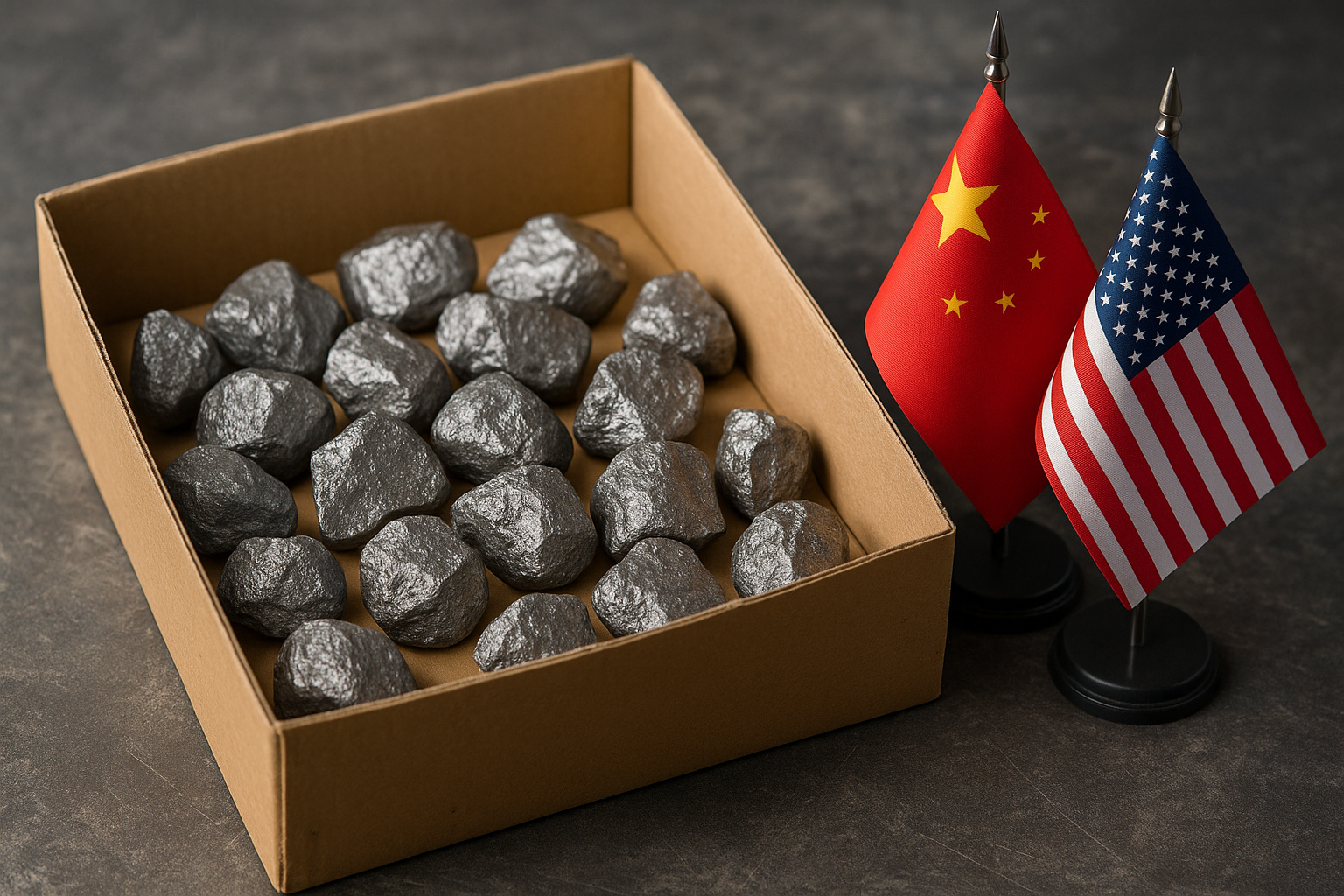

Chinese Government Simplifies Licensing Processes and Criticizes U.S. Measures That Increase Trade Tensions and Affect Global Supply Chains
The Ministry of Commerce of China announced on Thursday, October 16, 2025, the decision to reduce review time and simplify licensing procedures for rare earth exports.
The initiative aims to stimulate international trade of these strategic minerals, essential for sectors such as electric vehicles, wind turbines, and semiconductors.
According to He Yongqian, the spokesperson for the ministry, the goal is to “promote legitimate trade and strengthen regulatory efficiency” in the sector.
Adjustments and International Communication
According to He Yongqian, the export controls recently implemented represent a Chinese government effort to improve the regulatory system, without focusing on specific countries.
These controls were created to prevent the illegal use of rare earths, including in weapons of mass destruction, ensuring national security.
Furthermore, Beijing informed relevant countries and regions in advance about the new guidelines and maintained continuous dialogue with trading partners.
However, the spokesperson expressed strong dissatisfaction with the restrictive measures imposed by the United States, labeling them as “unbalanced and unnecessary actions.”
Response to U.S. Measures
The U.S. government expanded, at the beginning of October 2025, the “entity list”, adding new Chinese companies to the export restriction list.
Additionally, it imposed additional port fees on Chinese vessels, which, according to the spokesperson, “deliberately creates panic and distorts the global trading environment.”
Chinese authorities state that these actions harm global industries and raise U.S. inflation.
They also undermine the competitiveness of ports and domestic employment in the U.S.
In response, Beijing adopted proportional countermeasures, considered “actions taken out of necessity”, with the goal of safeguarding fair conditions in shipping and shipbuilding markets.
-
Chinese Nuclear Submarine Launches Simulated Warhead Missile in Pacific, Heightening Regional Tensions Amid Naval Drills with Russia Near Qingdao; New Zealand and Papua New Guinea Warn of Persistent Chinese Military Presence

-
Ayatollah Ali Khamenei’s Funeral Draws 15 to 20 Million in Tehran, Calls for Revenge Against Trump After Joint Israel-U.S. Attack

-
U.S. Establishes Permanent Embassy in Jerusalem, Reigniting International Debate Over Israel’s Capital
-
The world has nearly 12,000 nuclear warheads, with the majority held by the United States and Russia; see the figures for China, France, and the United Kingdom.


Growing Trade Tensions
According to the Ministry of Commerce of China, even after bilateral meetings held in Madrid, Spain, in September 2025, the U.S. government implemented 20 new trade restrictions against Chinese companies.
These measures were taken in just 20 days, which intensified tensions between the two economic powers.
In an official statement, He Yongqian stated: “The U.S. side is expected to value the achievements made in economic dialogues and immediately correct its erroneous practices.”
The statement reflects Beijing’s position in favor of fair and balanced regulation, according to the principles of the World Trade Organization (WTO).
Impacts and Perspectives
With the streamlining of licenses, China aims to ensure the global supply of critical minerals, maintaining its leadership in the global rare earth market.
The country is responsible for over 70% of global production, according to the Chinese Mining and Energy Association (2025).
The measure reinforces the government’s effort to reduce bureaucratic barriers, boost legitimate trade, and respond to external pressures.
Meanwhile, the United States and its allies intensify their search for new suppliers, escalating the geopolitical competition for strategic resources.
Amid escalating rivalries, China remains steadfast in balancing trade openness and national security — but to what extent will dialogue still be able to contain new friction?